If You're Curious About These Questions...
You should listen to this audiobook
- Have you ever wondered why the world's most successful leaders view their biggest mistakes as their greatest assets?
- What if you could stop fearing failure and instead master the art of using every setback as a catalyst for your personal growth?
- Did you know there is a specific mental shift that separates those who are crushed by failure from those who use it to 'fail forward' toward success?
Listen to Failing Forward — Cinematic Audio Edition
Loading player...
Key Takeaways from Failing Forward
- Understand why failure is not the opposite of success, but rather a necessary stepping stone that successful entrepreneurs embrace to move forward.
- Discover how to draw dividends from failure by recognizing unexpected opportunities and new discoveries when your original plans fall apart.
- Learn to separate blame from responsibility so you can take charge of your future, even when setbacks are caused by circumstances completely beyond your control.
- Find out why embracing mistakes through high-quantity output actually leads to greater skill development and higher-quality results than aiming for perfect, error-free work.
- Master the habit of actively investigating your missteps to ensure you turn every setback into instrumental knowledge rather than just a missed opportunity.
Learning Tools
Reinforce what you learned from Failing Forward
Mind Map
Failing Forward
Redefining Failure+
Opportunities in Failure+
Responsibility vs. Blame+
Learning from Mistakes+
Overcoming Fear+
Tools for Future Success+
Actionable Advice+
Quiz — Test Your Understanding
Question 1 of 7
According to the book, how should failure be fundamentally viewed?
Question 2 of 7
What does the story of Sergio Zyman and 'New Coke' illustrate about business failures?
Question 3 of 7
How did Thomas Edison's failure with the telegraph machine demonstrate the concept of 'drawing dividends from failure'?
Question 4 of 7
What is the primary lesson drawn from the stories of Greg Horn (whose supermarket flooded) and Roger Crawford (who was born with ectrodactylism)?
Question 5 of 7
In the 'Art and Fear' ceramics class experiment, why did the group graded on 'quantity' produce higher quality art than the group graded on 'quality'?
Question 6 of 7
Why does the author suggest that the cartoon character Charlie Brown is a poor role model for handling failure?
Question 7 of 7
According to the final chapters, which three practices are essential to make the most of opportunities for success?
Failing Forward — Full Chapter Overview
- 1Recommendation
- 2Failure is unavoidable, so treat it as a crucial part of progress.
- 3Failure creates new opportunities.
- 4You may not be to blame for your failures, but you are responsible for your successes.
- 5Turning failure into knowledge is essential for success.
- 6Overcoming fear of failure and taking new risks leads to long-term success.
- 7To make the most of success opportunities, you need clear goals, social skills, and a positive mindset.
- 8Final summary
Failing Forward Summary & Overview
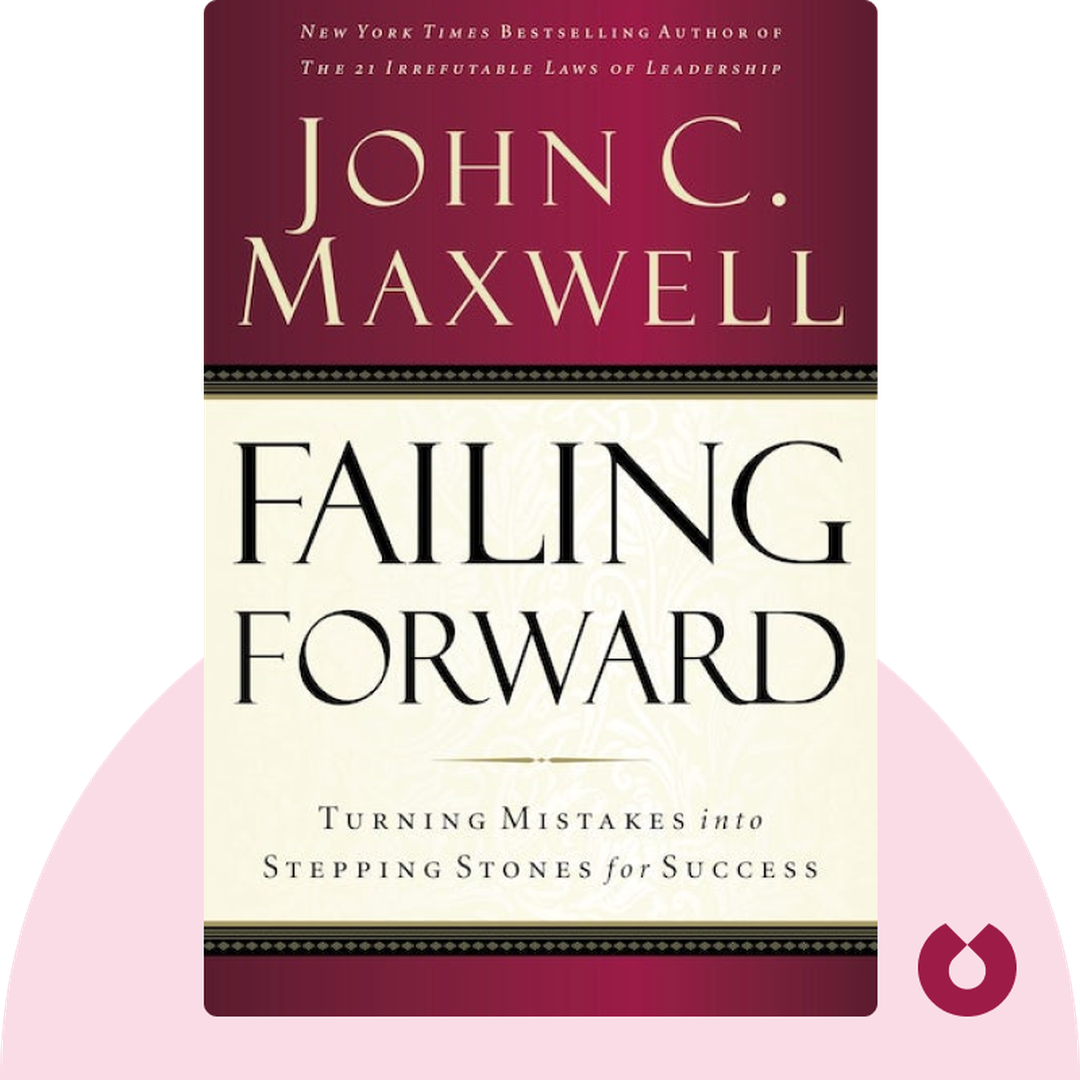
Failing Forward (2000) provides a positive perspective on failure. These blinks draw on legendary success stories and literary anecdotes to explain the importance of failure, the advantages of embracing it and the power of leveraging your mistakes to stimulate personal growth.
Who Should Listen to Failing Forward?
- Creative professionals struggling to take risks in their work
- Perfectionists looking for new ways to accept and interpret their mistakes
- Ambitious readers curious about the role of failure in success
Books Similar to Failing Forward
Readers who enjoyed this also liked these titles.