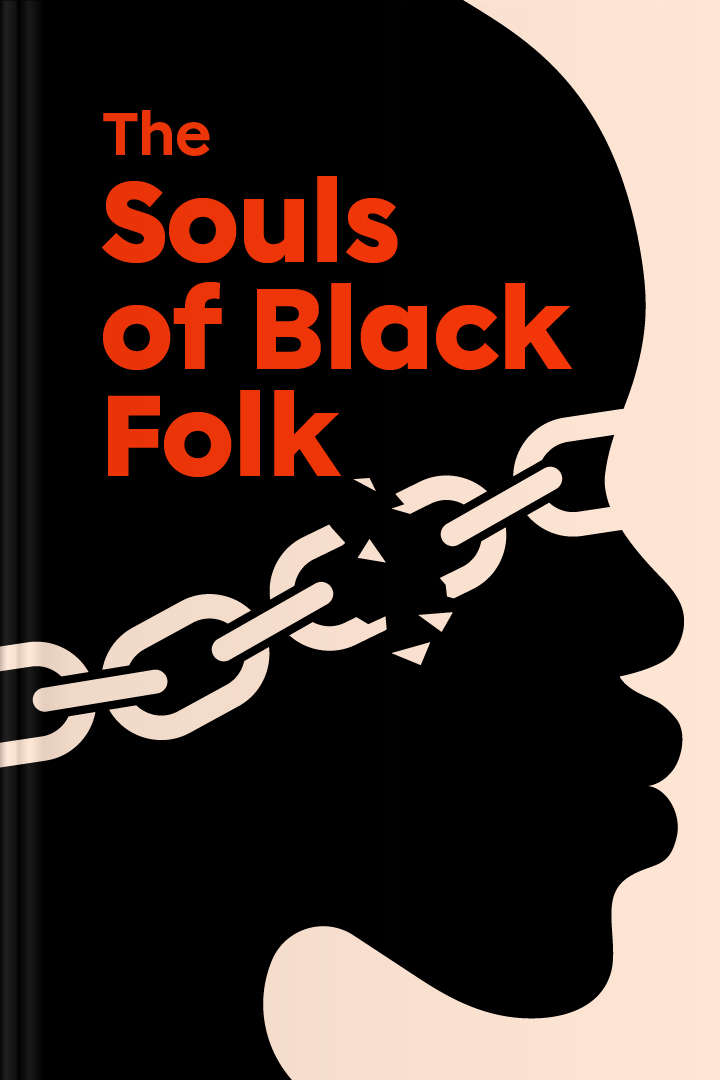
If You're Curious About These Questions...
You should listen to this audiobook
- Have you ever wondered what it feels like to live behind an invisible "Veil" that dictates how the world sees you and how you perceive your own soul?
- Are you curious about the profound psychological weight of being treated as a "problem" rather than a person, and how that internal conflict shapes a sense of belonging?
- What if the secret to true social progress isn't just vocational training, but a deeper kind of education that Du Bois believed was the only path to dignity and mutual understanding?
Listen to The Souls of Black Folk — Free Audiobook
Key Takeaways from The Souls of Black Folk
- Understand the profound concept of the 'Veil,' an invisible societal boundary that dictates how Black Americans are perceived, what opportunities they receive, and how they learn to view themselves.
- Learn how systemic inequality shapes success and failure, demonstrating that societal design and access to advantages often outweigh individual talent or effort.
- Grasp the psychological weight of 'double-consciousness,' the exhausting reality of constantly measuring your own identity through the judging eyes of a dominant society.
- Recognize the crucial distinction between legal freedom and true liberty, and why the promises of Emancipation left Black Americans facing new, systemic forms of confinement.
- Discover why being treated as a societal 'problem' deeply impacts personal identity, and how naming the 'color-line' is the first step toward recognizing true systemic division.
The Souls of Black Folk — Full Chapter Overview
Chapter 1: Recommendation
Chapter 2: Living Behind the Veil
Chapter 3: The Unfinished Freedom of Emancipation
Chapter 4: Reconstruction’s Promise and Its Limits
Chapter 5: When Hope Meets Hard Ground
Chapter 6: Education as a Way Through Prejudice
Chapter 7: The Right to Learn, Not Just to Labor
Chapter 8: Toward Shared Progress and Human Recognition
The Souls of Black Folk Summary & Overview
This narration revisits key ideas from W.E.B. Du Bois’s essay collection about Black life in the United States after Emancipation. Du Bois describes an invisible boundary—the “Veil”—that separates Black and white Americans even while they live in the same country, shaping opportunity, belonging, and the way people see themselves.
Across these chapters, we hear about the emotional weight of being treated as a “problem,” the unfinished freedom that followed the end of slavery, the mixed legacy of Reconstruction efforts like the Freedmen’s Bureau, and the stubborn difficulty of measuring progress when hope is repeatedly bruised. Du Bois returns, again and again, to education—not only job training, but full intellectual opportunity—as a path toward dignity, mutual understanding, and a more just society.
Who Should Listen to The Souls of Black Folk?
- Listeners who want a clear, human introduction to Du Bois’s ideas about the “Veil,” double-consciousness, and the color-line in American life.
- Educators, students, and curious readers looking for a supportive, listenable guide to the themes of Reconstruction, segregation, and the long struggle for equal citizenship.
- Anyone reflecting on prejudice, belonging, and how education can shape both self-respect and social change.
Books Similar to The Souls of Black Folk
Readers who enjoyed this also liked these titles.
A COMMUNITY HISTORY OF AFRICAN AMERICA, 1619–2019
The 2015 National Book Award Winner is a deep look at being black in America today

This gentle, guided listening journey traces how racist ideas were built to defend power, how they spread through religion, politics, and culture, and how an antiracist commitment can begin with honest reflection, clearer language, and everyday choices that protect human equality.
This warm, honest narration gently explores how racism took root in American Christian history, why selective storytelling keeps wounds open, and how truth-telling—though painful—can become a doorway to repentance, healing, and wiser action.