Theme Song
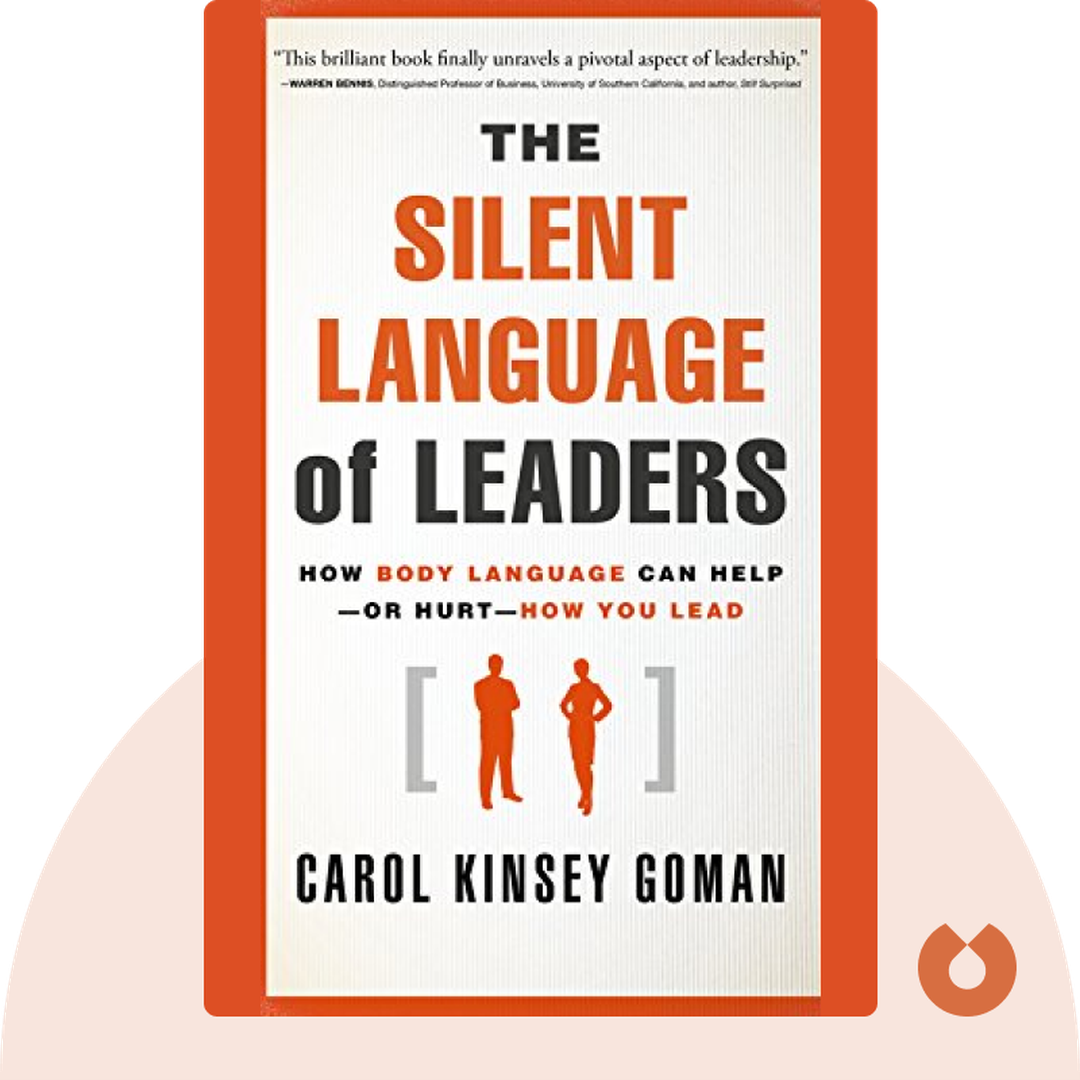
The Silent Language of Leaders
Start ListeningDownload Try free on iPhoneScan to start in 5 seconds
Categories:
If You're Curious About These Questions...
You should listen to this audiobook
- Did you know that your body language could be undermining your authority and contradicting your message without you saying a single word?
- Have you ever wondered what your team members are really thinking during a meeting, even when they seem to be in total agreement?
- What if you could master the subtle non-verbal shifts needed to build instant trust and lead effectively across different cultures?
Listen to The Silent Language of Leaders — Free Audiobook
Loading player...
Key Takeaways from The Silent Language of Leaders
- Understand why people evaluate your credibility and trustworthiness within seven seconds of meeting you, and how this instant judgment is rooted in the brain's limbic system.
- Learn how to simultaneously project warmth and authority by consciously using open body language, maintaining strong posture, and avoiding crossed arms.
- Discover how to become a highly persuasive negotiator by establishing behavioral baselines and reading 'gesture clusters' rather than isolated physical movements.
- Find out why paying attention to someone's feet can reveal hidden unease, and why keeping your own feet completely still projects strong leadership.
- Master the use of positive physical cues—such as keeping your palms face-down on a table—to overcome your team's natural resistance to change and project absolute certainty.
Learning Tools
Reinforce what you learned from The Silent Language of Leaders
Mind Map
The Silent Language of Leaders
Biology & Basics+
Projecting Leadership+
Negotiation & Reading Others+
Managing Change & Collaboration+
Communication Mediums+
Gender Differences+
Cultural Nuances & Universals+
The Power of Touch+
Quiz — Test Your Understanding
Question 1 of 8
According to the text, why is body language evaluated almost instantly (within seven seconds)?
Question 2 of 8
During a negotiation or presentation, what does keeping your palms down on the table convey?
Question 3 of 8
Why is it important to identify 'baselines' when reading a conversation partner's body language?
Question 4 of 8
According to the text, what is a key difference between 'lean' and 'rich' communication?
Question 5 of 8
Which spatial zone is usually considered best for interacting with business colleagues?
Question 6 of 8
How do male and female brains differ when processing emotions and stress, according to the book?
Question 7 of 8
While most fake facial expressions are asymmetrical, which emotion naturally produces an asymmetrical facial expression?
Question 8 of 8
Why is appropriate physical touch considered an important tool for great leaders?
The Silent Language of Leaders — Full Chapter Overview
- 1Recommendation
- 2Effective leadership demands strong communication – body language included.
- 3Successful leaders can both read strong body language and project it themselves.
- 4Mastering body language helps you become a stronger negotiator.
- 5Even with today’s communication tools, body language is vital for driving change.
- 6Positive body language is an essential part of effective collaboration.
- 7Gender plays a significant role in body language.
- 8Grasping cultural differences in body language is crucial in today’s multicultural business world.
The Silent Language of Leaders Summary & Overview
Strong leaders have to project the right body language and be able to read it well in their team members if they want to lead them to success. The Silent Language of Leaders (2011) offers tips for reading and controlling body language, even in cultures where social cues differ.
Who Should Listen to The Silent Language of Leaders?
- Anyone in a leadership position
- Anyone who works in a multicultural environment
- Anyone interested in body language or psychology
Books Similar to The Silent Language of Leaders
Readers who enjoyed this also liked these titles.