If You're Curious About These Questions...
You should listen to this audiobook
- Did you know that history’s most noble quests for human freedom have often transformed into the very systems of tyranny they sought to destroy?
- Have you ever wondered why the simple act of saying 'no' is actually the first step toward finding meaning in an indifferent universe?
- What’s the secret to rebelling against injustice without becoming the very monster you are trying to defeat?
Listen to The Rebel — Free Audiobook
Loading player...
Key Takeaways from The Rebel
- Understand the critical distinction between rebellion and revolution, and discover why idealistic movements often descend into deadly totalitarianism.
- Learn how the philosophy of absurdism empowers individuals to create their own meaning, reinforcing the inherent value of human life against state-sanctioned violence.
- Discover why a true rebel's refusal to accept injustice is actually a powerful affirmation of shared human dignity rather than just a destructive impulse.
- Explore the rise of the 'metaphysical rebel' who challenged divine authority over the existence of evil, sparking a profound philosophical shift away from traditional religion.
- Find out how tearing down traditional moral systems without establishing new blueprints for human values inadvertently paved the way for the darkest atrocities of the 20th century.
Learning Tools
Reinforce what you learned from The Rebel
Mind Map
The Rebel
The Core Paradox+
Absurdism & The Rebel+
Metaphysical Rebellion+
The Fall into Nihilism+
From Idea to Revolution+
Fascism vs. Communism+
Art as True Rebellion+
Quiz — Test Your Understanding
Question 1 of 8
How does Camus use the philosophy of absurdism to argue against state-sanctioned murder?
Question 2 of 8
According to the text, what does the rebel's refusal (saying 'no' to oppression) fundamentally represent?
Question 3 of 8
What was the primary trigger for 'metaphysical rebellion' against the monotheistic Christian God?
Question 4 of 8
According to Camus, what is the key flaw in the transformation from a rebel to a revolutionary?
Question 5 of 8
How did the text contrast the underlying philosophies of fascism and communism, despite both leading to mass murder?
Question 6 of 8
What was the defining contradiction of the Soviet system built by Vladimir Lenin?
Question 7 of 8
Why does Camus believe that authentic political rebellion can learn from the sensibilities of artists?
Question 8 of 8
According to the text, why do totalitarian systems often oppose art and dismiss it as a 'perversion'?
The Rebel — Full Chapter Overview
- 1Recommendation
- 2Murder, meaning, and rebellion in the modern age
- 3The rebels who took up arms against God
- 4Why the metaphysical rebels ultimately failed
- 5How rebellion turns into revolution
- 6The illusion of choosing between fascism and communism
- 7What political rebellion can learn from art
The Rebel Summary & Overview
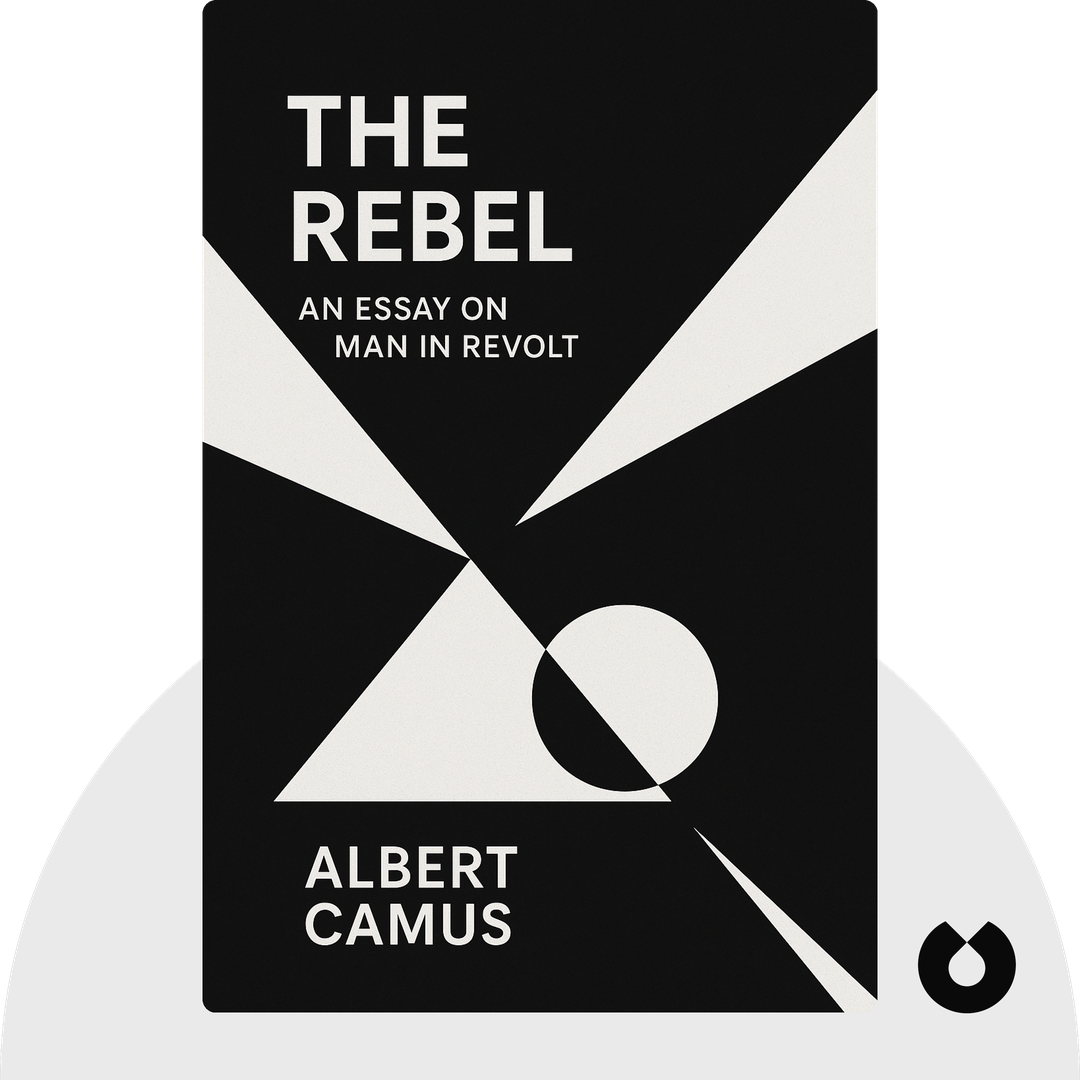
The Rebel (1951) is a philosophical classic that examines the promise and dangers of rebellion in modern society. Explaining the metaphysical roots of rebellion and analyzing the impact of historical revolutions from 18th century France to 20th century Russia, it exposes how noble ideals can transform into tyrannical systems – and why rebellion is still a vital and necessary part of the human experience.
Who Should Listen to The Rebel?
- Students of philosophy, political science, and history
- Political and social justice activists grappling with questions about violence and justice
- Readers interested in existential and absurdist philosophy
Books Similar to The Rebel
Readers who enjoyed this also liked these titles.