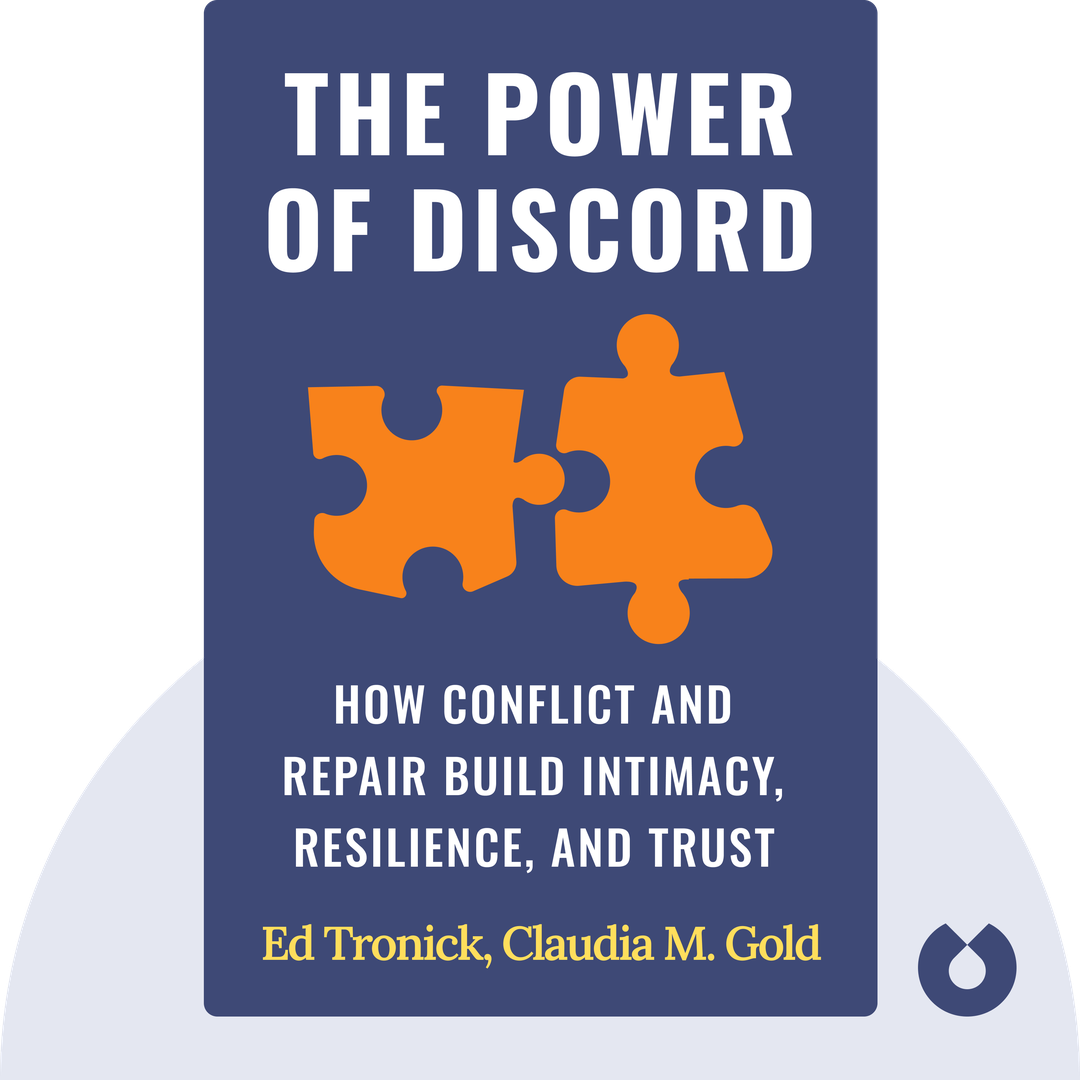
If You're Curious About These Questions...
You should listen to this audiobook
- Did you know that the "messy" moments of mismatch and discord in your relationships are actually the secret ingredient to building lifelong trust and resilience?
- Have you ever wondered what a famous psychological experiment involving a mother's "still face" reveals about how we truly connect with others?
- What if the key to a healthy relationship isn’t being perfectly in sync, but learning how to master the art of "repairing" when things go wrong?
Listen to The Power of Discord — Free Audiobook
Loading player...
Key Takeaways from The Power of Discord
- Discover why even the healthiest, securely attached relationships are out of sync 70 percent of the time, and how this everyday mismatch is actually perfectly normal.
- Understand the critical importance of the repair process in relationships, where successfully reconnecting after an argument builds deeper trust and long-lasting emotional resilience.
- Learn how small, manageable disappointments from a 'good enough' parent provide children with the necessary opportunities to develop independent emotional self-regulation.
- Recognize how our perfection-obsessed, advice-driven culture actually short-circuits genuine connection by making us fear the very discord that leads to personal growth.
- Master the crucial difference between rigid self-control and true self-regulation, enabling you to fully experience your emotions and transform messy conflicts into meaningful understanding.
Learning Tools
Reinforce what you learned from The Power of Discord
Mind Map
The Power of Discord
The Value of Discord+
Imperfection in Development+
Regulation and Meaning+
Building Resilience+
Playful Navigation+
Healing and Rewiring+
Quiz — Test Your Understanding
Question 1 of 7
According to Ed Tronick's research, what percentage of interactions in healthy, securely attached parent-infant relationships are typically out of sync?
Question 2 of 7
What is the primary purpose of D.W. Winnicott's concept of the 'good enough mother' who gradually 'fails' her infant?
Question 3 of 7
How does the book distinguish between self-regulation and self-control when dealing with relationship 'mess'?
Question 4 of 7
What is the key psychological distinction between 'tolerable stress' and 'toxic stress'?
Question 5 of 7
What do psychologists mean by 'implicit relational knowing' in the context of adult relationships?
Question 6 of 7
How does Stephen Wolfert’s DE-CRUIT project help veterans process trauma and rewire their stress responses?
Question 7 of 7
According to the authors, what is a major drawback of our modern 'advice-obsessed culture' regarding relationships?
The Power of Discord — Full Chapter Overview
- 1Recommendation
- 2Healthy bonds are shaped by discord
- 3Imperfection is vital to our emotional growth
- 4Regulation turns mess into meaningful patterns
- 5Repairing discord strengthens resilience
- 6Use play to handle discord
- 7Heal your relationship with discord
The Power of Discord Summary & Overview
The Power of Discord (2020) offers a significant reframing of the role discord plays in developing functional relationships. It reveals how moments of mismatch – when followed by repair – actually build trust, resilience, and deeper connection. Through groundbreaking research including the famous "Still-Face Experiment," it offers a refreshing perspective that will transform how you view conflict, showing that working through discord is not just normal but essential for creating lasting, meaningful relationships.
Who Should Listen to The Power of Discord?
- Parents who want to build healthy attachment patterns with their children
- Couples ready to transform inevitable conflicts into opportunities for connection
- Perfectionists who are ready to embrace messiness and grow from mistakes
Books Similar to The Power of Discord
Readers who enjoyed this also liked these titles.