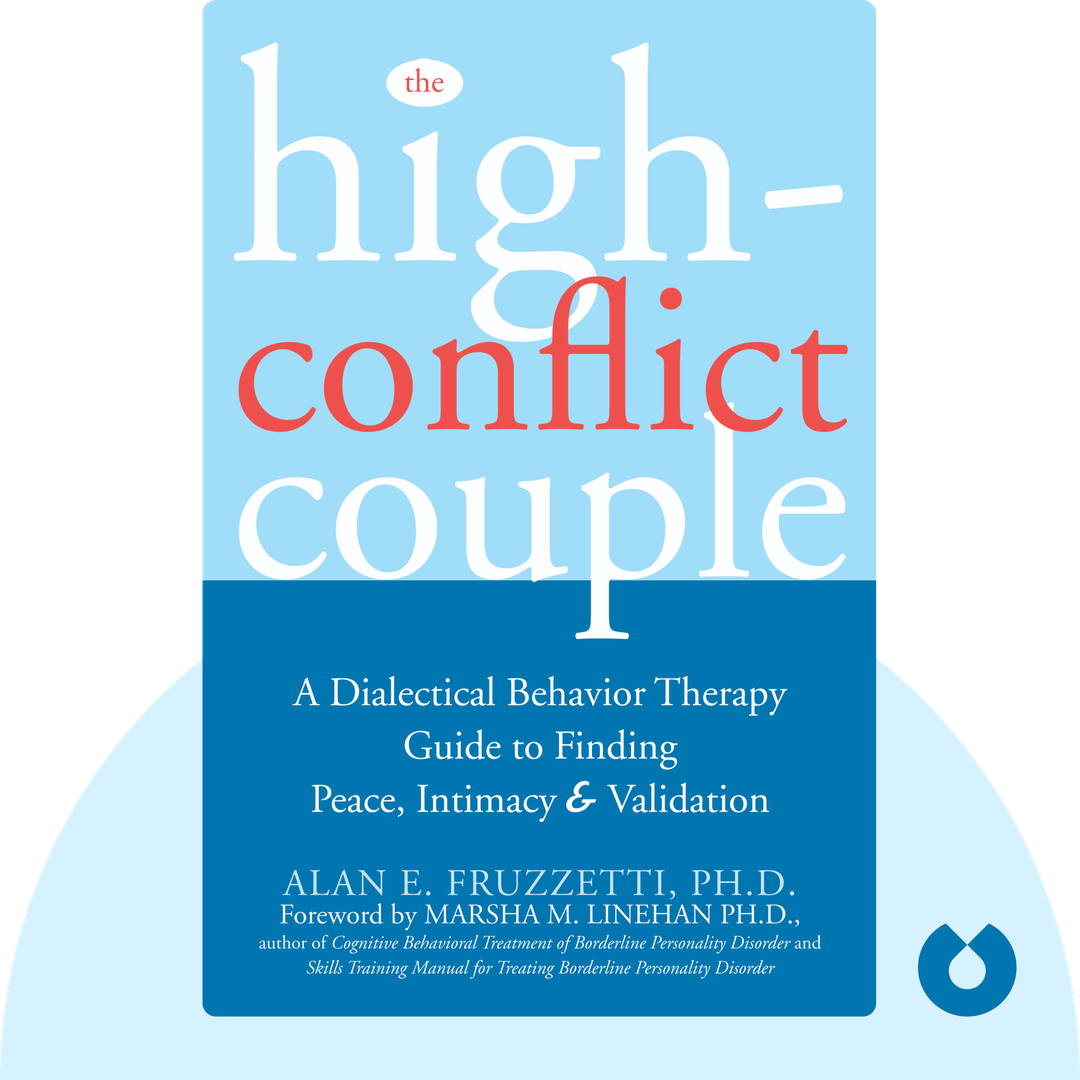
The High-Conflict Couple
Start ListeningDownload Try free on iPhoneScan to start in 5 seconds
Categories:
If You're Curious About These Questions...
You should listen to this audiobook
- Have you ever wondered why certain conversations with your partner always seem to spiral into an argument, no matter how hard you try to stay calm?
- What’s the secret to stopping a high-conflict cycle in its tracks before it damages your relationship beyond repair?
- What if you could use the power of mindfulness to transform your most reactive moments into opportunities for deeper connection and understanding?
Listen to The High-Conflict Couple — Free Audiobook
Loading player...
Key Takeaways from The High-Conflict Couple
- Understand how emotional arousal knocks you off your baseline and impairs your judgment during conflicts. Learn to use mindfulness to recognize these feelings early and stop fights before they even begin.
- Discover the critical difference between passively sharing physical space and actively occupying the same emotional space. Find out how engaging in simple, stress-free shared activities can help you reconnect and have fun with your partner.
- Learn how to practice 'accurate expression' by clearly stating your needs and feelings without attacking your partner's behavior. Understand why being direct about your conversational goals is essential for healthy, validating communication.
- Master the technique of assessing your physical sensations to describe your feelings without judgment. Discover how this simple mindfulness practice lowers negative arousal and keeps you in a state to resolve problems calmly.
- Recognize the importance of waiting until both you and your partner are emotionally relaxed and distraction-free before tackling difficult topics. Learn why avoiding indirect comments and simply asking for what you want is the key to relationship harmony.
Learning Tools
Reinforce what you learned from The High-Conflict Couple
Mind Map
The High-Conflict Couple
Emotional Regulation+
Quality Time & Connection+
Healthy Conversations+
Managing Problems+
Practicing Acceptance+
Quiz — Test Your Understanding
Question 1 of 6
According to the book, what happens when a person's emotional arousal moves past a moderate level?
Question 2 of 6
How does the author distinguish between 'passive' and 'active' togetherness?
Question 3 of 6
When engaging in healthy conversations, why does the author compare stating your wants to ordering at a restaurant?
Question 4 of 6
In the context of effective verbal communication, what does 'validation' mean?
Question 5 of 6
Why does the author prefer the term 'managing' a relationship problem rather than 'solving' it?
Question 6 of 6
What strategy does the author suggest for dealing with a partner's behavior that you cannot change?
The High-Conflict Couple — Full Chapter Overview
- 1Recommendation
- 2Staying mindful of your emotional state can help you prevent unnecessary fights.
- 3Make quality time with your partner enjoyable by staying mindful and creating meaningful shared activities.
- 4Healthy conversations require being direct and honest about what you want.
- 5Validate your partner’s emotions to strengthen trust and improve communication.
- 6Examine your problems to uncover the root cause and find a solution.
- 7Accept what you can’t change by finding new meaning in your partner’s behavior.
- 8Final summary
The High-Conflict Couple Summary & Overview
The High-Conflict Couple (2007) is a guide to overcoming the common relationship pitfalls that lead to conflict and animosity. Drawing upon years of psychology research and therapy experience, Alan E. Fruzzetti explains where conflict comes from and how it can be reduced.
Who Should Listen to The High-Conflict Couple?
- Couples tired of fighting with each other
- People who struggle to accept the things they cannot change
- Anyone wanting to be more present in their own life
Books Similar to The High-Conflict Couple
Readers who enjoyed this also liked these titles.