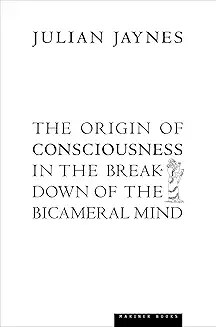
If You're Curious About These Questions...
You should listen to this audiobook
- Did you know that the subjective 'inner voice' you use to narrate your life might be a relatively recent invention rather than a permanent feature of the human mind?
- Have you ever wondered why ancient civilizations built their entire societies around the 'voices of gods'—and what that reveals about the evolution of our own consciousness?
- What if common human experiences like hypnosis, religious ecstasy, and even certain mental health conditions are actually remnants of an ancient way of thinking?
Listen to The Origin of Consciousness in the Breakdown of the Bicameral Mind — Free Audiobook
Key Takeaways from The Origin of Consciousness in the Breakdown of the Bicameral Mind
- — The Question That Won’t Go Away
- — What Consciousness Is Not
- — Consciousness as a Language-Built Model
- — The Iliad and the Strange Absence of Inner Minds
- — The Double Brain Hypothesis
The Origin of Consciousness in the Breakdown of the Bicameral Mind — Full Chapter Overview
Chapter 1: Recommendation
Chapter 2: The Question That Won’t Go Away
Chapter 3: What Consciousness Is Not
Chapter 4: Consciousness as a Language-Built Model
Chapter 5: The Iliad and the Strange Absence of Inner Minds
Chapter 6: The Double Brain Hypothesis
Chapter 7: Gods, Graves, Idols: Archaeology as Psychology
Chapter 8: Why the Gods Fell Silent
Chapter 9: Greece and Israel: Two Tracks into Consciousness
Chapter 10: Modern Vestiges: Religion, Hypnosis, and Schizophrenia
The Origin of Consciousness in the Breakdown of the Bicameral Mind Summary & Overview
Julian Jaynes proposes one of the most provocative theories in psychology and intellectual history: that subjective consciousness—an inner mental space with an “I” that narrates, plans, and introspects—did not always exist. In its place, early civilizations operated with a “bicameral mind,” where guidance came as auditory hallucinations experienced as divine commands.
The book builds a multi-part case. First, Jaynes carefully narrows what consciousness is (and is not), framing it as a language-based, metaphor-built analog of the external world. Then he turns to historical evidence—epics, ancient law codes, temple practices, idols, burial customs, and prophetic literature—to argue that earlier peoples lacked introspective language and instead attributed decisions to gods. Finally, he traces how writing, social upheaval, and cultural complexity weakened divine authority, forcing a transition toward conscious, self-narrated decision-making, with modern remnants appearing in religion, hypnosis, and schizophrenia.
Who Should Listen to The Origin of Consciousness in the Breakdown of the Bicameral Mind?
- Listeners who enjoy controversial big-think theories bridging psychology, linguistics, and ancient history.
- Students of consciousness studies who want a rigorous alternative to purely biological or computational origin stories.
- Readers curious about how religion, prophecy, and inner speech might connect to brain lateralization and culture.
Books Similar to The Origin of Consciousness in the Breakdown of the Bicameral Mind
Readers who enjoyed this also liked these titles.
Redefine Your Understanding of the Mind and Consciousness
In Search of a Fundamental Theory
A Brief Guide to the Fundamental Mystery of the Mind
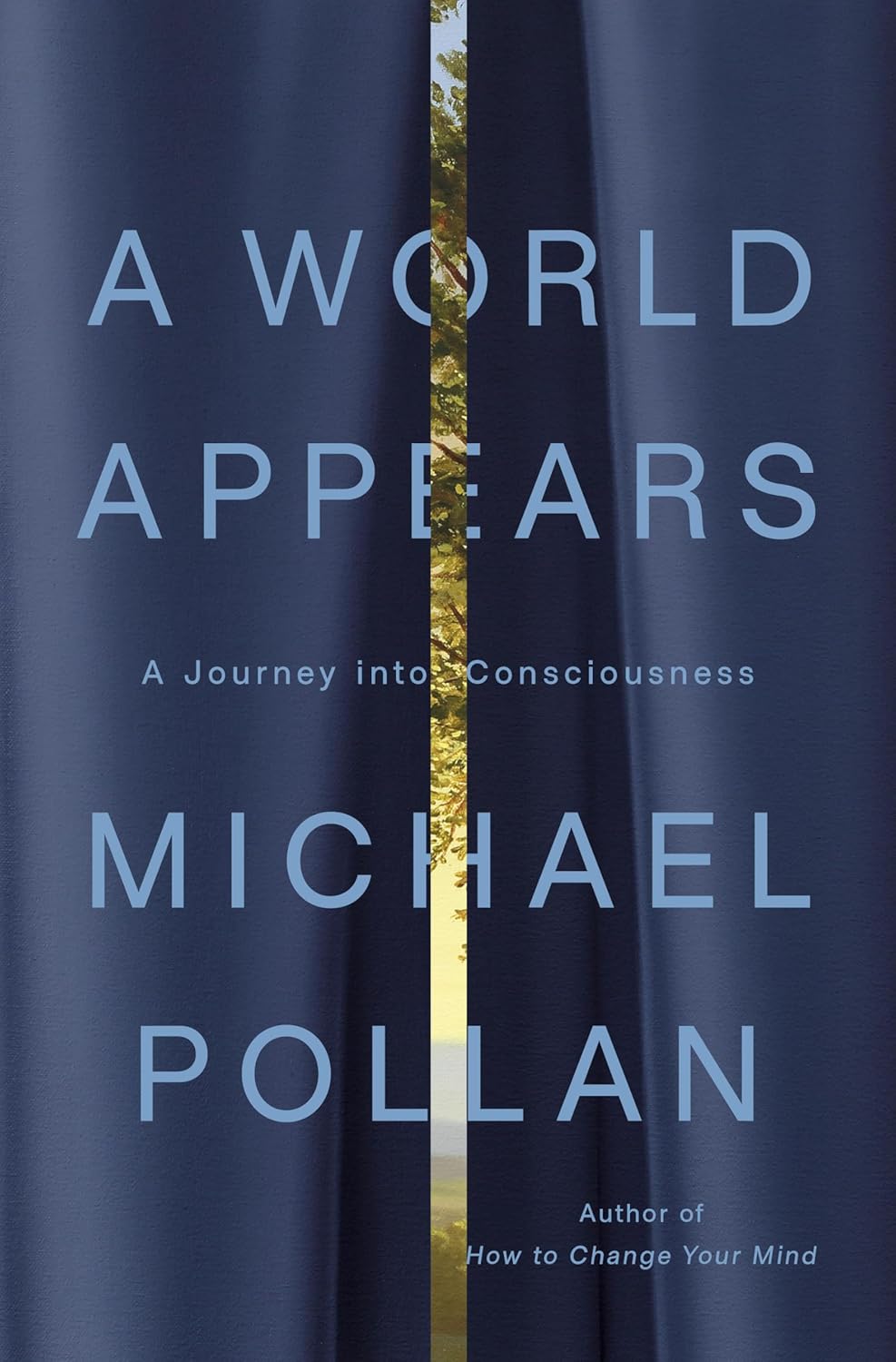
A decades-old bet about consciousness pulls Michael Pollan into a maze of neuroscience, philosophy, plants, psychedelics, AI, and meditation—until the biggest revelation isn’t a final theory, but a changed way of inhabiting experience itself.