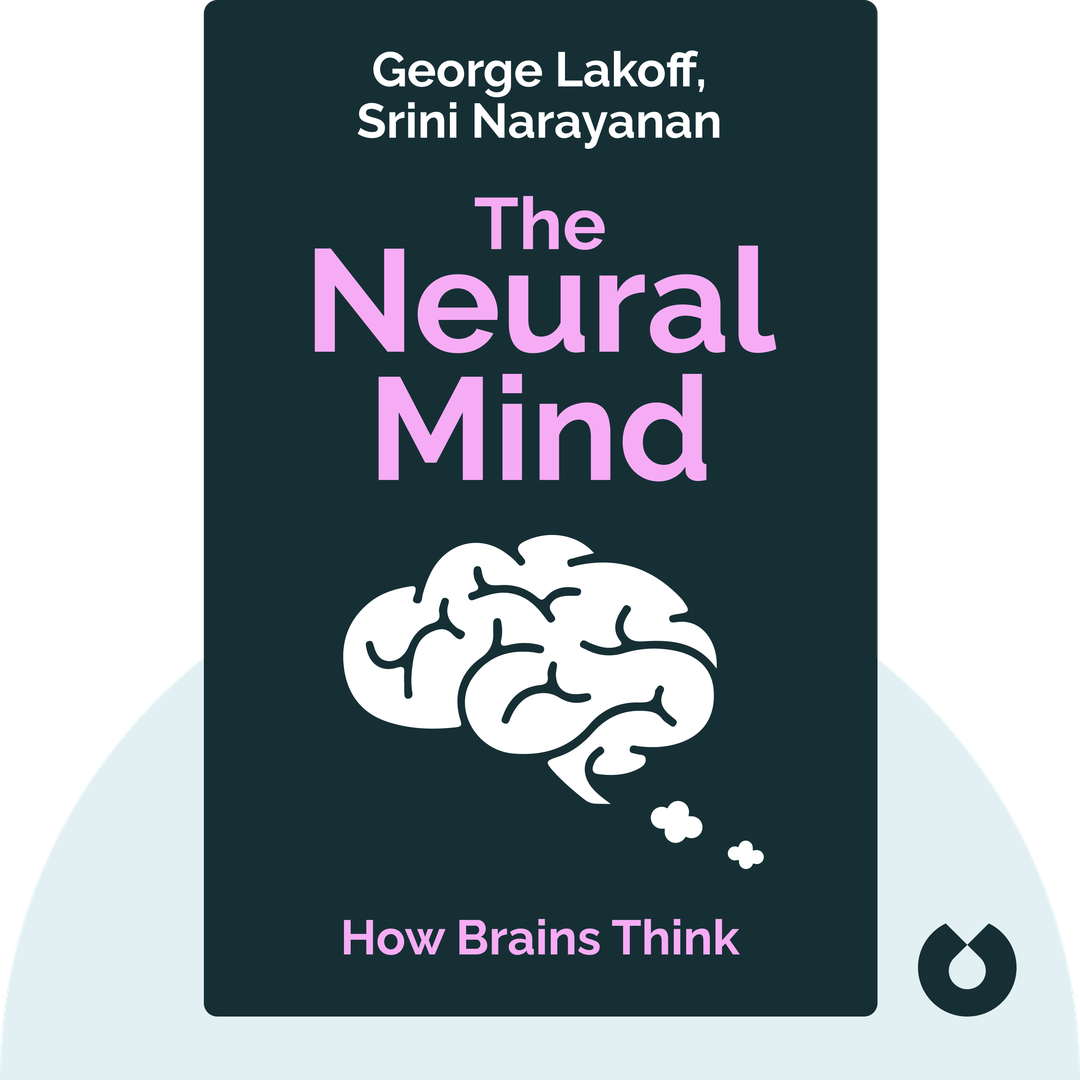
If You're Curious About These Questions...
You should listen to this audiobook
- Did you know that your most complex abstract thoughts are actually powered by the same neural circuits you use to move your muscles and sense the physical world?
- Have you ever wondered why we use physical language like "grasping" a concept or "reaching" a goal—and what this reveals about how your brain truly constructs meaning?
- What if the secret to mastering new skills and logic lies not in abstract study, but in understanding how your physical experiences shape your entire capacity to learn?
Listen to The Neural Mind — Free Audiobook
Loading player...
Key Takeaways from The Neural Mind
- Discover why the centuries-old mind-body divide is a neurobiological fiction, and how your most abstract thoughts actually live in the neural circuits used for movement and touch.
- Learn how hearing action words activates the exact same motor cortex regions in your brain as physically performing those movements, proving language and action share neural machinery.
- Understand how your brain borrows from physical experiences to process complex concepts, like using spatial navigation to understand time or physical temperature to judge emotional warmth.
- Find out how basic childhood movements create 'image schemas'—foundational physical patterns that serve as the neurological scaffolding for your entire capacity to think and reason.
- Explore how humanity's highest intellectual achievements, such as political democracy and moral justice, literally evolved from your brain's fundamental experiences of physical balance and containment.
The Neural Mind — Full Chapter Overview
Chapter 1: Recommendation
Chapter 2: The discovery that changed everything
Chapter 3: From breathing to the Bill of Rights
Chapter 4: The metaphor machine
Chapter 5: The simulation engine
Chapter 6: The AI looking-glass
The Neural Mind Summary & Overview
The Neural Mind (2025) presents a unified theory of human cognition that demonstrates how all abstract thinking emerges from the same neural circuits used for physical movement, perception, and bodily interaction with the world. Integrating decades of research from neuroscience, cognitive linguistics, and computational modeling, it demonstrates that metaphorical thinking is the foundation for how brains construct meaning.
Who Should Listen to The Neural Mind?
- Teachers, curriculum developers, and students who want to understand how embodied approaches can facilitate learning
- Curious minds fascinated by groundbreaking discoveries that challenge fundamental paradigms
- Anyone interested in how physical experiences shape language, logic, and learning capabilities
Books Similar to The Neural Mind
Readers who enjoyed this also liked these titles.
The Biological Mind
★ 4.4 / 5 • 162 ratingsHow Brain, Body, and Environment Collaborate to Make Us Who We Are
How to Create a Mind
★ 4.4 / 5 • 173 ratingsThe Secret of Human Thought Revealed
A Thousand Brains
★ 4.5 / 5 • 141 ratingsA New Theory of Intelligence
The Brain
★ 4.4 / 5 • 462 ratingsThe Story of You