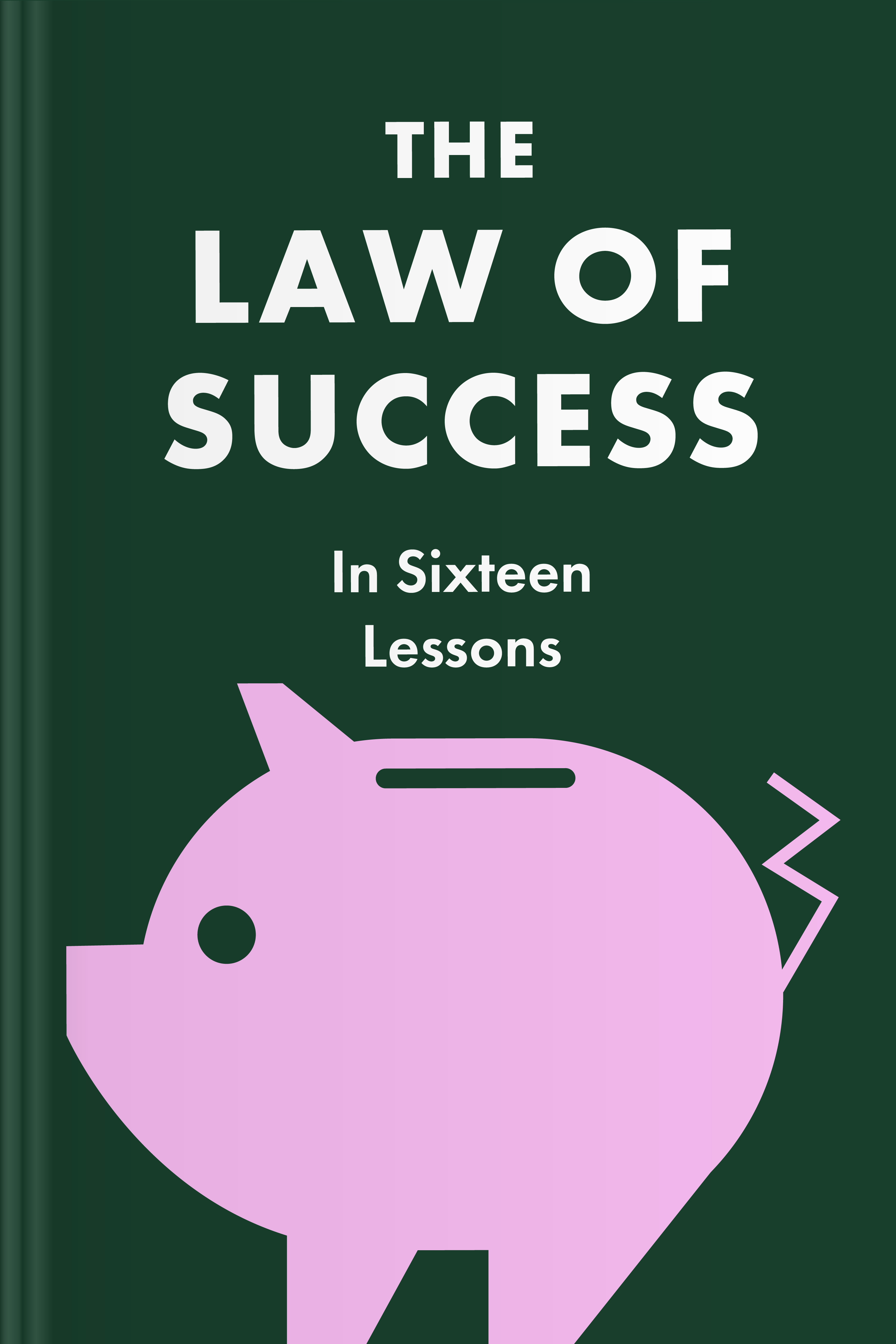
If You're Curious About These Questions...
You should listen to this audiobook
- Have you ever wondered why some people achieve their biggest dreams with ease while others stay scattered across too many priorities?
- What if the setbacks you’ve faced aren't signs of defeat, but actually the essential feedback required to build lasting self-confidence?
- Are you curious about how a specific combination of enthusiasm and self-control can transform your daily work into a magnet for career breakthroughs?
Listen to The Laws of Success in Sixteen Lessons — Free Audiobook
Key Takeaways from The Laws of Success in Sixteen Lessons
- Learn how choosing one definite aim prevents scattered energy and focuses your attention on what truly matters.
- Understand how to strengthen your self-confidence like a muscle by taking small, practical actions that overcome fear.
- Find out why establishing a steady saving habit is a crucial tool for protecting your freedom to pursue your primary goals without the pressure of debt.
- Master the twin leadership skills of initiative and imagination to take action without perfect conditions and to spot opportunities hidden within obstacles.
- Discover how to harness contagious enthusiasm to drive your projects, while using self-control to manage impulses and maintain balanced judgment.
The Laws of Success in Sixteen Lessons — Full Chapter Overview
Chapter 1: Recommendation
Chapter 2: One Clear Aim, One Steady Confidence
Chapter 3: Initiative and Imagination: The Leader’s Quiet Spark
Chapter 4: Enthusiasm with Self-Control: Energy that Lasts
Chapter 5: Loving the Work, Lightening the Room
Chapter 6: Accurate Thinking, Deep Focus, Shared Effort
Chapter 7: Failure as Feedback, Tolerance as Strength
Chapter 8: Bringing It Together, One Intentional Day at a Time
The Laws of Success in Sixteen Lessons Summary & Overview
This narration explores a compact set of success principles often associated with Napoleon Hill’s tradition: clarify one primary aim, strengthen self-confidence, practice saving and financial care, develop initiative and imagination, bring enthusiasm and self-control to daily work, build a pleasing personality through genuine warmth, and ground decisions in accurate facts and concentration.
It also makes room for real life: failure happens, sometimes repeatedly. Here, failure is treated as feedback rather than a final verdict. The closing message weaves the principles together into a supportive reminder that success tends to grow when intention, discipline, cooperation, and fair treatment of others are practiced consistently.
Who Should Listen to The Laws of Success in Sixteen Lessons?
- Listeners who want a calm, encouraging set of mindset and habit reminders for work, business, or personal goals—without hype.
- People who feel scattered by too many priorities and want help focusing on one clear aim at a time.
- Anyone rebuilding confidence after setbacks and looking for a steadier, more grounded way to think about success.
Books Similar to The Laws of Success in Sixteen Lessons
Readers who enjoyed this also liked these titles.
The 15 Most Powerful Principles for Wealth, Health, and Happiness

The Lost Writings
The secrets of 40 millionaires' wealth, revealed
The Secret to Freedom and Success