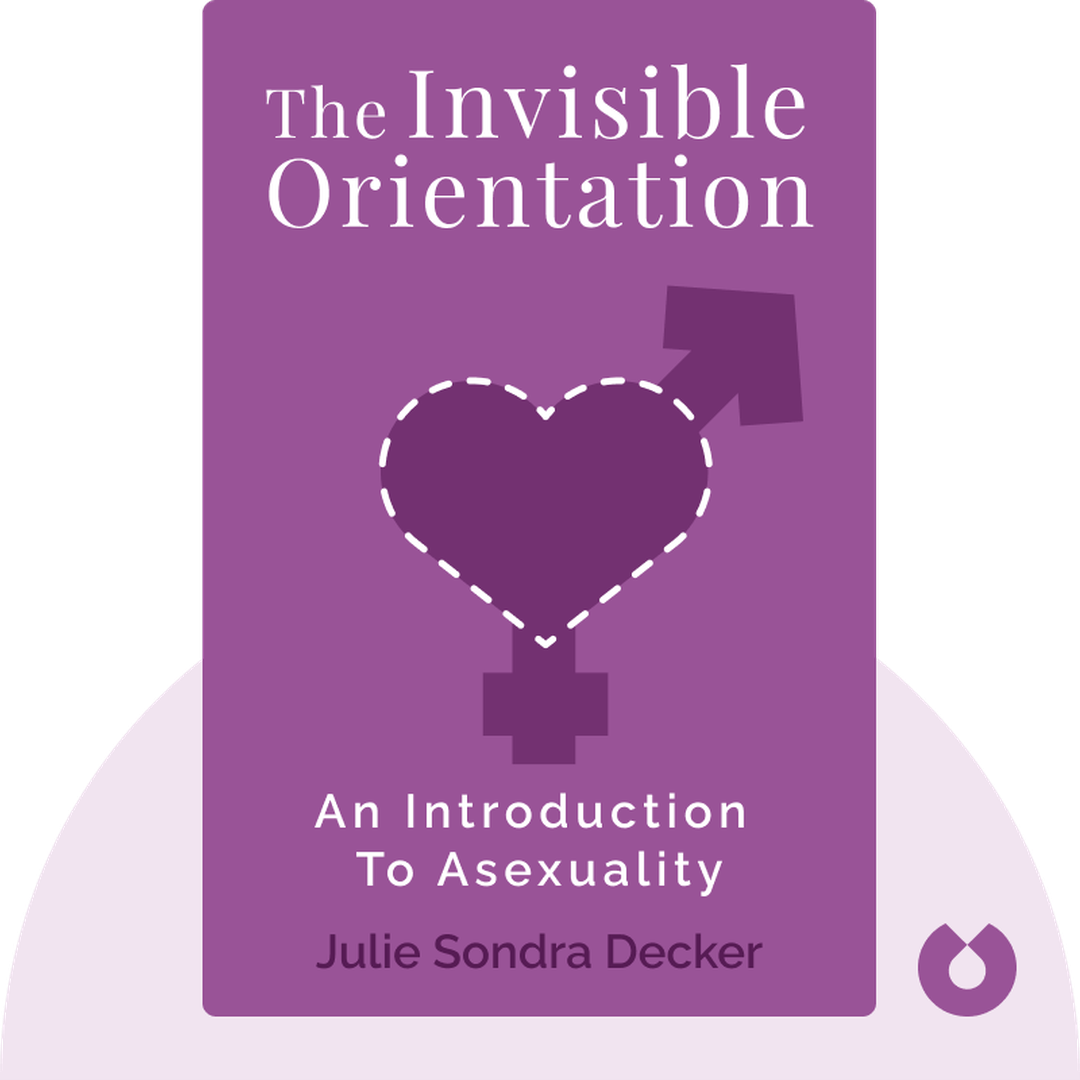
The Invisible Orientation
Start ListeningDownload Try free on iPhoneScan to start in 5 seconds
Categories:
If You're Curious About These Questions...
You should listen to this audiobook
- Have you ever wondered why a major sexual orientation remains almost entirely invisible in our sex-obsessed culture?
- Did you know that what society often labels as a “problem to be cured” is actually a natural and valid way of experiencing the world?
- Are you curious about how intimacy and relationships can thrive when they don’t follow the traditional rules of sexual attraction?
Listen to The Invisible Orientation — Free Audiobook
Loading player...
Key Takeaways from The Invisible Orientation
- Discover the crucial differences between sexual attraction, physical arousal, and sex drive to accurately understand what asexuality actually entails.
- Learn how deeply romantic, intimate, and fulfilling partnerships can be built entirely independent of sexual activity.
- Understand why a person's physical behavior does not dictate their orientation, meaning asexual individuals can still choose to engage in sex or masturbate.
- Uncover the harmful societal misconceptions that falsely label asexual people as frigid, immature, or simply going through a temporary phase.
- Recognize that asexuality is a valid, permanent sexual orientation rather than a physical or mental disorder requiring a medical diagnosis.
Learning Tools
Reinforce what you learned from The Invisible Orientation
Mind Map
The Invisible Orientation
Defining Asexuality+
Romance & Relationships+
Misconceptions & Stigma+
Medicalization & Pathologizing+
Social Pressure & Abuse+
Community & Advocacy+
Quiz — Test Your Understanding
Question 1 of 7
According to the book, how is asexuality primarily defined?
Question 2 of 7
Why might an asexual person engage in sexual activity or masturbation?
Question 3 of 7
How does the book describe the relationship between romance and asexuality?
Question 4 of 7
Which of the following is a common, condescending misconception society holds about asexual people?
Question 5 of 7
How do some medical professionals and individuals inappropriately react to someone identifying as asexual?
Question 6 of 7
What image has become a popular symbol of asexuality on the internet?
Question 7 of 7
According to the book's final actionable advice, what is the best way to support an asexual person who comes out to you?
The Invisible Orientation — Full Chapter Overview
- 1Recommendation
- 2Asexuality is a sexual orientation characterized by experiencing no sexual attraction to anyone at all.
- 3Strong relationships can be founded on romance, not sex.
- 4Many people don’t know asexuality exists, and others misunderstand the orientation.
- 5Asexual people are often pressed to prove their orientation isn’t caused by any mental or physical illness.
- 6It’s extremely stressful being labeled unnatural and having people try to 'fix' and change you personally.
- 7An increasing number of forums and organizations offer support and raise awareness about asexuality.
The Invisible Orientation Summary & Overview
The Invisible Orientation (2014) provides a helpful introduction to asexuality, including valuable information on both what it is and what it is not. You’ll also learn about how people experience this sexual orientation, the difficulties that come with it, and why there is no need to cure it, condescend to it or consider asexual people as being any different from you or me.
Who Should Listen to The Invisible Orientation?
- Anyone interested in how sexual attraction works
- Adults who are wondering about their sexual orientation
- Sociologists interested in the variety of human life
Books Similar to The Invisible Orientation
Readers who enjoyed this also liked these titles.