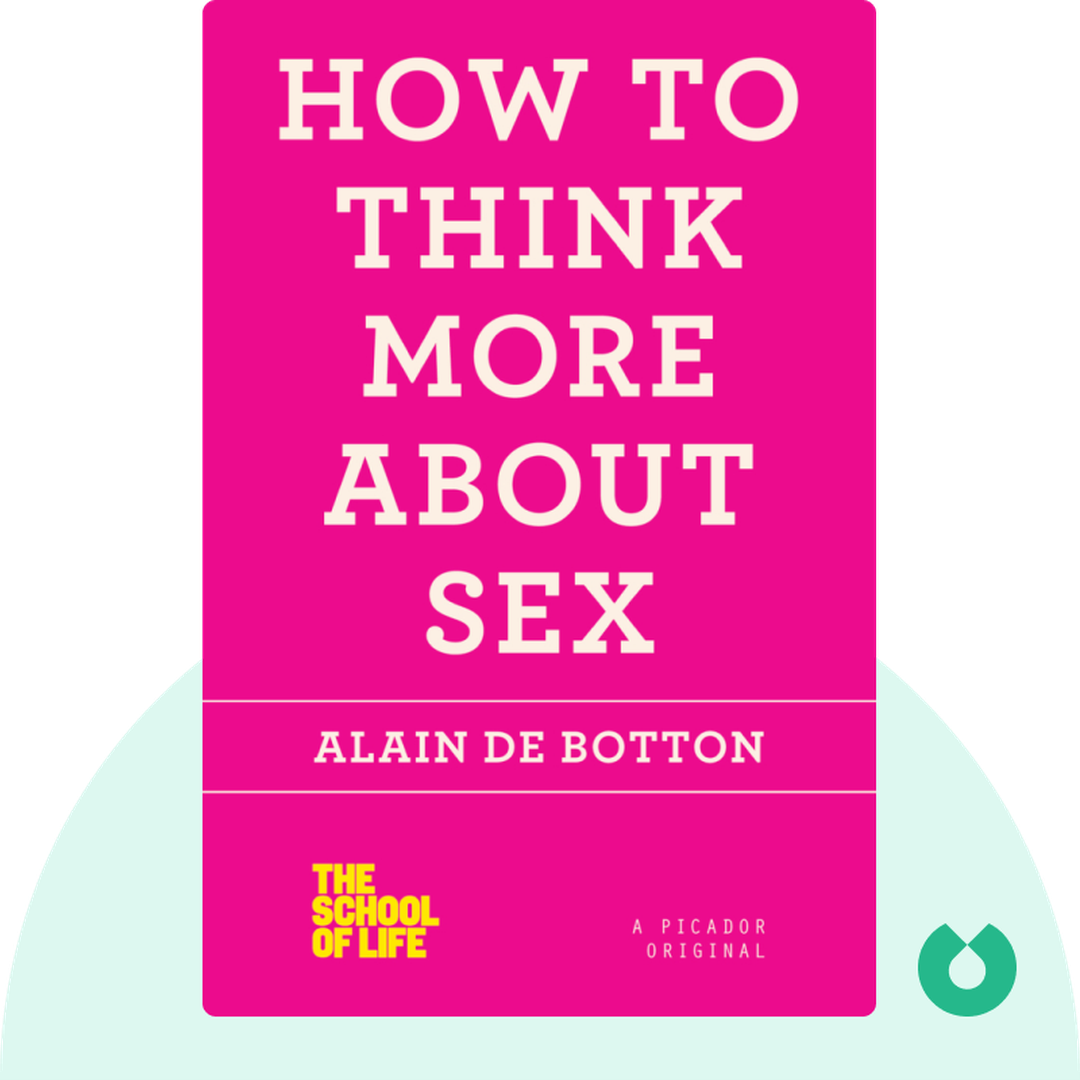
How to Think More About Sex
Start ListeningDownload Try free on iPhoneScan to start in 5 seconds
Categories:
If You're Curious About These Questions...
You should listen to this audiobook
- Have you ever wondered why sexual desire often feels so complicated and contradictory, even when we’re with the person we love?
- What if the secret to maintaining a vibrant sex life in a long-term relationship isn’t more spontaneity, but a completely different way of thinking?
- Did you know that our most 'unusual' or 'strange' desires might actually hold the key to understanding our deepest psychological needs?
Listen to How to Think More About Sex — Free Audiobook
Loading player...
Key Takeaways from How to Think More About Sex
- Understand why biological drives and evolutionary traits like physical symmetry only scratch the surface of the complexities behind human attraction and desire.
- Discover how growing up and conforming to societal expectations turn our bodies into taboos, creating a sense of isolation and shame around natural urges.
- Learn how sexual intimacy provides a rare, liberating escape from rigid social decorum, allowing us to safely reconcile our public personas with our private selves.
- Find out why the profound pleasure of partnered intimacy, such as a first kiss, stems from deep psychological acceptance rather than just physical nerve stimulation.
- Uncover how your childhood experiences and the unconscious mind secretly mold your adult desires, giving you the tools to navigate the emotional maze of modern sex.
Learning Tools
Reinforce what you learned from How to Think More About Sex
Mind Map
How to Think More About Sex
The Nature of Desire+
Sex and Society+
Navigating Intentions & Rejection+
Challenges of Long-Term Relationships+
Rekindling Passion+
Modern Sexual Dilemmas+
Quiz — Test Your Understanding
Question 1 of 10
According to the text, why does evolutionary biology fail to provide a complete picture of human sexual desire?
Question 2 of 10
How does the book describe the role of sex in relation to societal norms and personal isolation?
Question 3 of 10
Based on the psychological perspective presented in the text, why might an anxious person find a calm, simple painting or a highly focused partner attractive?
Question 4 of 10
How does Alain de Botton suggest we view sexual fetishes?
Question 5 of 10
The author compares sexual rejection to the weather in order to illustrate that:
Question 6 of 10
Why does casual, unguarded nudity in a long-term relationship often fail to trigger sexual arousal?
Question 7 of 10
What is the primary cause of the tension between domestic life and sex?
Question 8 of 10
In the context of long-term relationships, what does the 'incest taboo' refer to?
Question 9 of 10
How does the author suggest pornography could be improved to be less destructive?
Question 10 of 10
What is the book's perspective on the blame surrounding adultery?
How to Think More About Sex — Full Chapter Overview
- 1Recommendation
- 2Biology can explain attraction and why we have sex, but there’s much more to the story.
- 3Our sexual development pits us against social norms and can leave us feeling alone.
- 4Sex lets us escape social pressures and be ourselves.
- 5Our psychology ultimately decides who and what turns us on.
- 6Fetishes can offer windows into our inner lives.
- 7We should treat the need for love and the need for sex as equally legitimate.
- 8Rejection is like the weather; we shouldn’t take it personally.
- 9Long-term relationships don’t ensure frequent sex or freedom from rejection.
- 10Moving between everyday life and erotic life is no easy task.
- 11Whether we feel attracted to our partner depends on the perspective we adopt.
- 12We can change how we see our partner without leaving them.
- 13Pornography is a huge waste of time, though it might not be if it learned from religious art.
- 14Don’t judge infidelity too harshly, but still value fidelity.
- 15Final summary
How to Think More About Sex Summary & Overview
In How to Think More About Sex (2012), Alain de Botton dives into the strange and often uncomfortable world of sex. A nuanced reflection on the true meaning of sex and its place in our lives, these blinks are full of both insights into the psychology of desire and practical advice, such as how to maintain sexual interest within long-term relationships. Sex, de Botton ultimately concludes, will never be simple, but it can be enjoyable. All we need to do is think about it more.
Who Should Listen to How to Think More About Sex?
- Anyone who wants to understand their own sexual desires
- Fans of Freudian psychology and would-be philosophers of sex
- Anyone who’s ever felt sexually deprived or been stung by rejection
Books Similar to How to Think More About Sex
Readers who enjoyed this also liked these titles.