If You're Curious About These Questions...
You should listen to this audiobook
- Have you ever wondered why reaching your goals never seems to bring the lasting happiness you expected?
- What if the secret to peak motivation isn't looking at how far you have to go, but measuring your progress in a completely different direction?
- Did you know that most high-achievers are trapped in a mental cycle that drains their fulfillment, and do you know the simple shift to break free?
Listen to The Gap and the Gain — Cinematic Audio Edition
Loading player...
Key Takeaways from The Gap and the Gain
- Understand why happiness isn't something to be endlessly pursued, but a conscious choice you can make right now to boost your intrinsic motivation.
- Discover why high achievers perform better when they abandon the myth that misery fuels motivation, and instead focus on gratitude for their past progress.
- Learn how social media intentionally puts you in the 'GAP' by fostering constant comparison, manipulating your mental well-being to make you a better consumer.
- Master the practice of defining your own internal standards of success by creating a personalized list of values to confidently evaluate any new opportunity.
- Find out how living in the 'GAIN'—giving yourself credit for your progress rather than focusing on your shortcomings—can significantly improve your physical health and extend your lifespan.
Learning Tools
Reinforce what you learned from The Gap and the Gain
Mind Map
The Gap and the Gain
Core Philosophy+
Redefining Success+
Mind-Body Connection+
Tracking Progress+
The Nightly Routine+
Reframing Setbacks+
Quiz — Test Your Understanding
Question 1 of 7
According to the text, what is the fundamental flaw in the idea of 'the pursuit of happiness'?
Question 2 of 7
Why are social media platforms intentionally designed to put users in the 'GAP'?
Question 3 of 7
What did the study involving hotel cleaners demonstrate about the mind-body connection?
Question 4 of 7
According to the book, what is the correct way to measure your personal progress?
Question 5 of 7
How does writing down three wins for the next day before going to bed benefit you?
Question 6 of 7
What is 'psychological flexibility' as described in the context of Howard Getson losing $2 million?
Question 7 of 7
What actionable advice does the book offer when you experience a disappointment and life doesn't go your way?
The Gap and the Gain — Full Chapter Overview
- 1Recommendation
- 2Take control of your own happiness.
- 3Stop comparing yourself with others.
- 4How you perceive your life shapes how you live.
- 5Make sure to track your progress and celebrate your achievements.
- 6Use the final hour of the day to celebrate your wins and plan meaningful future achievements.
- 7You can turn any seemingly negative experience into a GAIN by reframing your interpretation of it.
The Gap and the Gain Summary & Overview
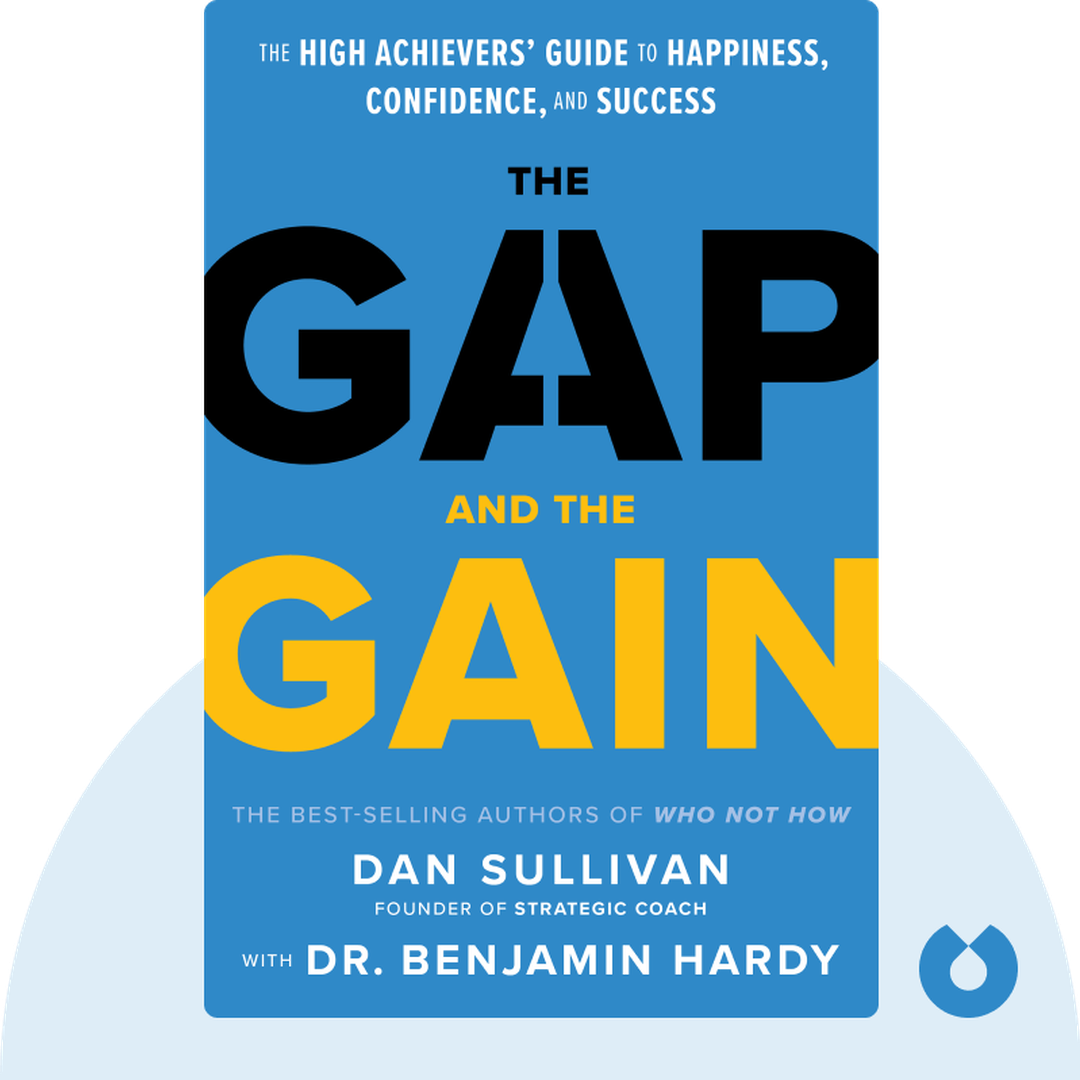
The Gap and the Gain (2021) is a guide to finding happiness and fulfillment inside yourself, instead of constantly hunting for external affirmation. By learning to define your own standards of success, and by measuring your achievement backward, you’ll appreciate how much progress you’ve actually made, and experience renewed motivation in every area of your life.
Who Should Listen to The Gap and the Gain?
- Undermotivated entrepreneurs
- Successful but unfulfilled business people
- Persistent ruminators who want to learn how to think positively
Books Similar to The Gap and the Gain
Readers who enjoyed this also liked these titles.