If You're Curious About These Questions...
You should listen to this audiobook
- Did you know that the first 60 seconds of a conversation can determine whether your audience listens to you or completely tunes you out?
- What if you could master a simple three-step method to ensure every message you deliver is clear, concise, and professional?
- Are you curious about the specific technique that top leaders use to get straight to the point without sounding rude or abrupt?
Listen to The First Minute — Cinematic Audio Edition
Loading player...
Key Takeaways from The First Minute
- Master the crucial first minute of any business interaction to instantly establish clarity, set the correct tone, and prevent costly misunderstandings.
- Discover how to effectively frame your communications within the first 15 seconds by clearly defining the context, your intent, and the core message.
- Understand the power of stating your intent up front to ensure your audience listens with the appropriate mindset and knows exactly what is expected of them.
- Learn to utilize the GPS method—Goal, Problem, Solution—to create structured summaries that prevent audience fatigue and keep discussions purposeful.
- Find out how to shift from a confusing detail-first approach to a concise, solution-first strategy that makes complex workplace topics accessible and highly actionable.
Learning Tools
Reinforce what you learned from The First Minute
Mind Map
The First Minute
Core Premise+
1. Framing+
2. Structured Summaries+
3. Timing & Validation+
4. Platform Applications+
Quiz — Test Your Understanding
Question 1 of 6
According to the book, what are the three key components of effective framing in communication?
Question 2 of 6
When framing a conversation, what is the specific purpose of stating your 'intent'?
Question 3 of 6
What does the GPS method stand for when creating structured summaries?
Question 4 of 6
What common workplace communication mistake does the structured summary aim to fix?
Question 5 of 6
After conducting a time check, what is the purpose of a 'validation checkpoint'?
Question 6 of 6
How should the framing components and structured summaries be applied when composing an effective business email?
The First Minute — Full Chapter Overview
- 1Recommendation
- 2Mastering the skill of framing for clearer communication
- 3Clear communication through structured summaries
- 4How to make your conversations timely, focused, and effective
- 5Clear communication across platforms in that first minute
The First Minute Summary & Overview
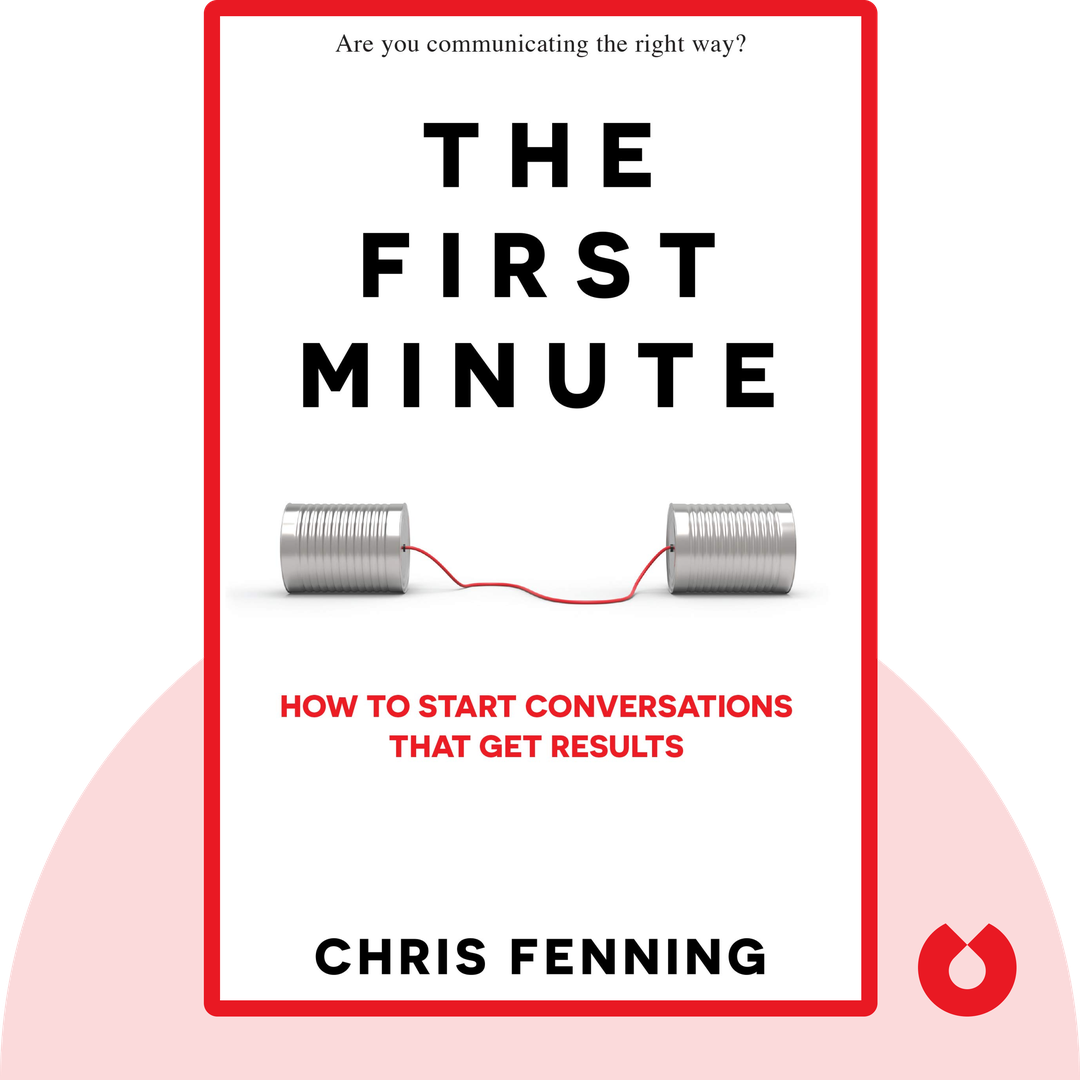
The First Minute (2020) explores effective techniques for mastering the crucial initial moments of communication, aiming to enhance the impact of spoken interactions. It offers strategies to organize thoughts and deliver messages with clarity and confidence, ensuring that speakers can engage and persuade their audiences from the start.
Who Should Listen to The First Minute?
- Business professionals seeking improved presentation skills
- Sales representatives working on more effective pitches
- Team leaders looking to boost meeting productivity
Books Similar to The First Minute
Readers who enjoyed this also liked these titles.