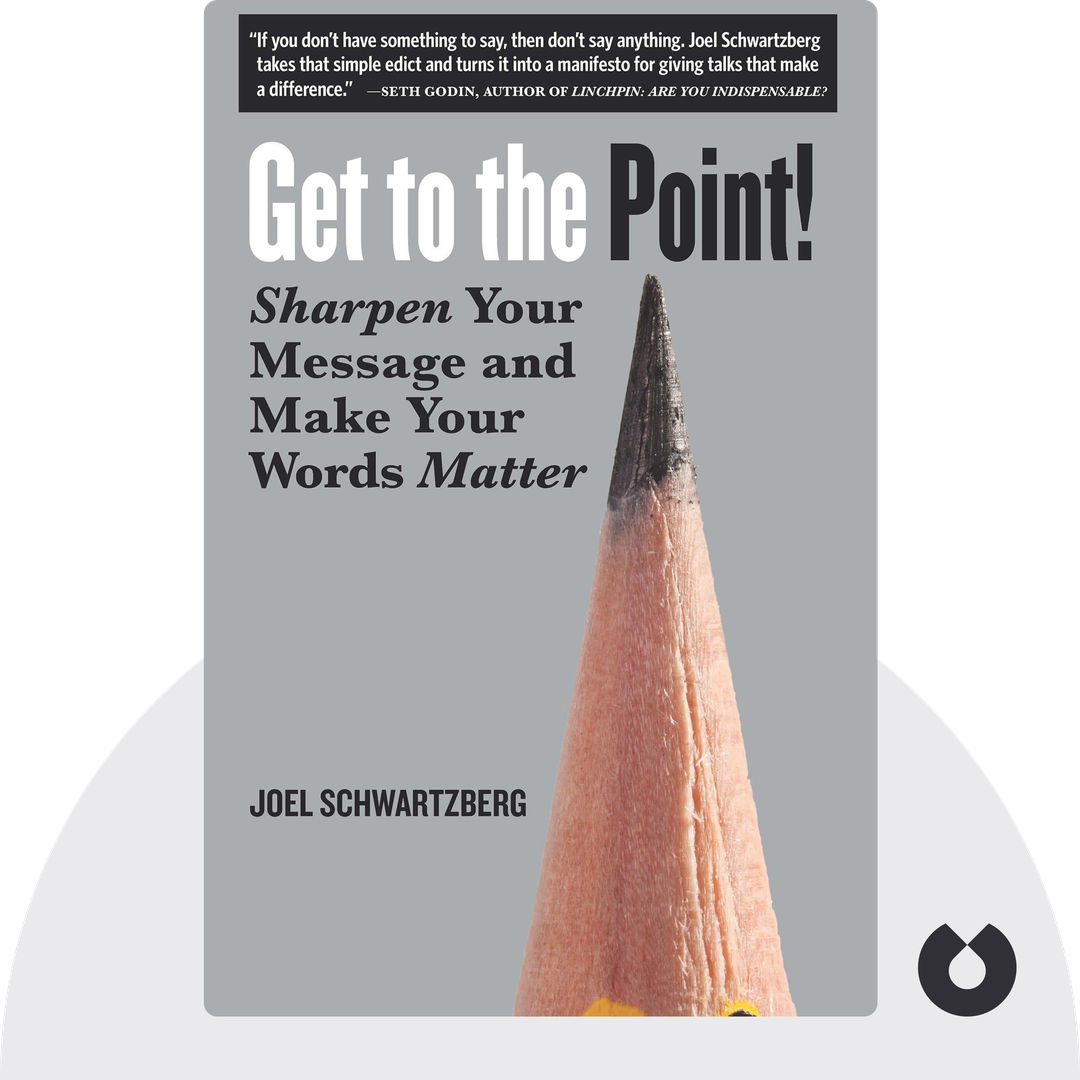
If You're Curious About These Questions...
You should listen to this audiobook
- Have you ever wondered why most people confuse having a 'topic' with having a 'point'—and how that mistake is sabotaging your impact?
- What's the secret 'litmus test' you can use to ensure your message is actually clear, concise, and compelling every single time?
- What if you could command any room and drive immediate action just by mastering one simple shift in how you structure your thoughts?
Listen to Get to the Point! — Free Audiobook
Loading player...
Key Takeaways from Get to the Point!
- Discover how to test the strength of your main point by using the 'I believe that…' framework and asking 'So what?' to eliminate superficial ideas.
- Understand the true metric of communication success: whether your audience can clearly articulate your central claim back to you in their own words.
- Learn how to actively 'sell' your message by maximizing the crucial first 30 seconds of your pitch and cutting out momentum-killing filler words.
- Master the art of confident delivery by eliminating 'uptalk' and using strong, conclusive tones to give your statements professional weight.
- Find out how to tailor your arguments to your audience's specific needs and increase engagement by removing physical or digital barriers.
Learning Tools
Reinforce what you learned from Get to the Point!
Mind Map
Get to the Point!
Start with the Point+
Sell the Point+
Strengthen the Point+
End with the Point+
Quiz — Test Your Understanding
Question 1 of 7
According to the author, what is a practical way to test the validity of your main point?
Question 2 of 7
How does the author recommend approaching the delivery of your point to avoid panic during a presentation?
Question 3 of 7
What is described as the ultimate yardstick for a successful presentation?
Question 4 of 7
Why does the author emphasize prioritizing the first 30 seconds of your presentation?
Question 5 of 7
Which common speaking habit does the author warn against because it makes a speaker sound unsure or unprofessional?
Question 6 of 7
How should you handle an audience member who attempts to bait you with a controversial side remark?
Question 7 of 7
What is the recommended way to conclude your presentation once you have successfully conveyed your message?
Get to the Point! — Full Chapter Overview
- 1Recommendation
- 2Begin with the point
- 3Sell your point
- 4Strengthen your point
- 5Close with the point
- 6Final summary
Get to the Point! Summary & Overview
Get to the Point! (2017) is your guide to delivering clear, concise, and compelling messages. It emphasizes the importance of identifying and sticking to a precise point, and arms you with tools and techniques to build confidence in your written and spoken communications.
Who Should Listen to Get to the Point!?
- Aspiring public speakers wanting to make a strong impact
- Business or nonprofit teams honing persuasive messaging
- Students looking to refine their presentation skills
Books Similar to Get to the Point!
Readers who enjoyed this also liked these titles.