If You're Curious About These Questions...
You should listen to this audiobook
- Did you know that the secret to truly impactful communication has almost nothing to do with what you say, and everything to do with how you shift your focus away from yourself?
- What if you could transform your team’s results and career trajectory simply by mastering the art of creating 'psychological safety' in every interaction?
- Have you ever wondered why some messages resonate instantly while others are ignored, and what specific shifts in your delivery could make you an unforgettable communicator?
Listen to Simply Said — Free Audiobook
Loading player...
Key Takeaways from Simply Said
- Discover why shifting your focus from your own expertise to your audience's core needs is the fundamental secret to making any message resonate.
- Master the art of impactful speaking by leveraging strategic pauses, purposeful movement, and confident body language to build genuine connections.
- Learn how to write for immediate results by placing your main point in the opening sentence and using clear headings to make your text easily scannable.
- Find out how to channel nervous energy into an engaging presentation by prioritizing authenticity and a conversational tone over rigid perfection.
- Understand the unique demands of digital communication by mastering email discipline, crafting actionable subject lines, and carefully revising for clear tone.
Learning Tools
Reinforce what you learned from Simply Said
Mind Map
Simply Said
Building Your Message+
Speaking with Impact+
Writing for Results+
Navigating Context+
Communication in Leadership+
Facilitating Success+
Quiz — Test Your Understanding
Question 1 of 8
What is the fundamental mental shift required for powerful communication?
Question 2 of 8
According to the text, what is a highly effective way to handle nervousness before a presentation?
Question 3 of 8
How should you structure the opening of an effective email or written message?
Question 4 of 8
Why does the author advise against using humor as a primary tool for engagement in group settings?
Question 5 of 8
When navigating a difficult conversation about performance issues, what should be your primary focus?
Question 6 of 8
How can leaders effectively create psychological safety within their teams?
Question 7 of 8
How can a leader use 'calculated vulnerability' to unlock group creativity during a brainstorming session?
Question 8 of 8
What role does the 'strategic pause' play in verbal communication?
Simply Said — Full Chapter Overview
- 1Recommendation
- 2Developing your message
- 3Speak with impact
- 4Writing for outcomes
- 5Navigating contexts
- 6Communication within leadership
- 7Enabling success
Simply Said Summary & Overview
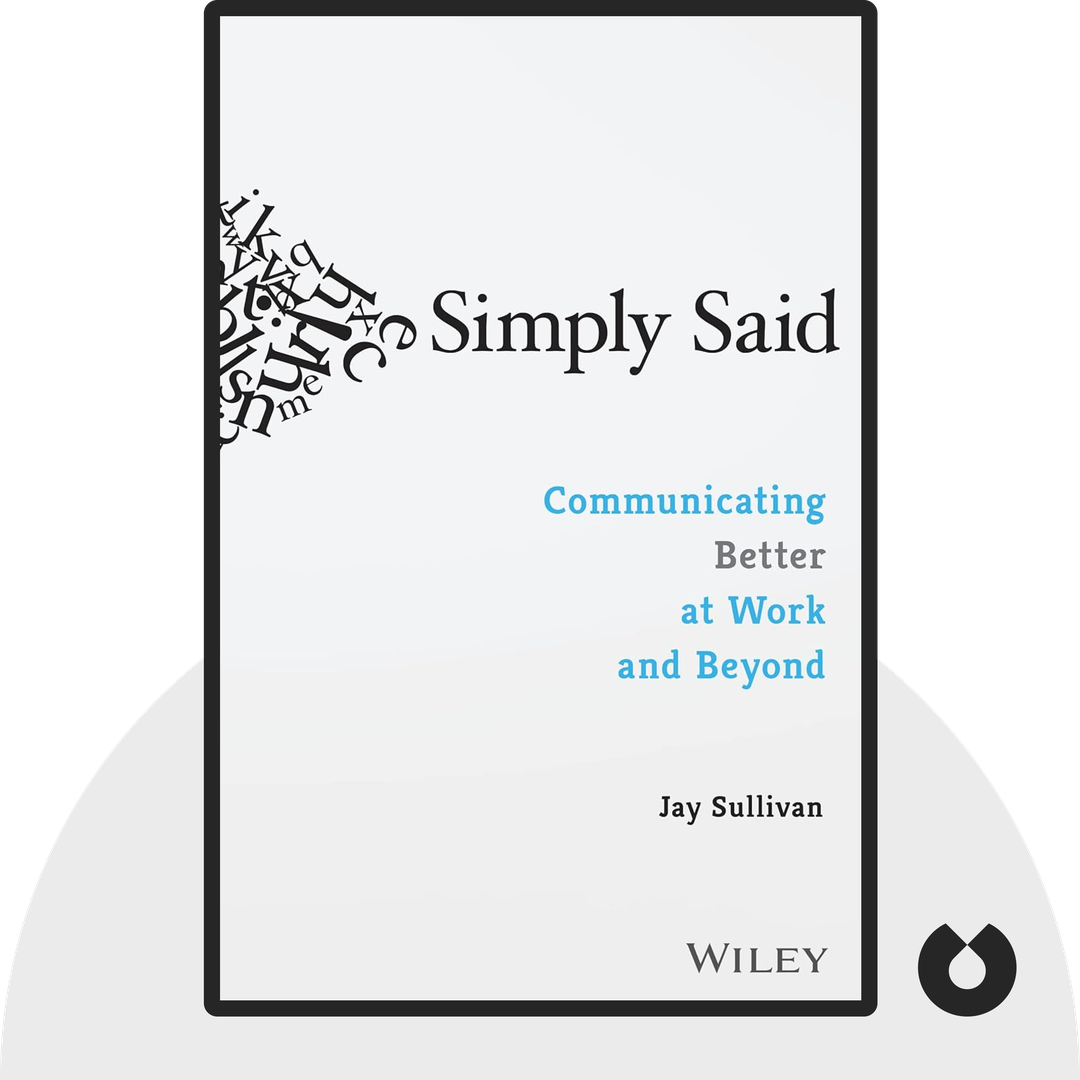
Simply Said (2016) presents powerful principles for crafting and delivering messages that resonate deeply with your audience, whether in writing, speaking, or leadership roles. The book reveals how focusing on audience impact, mastering delivery techniques, and creating psychologically safe communication environments can transform workplace interactions and drive meaningful results.
Who Should Listen to Simply Said?
- Professionals seeking to advance their careers through better communication skills
- Remote team leaders navigating the challenges of virtual communication
- Anyone struggling with difficult workplace conversations looking for better results
Books Similar to Simply Said
Readers who enjoyed this also liked these titles.