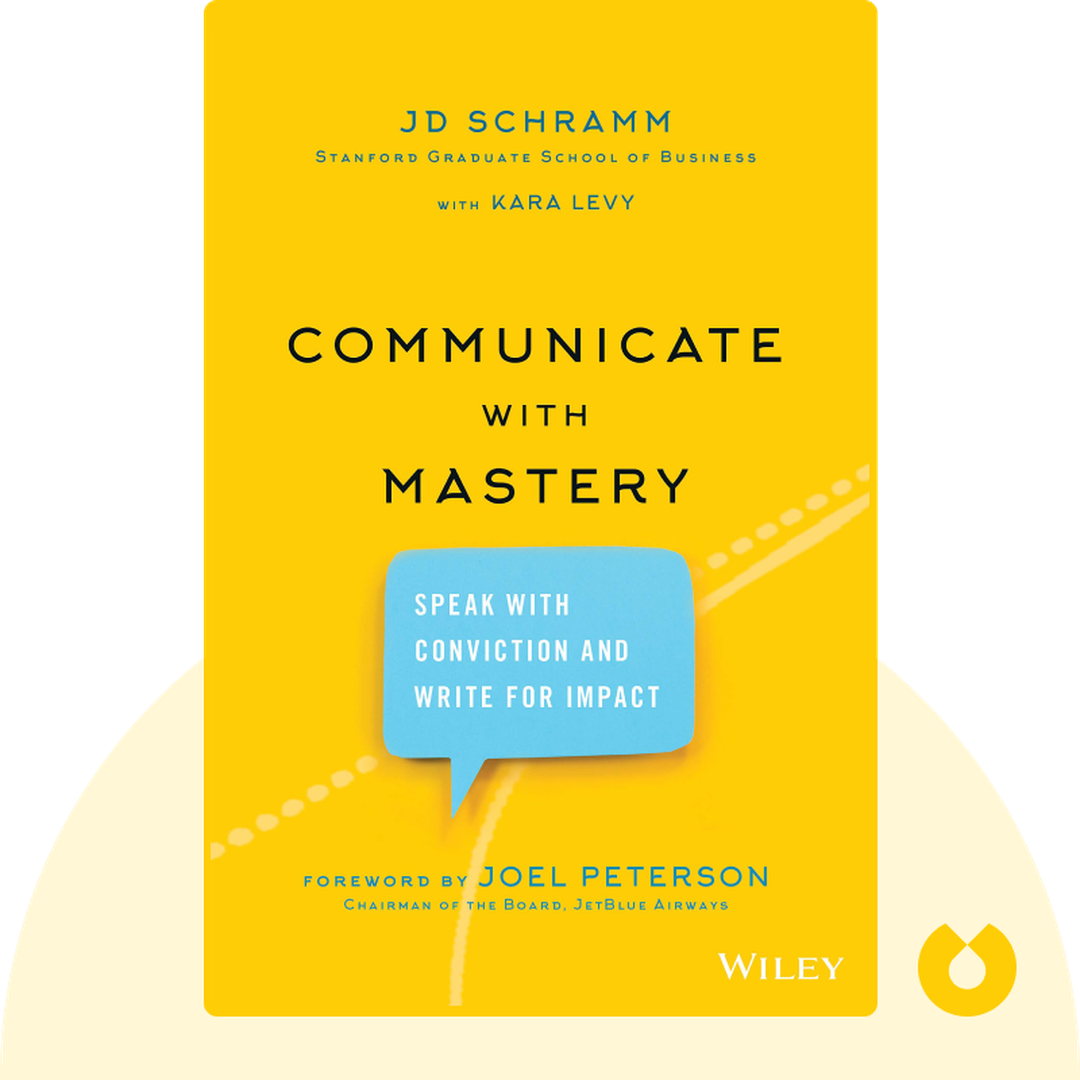
Communicate with Mastery
Start ListeningDownload Try free on iPhoneScan to start in 5 seconds
Categories:
If You're Curious About These Questions...
You should listen to this audiobook
- What’s the secret to delivering high-stakes messages that not only inform your team but actually inspire them to follow your lead?
- Have you ever wondered why some leaders command the room effortlessly while others struggle to be heard, even when they have better ideas?
- What if you could apply a proven framework to every email and presentation to ensure your communication always hits its mark with mastery?
Listen to Communicate with Mastery — Free Audiobook
Loading player...
Key Takeaways from Communicate with Mastery
- Discover how to use the AIM framework to analyze your primary and secondary audiences so you can tailor your message and achieve your desired impact.
- Learn three actionable strategies to manage public speaking anxiety, including how adopting power poses can drastically lower your stress hormones and boost confidence.
- Master the three distinct layers of communication—verbal, vocal, and visual—and understand why your body language and tone are just as crucial as the words you choose.
- Apply the ABCs of business writing—Active, Brief, and Clear—by replacing weak passive phrases with power verbs to make your documents energetic and easy to understand.
- Find out how to craft impactful document headlines using the 'What? So what? Now what?' method to synthesize information and drive your readers to take action.
Learning Tools
Reinforce what you learned from Communicate with Mastery
Mind Map
Communicate with Mastery
Audience & Intent (AIM Framework)+
Managing Anxiety & Delivery+
Business Writing (The ABCs)+
Crafting a Pitch+
Storytelling+
Mastering Q&A+
Identity & Authenticity+
Working with a Coach+
Quiz — Test Your Understanding
Question 1 of 8
What important lesson about audience analysis can be learned from Mitt Romney's 2012 presidential campaign?
Question 2 of 8
According to the text, which of the following is a recommended strategy for managing public speaking anxiety?
Question 3 of 8
What does the 'ABC' acronym stand for in the context of strong business writing?
Question 4 of 8
To master writing headlines for business documents, the author suggests synthesizing the piece by answering which three questions?
Question 5 of 8
When pitching a solution to investors, how did Steve Jobs' introduction of the iPod Nano demonstrate effective communication?
Question 6 of 8
What is the fundamental requirement for crafting a powerful story, according to the text?
Question 7 of 8
How did Hillary Clinton effectively handle a difficult question about abortion during her 2000 US Senate debate?
Question 8 of 8
If a leader struggles with expressing themselves clearly in a non-native language, what is one of the primary techniques the author recommends?
Communicate with Mastery — Full Chapter Overview
- 1Recommendation
- 2To communicate effectively, start by understanding your audience.
- 3Speak with conviction by managing anxiety and mastering verbal, vocal, and visual communication.
- 4Make your writing active, brief, and clear to maximize impact.
- 5Build a pitch by focusing on the problem, your solution, the market, and your business.
- 6Use storytelling to connect with your audience and make your message memorable.
- 7Connect more powerfully with your audience by making time for Q&A.
- 8Your identity shapes your perspectives, leadership style, and goals.
- 9When hiring a coach, seek recommendations, stay open-minded, and be ready to take risks.
- 10Final summary
Communicate with Mastery Summary & Overview
Communicate with Mastery (2020) is a practical guide for senior leaders wishing to improve their communication skills. It provides actionable advice and useful strategies to become an influential speaker and a compelling writer.
Who Should Listen to Communicate with Mastery?
- Business leaders
- Entrepreneurs
- People who want to improve their communication skills
Books Similar to Communicate with Mastery
Readers who enjoyed this also liked these titles.