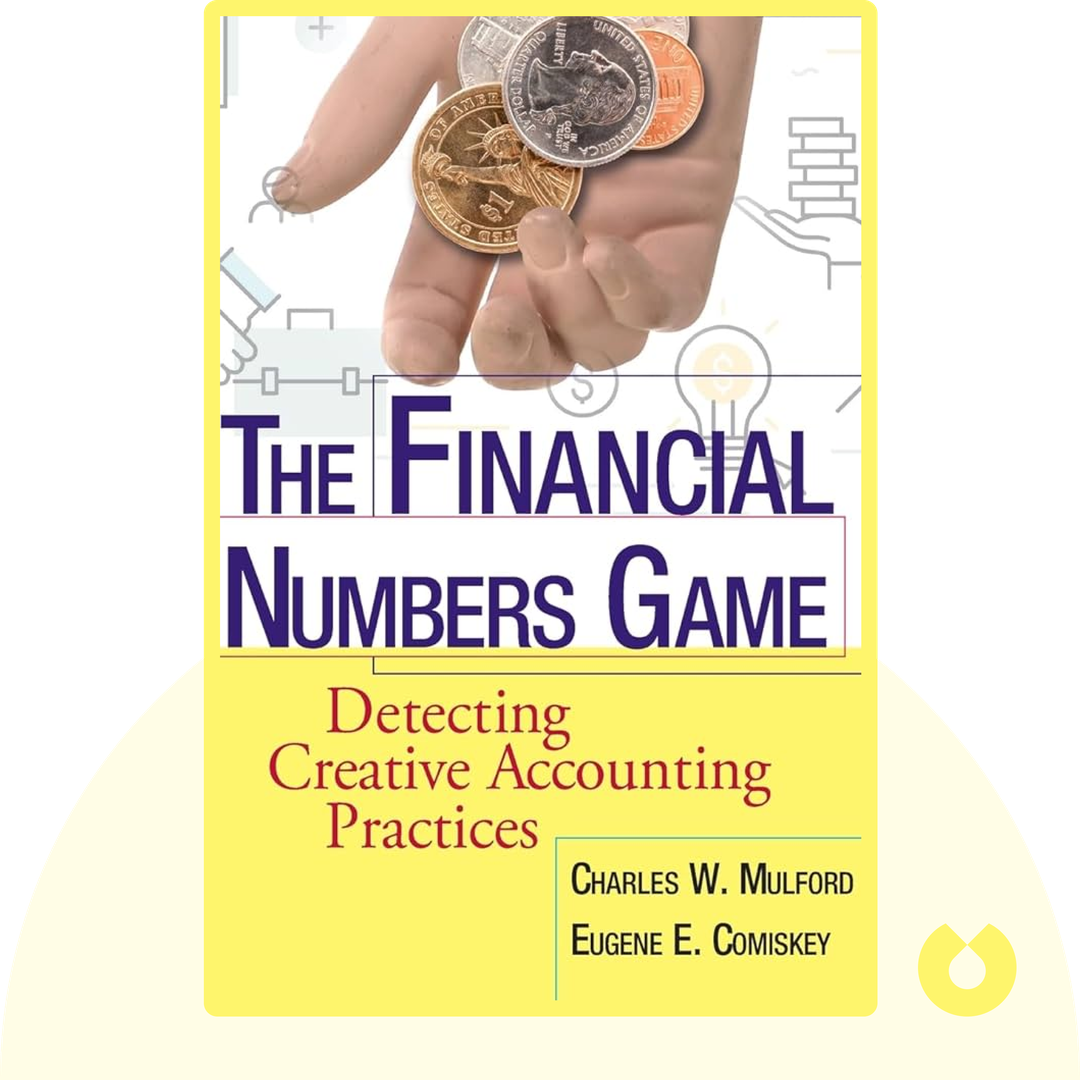
The Financial Numbers Game
Start ListeningDownload Try free on iPhoneScan to start in 5 seconds
Categories:
If You're Curious About These Questions...
You should listen to this audiobook
- Did you know that a company’s impressive earnings report could actually be a carefully constructed illusion designed to mask underlying financial trouble?
- Have you ever wondered how some corporations manage to consistently hit their targets using 'accounting magic' that stays just within the legal limits?
- What if you could identify the subtle red flags in financial statements that reveal the true story behind the numbers before the rest of the market catches on?
Listen to The Financial Numbers Game — Free Audiobook
Loading player...
Key Takeaways from The Financial Numbers Game
- Discover why adopting a detective's mindset and scrutinizing accounting footnotes is essential for uncovering the true financial health of a company.
- Understand the mechanics of aggressive revenue recognition and earnings management, which are deceptive tactics companies use to artificially inflate their value.
- Learn to identify manipulative accounting practices like 'big bath' charges, where businesses intentionally inflate current expenses to artificially boost future profits.
- Master the skill of spotting revenue manipulation by comparing a company's reported revenue growth against its receivables to catch hidden discrepancies.
- Find out how to protect your investments and drive corporate transparency by leveraging your shareholder voting power to advocate for stricter audit committees.
Learning Tools
Reinforce what you learned from The Financial Numbers Game
Mind Map
The Financial Numbers Game
The Illusion of Financial Statements+
The SEC's Regulatory Battle+
Decoding Corporate Accounting Tricks+
Mastering Financial Detective Work+
Quiz — Test Your Understanding
Question 1 of 6
What is a primary characteristic of aggressive revenue recognition as described in the text?
Question 2 of 6
According to the text, what is the purpose of a 'big bath' charge?
Question 3 of 6
Which of the following scenarios is highlighted as a potential red flag for revenue manipulation?
Question 4 of 6
Why should investors be cautious when evaluating a company's pro-forma information?
Question 5 of 6
What are the 'three Cs' of accounting policies that investors should look for in a company?
Question 6 of 6
Which metric does the text identify as 'hard-to-fake' and recommend investors focus on to avoid financial illusions?
The Financial Numbers Game — Full Chapter Overview
- 1Recommendation
- 2Unmasking the illusions within financial statements
- 3The SEC’s continuing battle against financial trickery
- 4Decoding the monetary maze of corporate accounting
- 5Mastering the craft of financial detective work
The Financial Numbers Game Summary & Overview
The Financial Numbers Game (2002) unveils the world of creative accounting and the intricate strategies companies use to manipulate their financial statements. Dive deep into the realm of financial trickery and gain the tools to scrutinize and understand the true story behind the numbers. Arm yourself with knowledge and navigate the complex financial landscape with confidence.
Who Should Listen to The Financial Numbers Game?
- Aspiring financial analysts seeking in-depth understanding in their field
- Accounting professionals honing their skills
- MBA students seeking better understanding of finance
Books Similar to The Financial Numbers Game
Readers who enjoyed this also liked these titles.