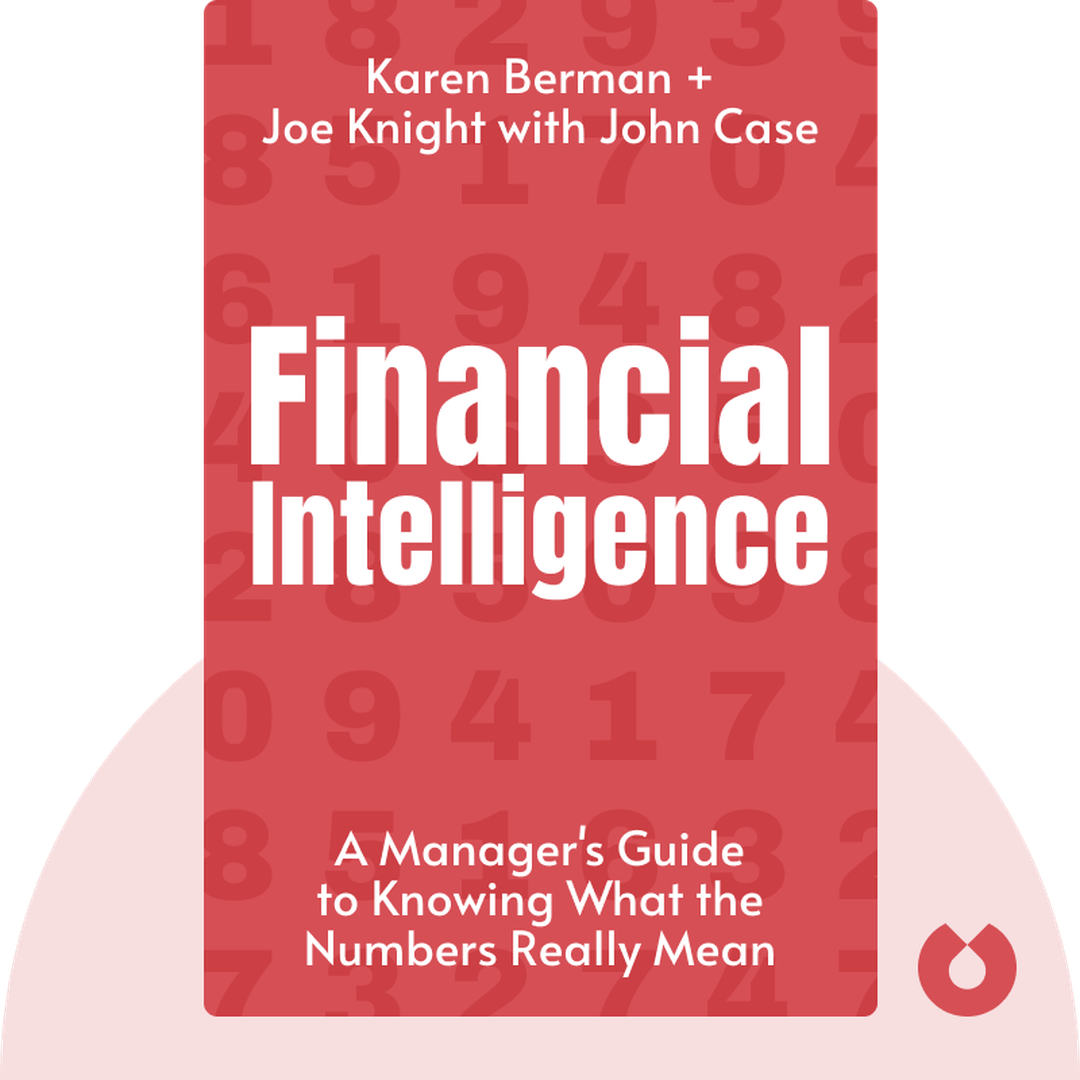
Financial Intelligence
Start ListeningDownload Try free on iPhoneScan to start in 5 seconds
Categories:
If You're Curious About These Questions...
You should listen to this audiobook
- Did you know that the numbers on a financial statement aren't always cold, hard facts, but actually involve a surprising amount of "art" and estimation?
- Have you ever wondered how a company can show a massive profit on paper and yet still go completely broke?
- What if you could look past the jargon of an income statement to uncover the hidden story of how your business is actually performing?
Listen to Financial Intelligence — Cinematic Audio Edition
Loading player...
Key Takeaways from Financial Intelligence
- Discover why a foundational understanding of accounting is crucial for non-financial professionals to make intelligent, numbers-based corporate decisions.
- Master the art of reading an income statement line by line to uncover vital insights into a company's operational efficiency and overall financial health.
- Find out why you must scan the fine print in financial footnotes to spot hidden red flags like lawsuits, accounting changes, and struggling business units.
- Understand the critical difference between gross profit and operating profit to accurately evaluate both production efficiency and total business model profitability.
- Recognize that financial numbers are not cold, hard facts, but rather estimates and assumptions shaped by a company's specific revenue recognition rules.
Learning Tools
Reinforce what you learned from Financial Intelligence
Mind Map
Financial Intelligence
Value of Financial Literacy+
Income Statement Overview+
Decoding Line Items+
Advanced Analysis+
Core Principle+
Quiz — Test Your Understanding
Question 1 of 6
What is the primary function of an income statement according to the text?
Question 2 of 6
How does operating profit differ from gross profit on an income statement?
Question 3 of 6
What does the term 'big bath accounting' refer to in the context of financial statements?
Question 4 of 6
According to the accounting rules mentioned in the text, when is a company typically allowed to record earned revenue on its income statement?
Question 5 of 6
Why is it important to scan the footnotes of an income statement?
Question 6 of 6
What is the 'one big rule' of reading income statement sheets highlighted at the end of the text?
Financial Intelligence — Full Chapter Overview
- 1Recommendation
- 2What exactly is an income statement?
- 3Decode your income statement
- 4Take your analysis to the next level
- 5Final summary
Financial Intelligence Summary & Overview
Financial Intelligence (2006) is an indispensable guide for managers seeking to interpret financial data. It’s known to be one of the clearest and most practical resources for decision makers without a background in finance.
Who Should Listen to Financial Intelligence?
- Managers who need to make numbers-based decisions
- Entrepreneurs who want to make the numbers work for them
- Anyone who’s ever stared in confusion at an income statement
Books Similar to Financial Intelligence
Readers who enjoyed this also liked these titles.