If You're Curious About These Questions...
You should listen to this audiobook
- Have you ever wondered why it’s easier than ever to gain power today, yet harder than ever to actually use it or keep it?
- Did you know that the traditional 'fortresses' of power are being toppled by small, agile players, and do you know what this shift means for the future of global stability?
- Are you curious about how a world where power is spread among everyone might actually be leading us toward a state of global paralysis?
Listen to The End of Power — Free Audiobook
Loading player...
Key Takeaways from The End of Power
- Understand why traditional barriers to power—such as military arsenals, capital, and brand recognition—are rapidly weakening, leaving once-untouchable leaders vulnerable to sudden downfall.
- Discover how a global increase in living standards, wealth, and literacy has empowered everyday citizens, making them far more difficult for authorities to exploit or control.
- Recognize why an unprecedented abundance of choices in modern society creates new dilemmas for leaders, making it nearly impossible to coerce loyalty or dictate consumer and voter behavior.
- Learn how cheaper travel and instant communication allow people, money, and ideas to cross borders effortlessly, giving citizens the ultimate power to 'vote with their feet.'
- Find out how the rise of the global middle class is driving a worldwide spread of liberal values, causing age-old conservative institutions to be actively questioned and upended.
Learning Tools
Reinforce what you learned from The End of Power
Mind Map
The End of Power
The Nature of Power Decay+
Drivers of Decay (The Three Revolutions)+
Impact on Society's Sectors+
Dangers of Power Decay+
How to Respond and Shield from Harm+
Quiz — Test Your Understanding
Question 1 of 10
According to the book, what is the fundamental transformation happening to power in the modern world?
Question 2 of 10
How has the dramatic increase in global wealth, education, and life expectancy affected the dynamic between leaders and citizens?
Question 3 of 10
In the context of modern mobility, how does the current era differ from the Cold War era (e.g., East Germany)?
Question 4 of 10
What has been the statistical trend regarding asymmetrical warfare between 1950 and 1998 compared to the 19th century?
Question 5 of 10
Why are 'micropowers' (such as insurgencies or non-state actors) becoming more capable of challenging traditional militaries?
Question 6 of 10
How has the decay of power altered the business landscape for small companies competing against large corporations?
Question 7 of 10
What is one of the major negative consequences or dangers of the decay of power mentioned in the book?
Question 8 of 10
According to the author, how should we adapt our political parties to shield ourselves from the harms caused by the end of power?
Question 9 of 10
When analyzing global power shifts, how does the book reframe the narrative of 'China's rise to power' compared to the United States?
Question 10 of 10
What does the historian Jacob Burckhardt's concept of 'terrible simplifiers' refer to in the context of the book?
The End of Power — Full Chapter Overview
- 1Recommendation
- 2Power is collapsing on all fronts.
- 3The more we have, the harder it is to control it all.
- 4In today’s world, people enjoy unprecedented and ungovernable mobility.
- 5As values shift, anything that can be challenged will be.
- 6Political authority is being divided and shared more than ever.
- 7Even the weak now wield real power in international affairs.
- 8Personal and corporate fortunes are swinging wildly.
- 9Small congregations, nonprofits and media outlets confront the giants in their realms.
- 10While weakening power brings gains, it also creates serious dangers.
- 11Getting involved, decoding power, and rejecting easy slogans can protect us from the fallout of power’s end.
The End of Power Summary & Overview
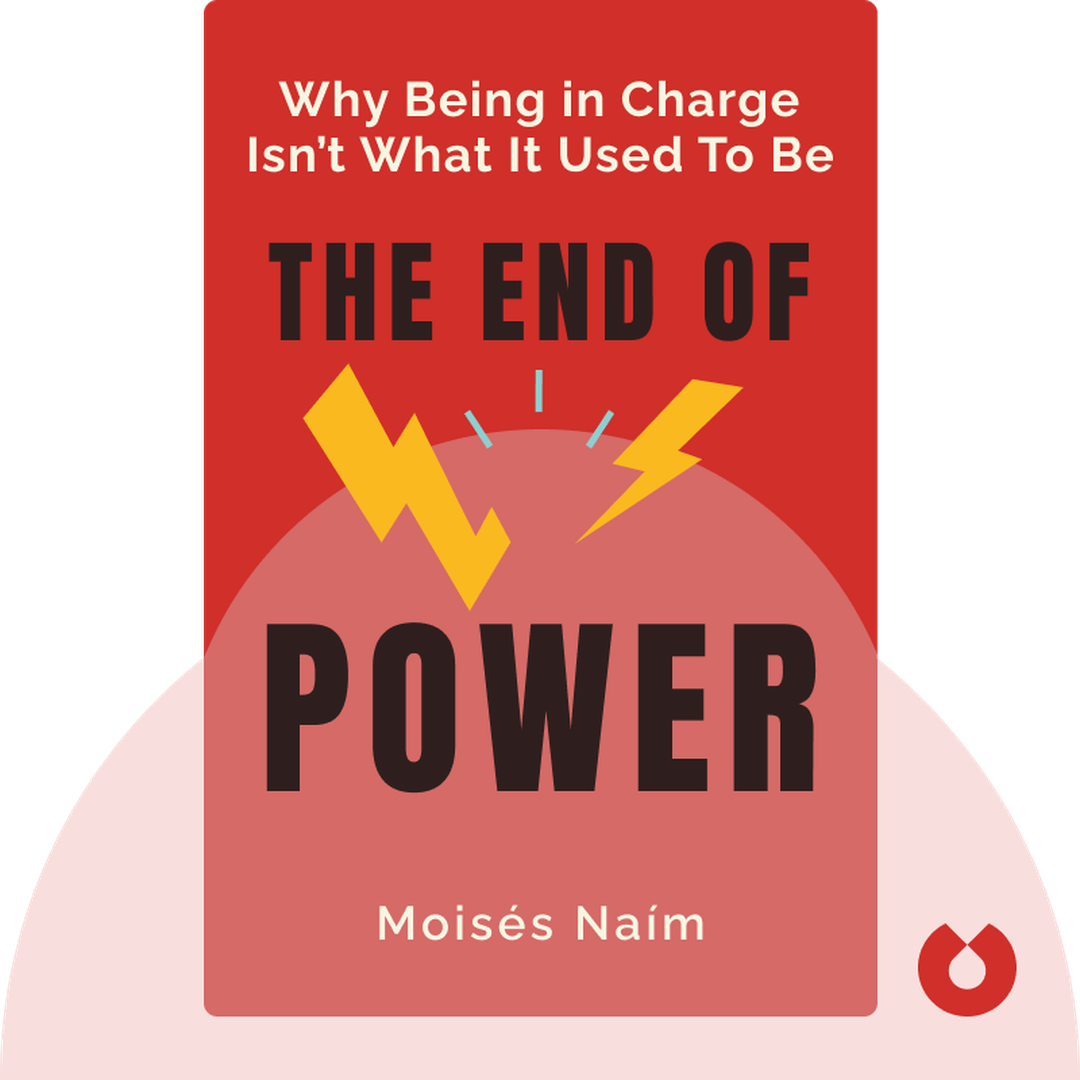
The End of Power makes the case for how advances changes in technology and society have caused the old fortresses of power to crumble. We now face a brand new paradigm of power, one that isn’t hoarded by an elite few, but rather split amongst us all. But what does that mean for society and government?
Who Should Listen to The End of Power?
- Anyone interested in foreign policy
- Anyone interested in culture and social phenomena
- Anyone interested in political science
Books Similar to The End of Power
Readers who enjoyed this also liked these titles.