If You're Curious About These Questions...
You should listen to this audiobook
- Have you ever wondered why mainstream media often follows a uniform narrative, and whose interests are truly being served behind the headlines?
- Did you know that the very institutions meant to uphold democracy might actually be designed to 'manufacture' your consent?
- Are you curious about the hidden mechanisms that allow corporate power and government policy to shape your life without you ever realizing it?
Listen to Understanding Power — Cinematic Audio Edition
Loading player...
Key Takeaways from Understanding Power
- Discover how public activism actively limits government power, forcing leaders to shift from direct military interventions to covert operations.
- Understand the real motivation behind government secrecy, which is frequently used to prevent domestic backlash rather than to protect national security.
- Learn how leaders use the age-old tactic of manufacturing fear and shrouding power in mystery to keep populations obedient and compliant.
- Find out why educational institutions prioritize punctuality and rule-following over intellectual curiosity to produce a controllable workforce.
- Explore how universities protect external funding interests by shaping student culture and intentionally dividing academic disciplines to prevent critical questioning.
Learning Tools
Reinforce what you learned from Understanding Power
Mind Map
Understanding Power
Activism & Public Influence+
Educational Institutions+
The Role of Poverty+
Social Policy & Mass Incarceration+
Citizen Responsibility+
Quiz — Test Your Understanding
Question 1 of 6
According to the text, why did President Reagan use covert operations in Guatemala instead of direct military action like President Kennedy did in Vietnam?
Question 2 of 6
What is the primary reason governments often classify documents and maintain secrecy, according to the text?
Question 3 of 6
How do educational institutions, particularly universities, protect the interests of their funding bodies?
Question 4 of 6
Why did the US government cancel aid to Nicaragua in 1981 after the Sandinista government began improving its society?
Question 5 of 6
What factor contributed significantly to the inability of working-class immigrants and internal migrants to escape poverty in the US after World War II?
Question 6 of 6
According to the text, what is a hidden economic function of the high incarceration rates driven by social policies like the 'war on drugs'?
Understanding Power — Full Chapter Overview
- 1Recommendation
- 2The power of the public
- 3The power of academic institutions
- 4The power within poverty
- 5The power behind social policy
Understanding Power Summary & Overview
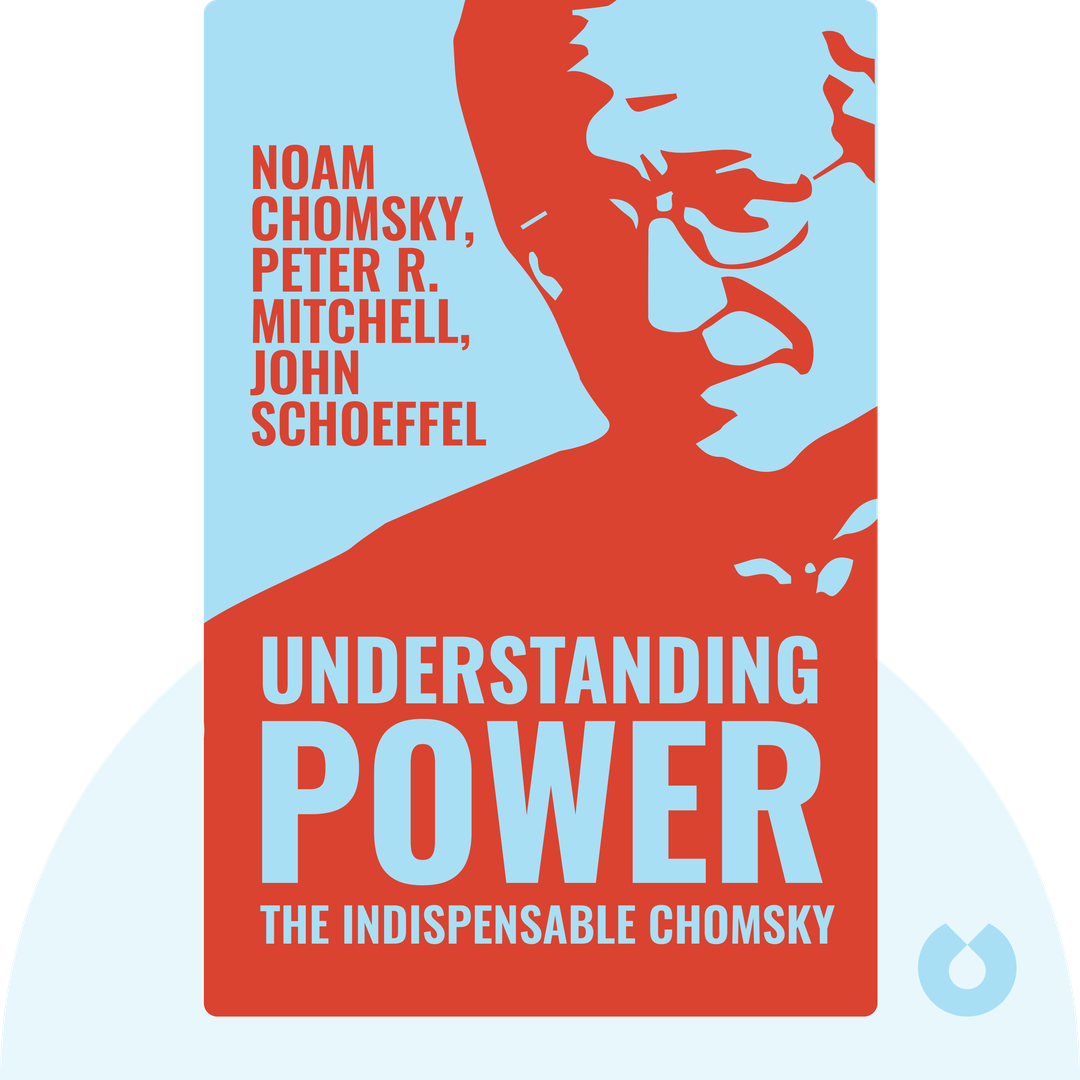
Understanding Power (2002) is a compilation of discussions and seminars by Noam Chomsky curated by Peter R. Mitchell and John Schoeffel. Throughout this collection, Chomsky delves into a wide range of topics, primarily focusing on how power and politics shape societies – critiquing media, corporate power, and governmental control, all while examining how these forces influence public opinion, policy, and democracy. With a focus on America, it reinterprets events of the past concerning foreign and social policy, highlighting the many challenges that Americans continue to face.
Who Should Listen to Understanding Power?
- Political and sociology students
- Citizen historians interested in America
- Changemakers and activists
Books Similar to Understanding Power
Readers who enjoyed this also liked these titles.