If You're Curious About These Questions...
You should listen to this audiobook
- Have you ever wondered what it was like to read the private, daily thoughts of both a Jewish person in hiding and the Dutch Nazi who supported their deportation?
- Are you curious about how ordinary people justified their most difficult moral decisions—collaboration, resistance, or simply looking away—as the world around them collapsed?
- What if you could step inside the minds of those living through the Dutch occupation to discover how they understood a tragedy before history had even given it a name?
Listen to The Diary Keepers — Free Audiobook
Key Takeaways from The Diary Keepers
- — Searching for Emerich
- — The Vault Below Sea Level
- — May 1940: Paratroopers and a Five-Day Collapse
- — 1940–1941: The “Honeymoon,” Registration, and the Jewish Quarter Erupts
- — 1942: The Star, the Councils, and “Labor Camps”
The Diary Keepers — Full Chapter Overview
Chapter 1: Recommendation
Chapter 2: Searching for Emerich
Chapter 3: The Vault Below Sea Level
Chapter 4: May 1940: Paratroopers and a Five-Day Collapse
Chapter 5: 1940–1941: The “Honeymoon,” Registration, and the Jewish Quarter Erupts
Chapter 6: 1942: The Star, the Councils, and “Labor Camps”
Chapter 7: Inside the Machine: Westerbork, Hiding, and the “Jew Hunt”
Chapter 8: The Midpoint: Councils Collapse, Homes Empty, and the Last Jews of Amsterdam
Chapter 9: 1944–1945: Liberation, Hunger, and the Long War After the War
The Diary Keepers Summary & Overview
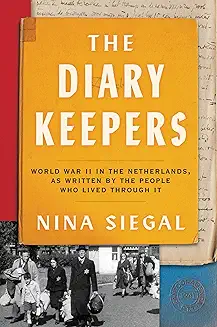
The Diary Keepers is a narrative history of the Nazi occupation of the Netherlands built from personal diaries preserved at Amsterdam’s NIOD Institute. Nina Siegal frames the book through her own family’s Holocaust legacy and then opens the vault on thousands of civilian journals—some never published—showing what it felt like to live through invasion, rationing, collaboration, resistance, and the destruction of Dutch Jewry.
Rather than retelling a single survivor story, the book braids together sharply contrasting voices: Jewish diarists facing deportation and hiding; a renowned journalist documenting Westerbork; ordinary workers watching society crack; and Dutch Nazis recording their ambitions and rationalizations. The result is a layered portrait of the occupation that asks a persistent question: not just what happened, but how people understood it as it was happening.
Who Should Listen to The Diary Keepers?
- Listeners who want a deeply human, diary-driven account of the Dutch occupation and Holocaust beyond Anne Frank.
- Students and history fans interested in moral choices—collaboration, bystanding, and resistance—told through firsthand voices.
- Readers drawn to archives, memory studies, and how societies remember (and misremember) atrocity over generations.
Books Similar to The Diary Keepers
Readers who enjoyed this also liked these titles.

The famous story of a Jewish girl who went into hiding during the Second World War

The Untold Story of Women Resistance Fighters in Hitler's Ghettos

A survivor’s account of Auschwitz

The True Story of the American Woman at the Heart of the German Resistance to Hitler