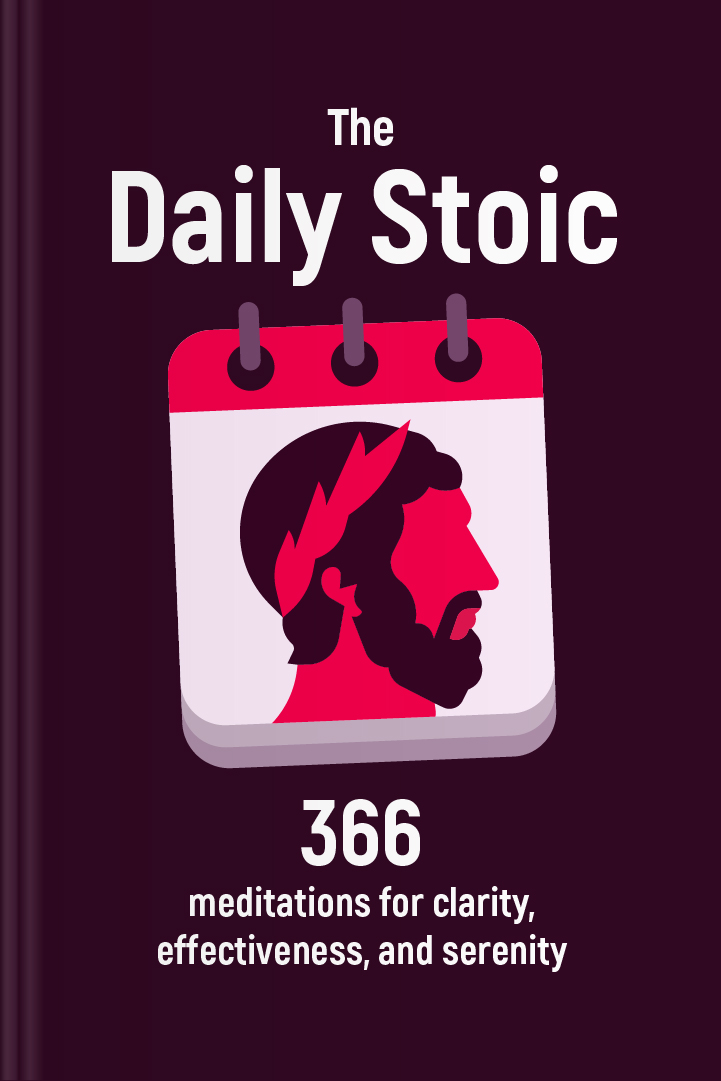
If You're Curious About These Questions...
You should listen to this audiobook
- Have you ever wondered why we struggle so much with things we can't control, and what's the secret to finding unshakable calm in the middle of chaos?
- What if you could turn every setback or obstacle you face into a direct path toward progress and personal strength?
- Are you curious about how ancient wisdom can help you stop overthinking and start making clearer, more grounded decisions every single day?
Listen to The Daily Stoic — Free Audiobook
Key Takeaways from The Daily Stoic
- Discover why Stoicism isn't a gloomy academic theory, but a highly practical toolkit for navigating daily life with steadiness, courage, and clarity.
- Learn how to cultivate your 'ruling principle' by honestly assessing your strengths and questioning your beliefs to avoid being pushed and pulled by external circumstances.
- Understand the three steady moves to combat overthinking: controlling your perceptions, focusing on the next right action, and willingly accepting what is outside your control.
- Master the art of staying present and silencing mental noise by treating the task in front of you with full attention and adopting a grounding mental mantra.
- Find out how to create crucial space between your feelings and your responses, allowing you to act with reason and wisdom rather than simply suppressing your emotions.
The Daily Stoic — Full Chapter Overview
Chapter 1: Recommendation
Chapter 2: Waking Up to the Inner Compass
Chapter 3: Clearing the Mental Fog to Find Focus
Chapter 4: Making Space Between Feeling and Response
Chapter 5: Questioning the Mind with Humility
Chapter 6: Turning Roadblocks into a Path Forward
Chapter 7: Accepting What Happened, Choosing What’s Next
Chapter 8: Letting Mortality Make Life More Vivid
Chapter 9: Choosing Virtue as a Steady North Star
The Daily Stoic Summary & Overview
This warm, supportive narration explores Stoicism as a practical philosophy for everyday life. Rather than draining life of joy, Stoic practice strengthens inner stability—helping people see themselves honestly, focus on what matters, and respond wisely to stress, fear, and distraction.
Across these chapters, the listener is guided through key Stoic themes: awareness, attention, emotional steadiness, humility around mental bias, resilience in the face of obstacles, acceptance of fate without passivity, and a calm relationship with mortality. The aim is not perfection, but progress—one clear thought and one grounded choice at a time.
Who Should Listen to The Daily Stoic?
- Anyone who feels overwhelmed by overthinking, distraction, or the pressure to control outcomes, and wants a calmer, clearer approach to daily decisions
- Listeners interested in Stoicism as a practical tool—especially those who want emotional steadiness without suppressing feelings
- People navigating setbacks, change, or uncertainty who want to build resilience and meaning without harsh self-judgment
Books Similar to The Daily Stoic
Readers who enjoyed this also liked these titles.
A Philosophical User's Manual
Ancient Wisdom For Modern Living
Timeless Wisdom to Gain Resilience, Confidence, and Calmness
The Art of Living from Zeno to Marcus Aurelius