If You're Curious About These Questions...
You should listen to this audiobook
- Did you know that fear isn't just an emotion, but a deeply ingrained habit that can be rewritten using a simple four-step program?
- Have you ever wondered why even the most motivated people get stuck, and what specific psychological shifts are needed to finally bridge the gap between fear and action?
- What if you could transform your inner critic into a source of courage that allows you to foster more nurturing and authentic relationships?
Listen to The Courage Habit — Free Audiobook
Loading player...
Key Takeaways from The Courage Habit
- Understand why simply fighting or ignoring fear doesn't work, and how your brain naturally uses anxiety to keep you trapped in comfortable, predictable routines.
- Learn how to uncover your most authentic desires by visualizing your 'Liberated Day,' a detailed exercise that removes fear and external expectations from the equation.
- Define your path forward by setting three Primary Focus goals that push you outside your comfort zone and help you build necessary resilience.
- Discover how to dismantle your psychological barriers by recognizing the hidden cue-routine-reward habit loops that govern your emotional responses to stress.
- Identify which of the four main fear routines—Perfectionist, Saboteur, Martyr, or Pessimist—is secretly sabotaging your dreams in exchange for temporary emotional relief.
Learning Tools
Reinforce what you learned from The Courage Habit
Mind Map
The Courage Habit
Understanding Fear+
The 4 Fear Routines+
Preparation: Naming Desires+
Step 1: Accessing the Body+
Step 2: Engaging the Inner Critic+
Step 3: Reframing Limiting Stories+
Step 4: Building Courageous Community+
Ongoing Action+
Quiz — Test Your Understanding
Question 1 of 8
According to Kate Swoboda, why is trying to fight your fear an unrealistic approach to living a more courageous life?
Question 2 of 8
What is the primary purpose of envisioning your 'Liberated Day'?
Question 3 of 8
In the context of Charles Duhigg's cue-routine-reward cycle, what typically serves as the 'reward' in a fear routine?
Question 4 of 8
Which fear routine is characterized by taking 'two steps forward and one step back' and expecting big returns on small investments of energy?
Question 5 of 8
What does the author suggest doing if you are worried that 'accessing the body' will bring up intense feelings that overwhelm you?
Question 6 of 8
How does the 'Re-do, please' tool help you manage your Inner Critic?
Question 7 of 8
According to the book, how does reframing a limiting Story differ from simply making positive affirmations?
Question 8 of 8
Which of the following is considered a 'reaching out' behavior when building a courageous community?
The Courage Habit — Full Chapter Overview
- 1Recommendation
- 2Living courageously starts with recognizing how fear shapes your habits and routines.
- 3Honestly naming what you truly want lets your most courageous self come forward.
- 4You cannot eliminate fear, but you can weaken its grip by owning your fear pattern.
- 5After you recognize how fear feels in your body, you can start to shift your fear pattern.
- 6You can respond to your inner critic without letting it overpower you.
- 7Rewriting limiting stories lets you recognize new possibilities in your life.
- 8To cultivate a brave life, connect with people who also value courage.
The Courage Habit Summary & Overview
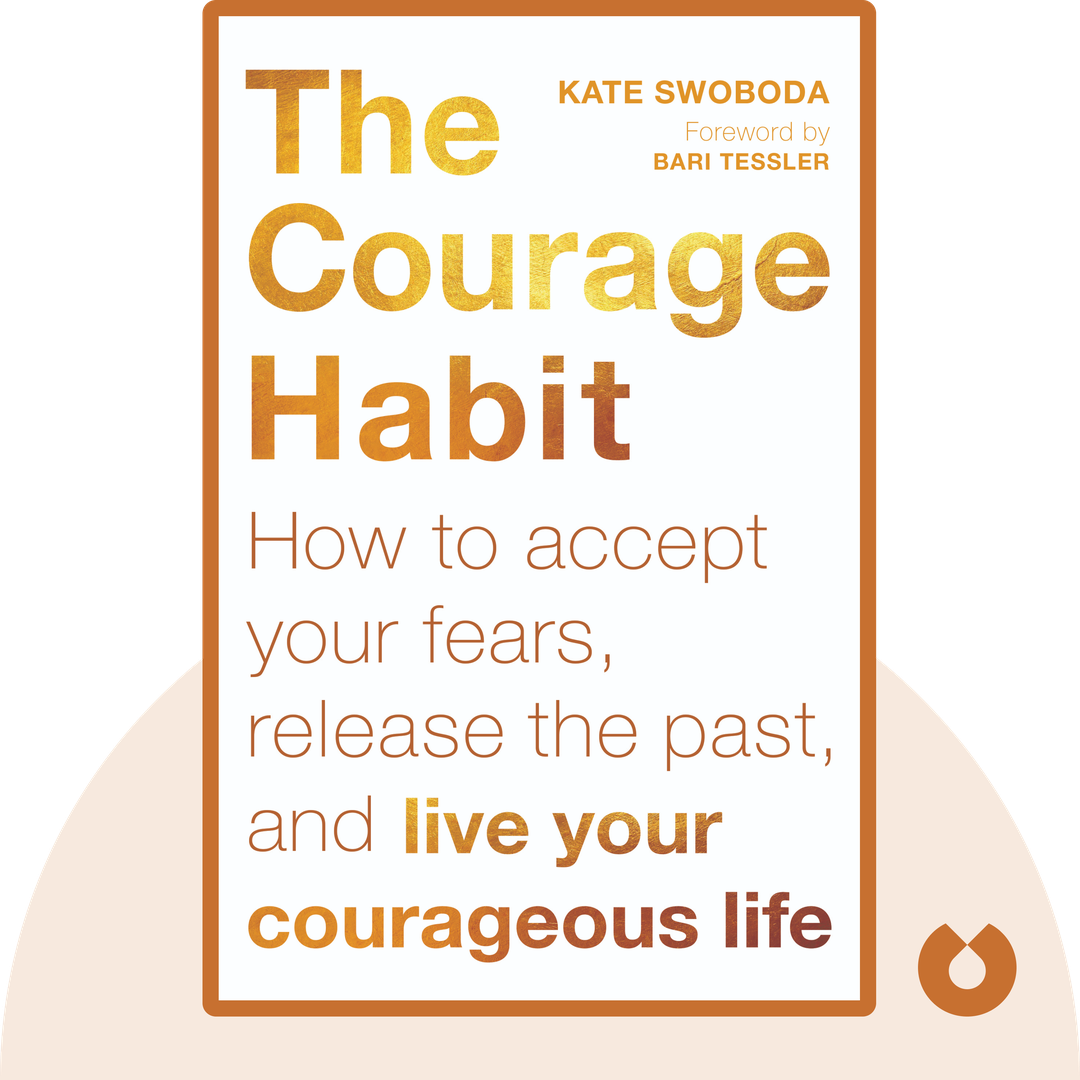
The Courage Habit (2018) takes a look at the role fear plays in our lives and offers a four-step program for becoming your most courageous self and following your dreams. Using inspiring examples and practical tips rooted in cognitive behavioral therapy, or CBT, and acceptance and commitment therapy, or ACT, it outlines ways that everyone can cultivate the courage they need to change their lives.
Who Should Listen to The Courage Habit?
- Independent thinkers who want to confront their fears and unlock their hidden potential
- Motivated-but-stuck achievers who want to learn the principles of habit formation
- Sensitive souls who would like to foster more nurturing relationships
Books Similar to The Courage Habit
Readers who enjoyed this also liked these titles.