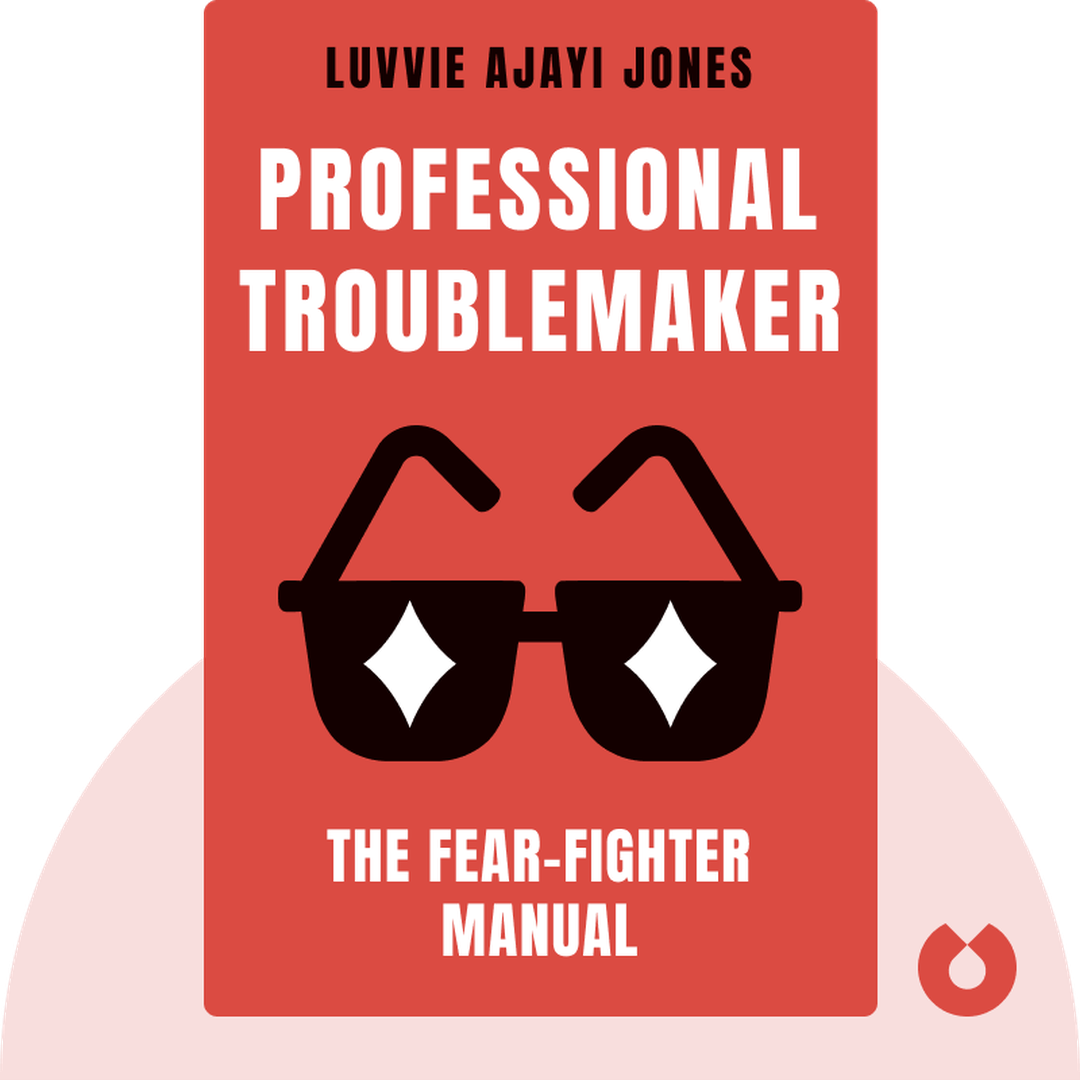
Professional Troublemaker
Start ListeningDownload Try free on iPhoneScan to start in 5 seconds
Categories:
If You're Curious About These Questions...
You should listen to this audiobook
- What if you could transform your deepest fears into the very fuel you need to live your most authentic and audacious life?
- Have you ever wondered why being 'nice' often stops you from getting what you actually deserve, and how you can change that without losing your kindness?
- What’s the secret to speaking your truth and standing up for your values, even when your heart is racing and your voice is shaking?
Listen to Professional Troublemaker — Free Audiobook
Loading player...
Key Takeaways from Professional Troublemaker
- Understand what it truly means to be a professional troublemaker who confronts injustice and refuses to let universal fears dictate life-changing decisions.
- Discover how cultivating a deep self-awareness and identifying your core values acts as an unbreakable anchor when facing chaotic and difficult moments.
- Learn how to overcome 'dream deficiency' by giving yourself permission to audaciously pursue your biggest aspirations regardless of past setbacks or a perceived lack of qualifications.
- Master the art of tactfully challenging biases and poor ideas by posing insightful questions rather than just being needlessly contrarian.
- Find out how to boldly speak the truth using a three-question checklist that ensures your words are genuine, defensible, and considerate.
Learning Tools
Reinforce what you learned from Professional Troublemaker
Mind Map
Professional Troublemaker
Embracing Identity+
Owning Your Personality+
Practicing Honesty+
Relinquishing Control+
Kindness Over Niceness+
Building Your Squad+
Taking Action+
Quiz — Test Your Understanding
Question 1 of 8
According to the book, what is the primary purpose of writing a personal 'oríkì'?
Question 2 of 8
How does the author suggest you frame the criticism that your personality is 'too much'?
Question 3 of 8
Why do most people frequently lie in everyday conversations, according to the text?
Question 4 of 8
What tool does the author recommend using to get people to reconsider their prejudiced attitudes or terrible ideas without just being contrarian?
Question 5 of 8
What is the underlying reason people often refuse to share their workload and try to be entirely self-reliant?
Question 6 of 8
How does the book distinguish between being 'nice' and being 'kind'?
Question 7 of 8
According to the author, what is a key role of 'Day One Friends'?
Question 8 of 8
What actionable advice does the author give regarding unfulfilled desires, referencing the phrase 'Closed mouths don't get fed'?
Professional Troublemaker — Full Chapter Overview
- 1Recommendation
- 2Knowing who you really are makes it easier to be yourself.
- 3When it comes to your personality, “too much” is just right.
- 4Be honest, even when it feels uncomfortable.
- 5Don’t carry the entire workload yourself.
- 6Aim for kindness, not niceness.
- 7Everyone needs a gang of friends.
- 8Final summary
Professional Troublemaker Summary & Overview
Professional Troublemaker (2021) is a guide to overcoming the fear that stops us from being our best selves and living our truest values. From friendships to honesty and responsibility to kindness, the author explores the touchstones of a meaningful life – boldly urging us to speak up for what we really deserve.
Who Should Listen to Professional Troublemaker?
- Scaredy-cats who need to learn to live with gumption
- Nice people not getting results by just being nice
- Control freaks who need to learn to take a break
Books Similar to Professional Troublemaker
Readers who enjoyed this also liked these titles.