If You're Curious About These Questions...
You should listen to this audiobook
- Have you ever wondered why the very feelings you try to avoid—like fear and anxiety—might actually be the secret fuel for your greatest career breakthroughs?
- What if you could stop fighting your performance anxiety and instead learn the specific technique to harness it as a driver for success?
- Are you curious about how the world’s most ambitious professionals use the 'discomfort zone' to turn their most intimidating challenges into life-changing opportunities?
Listen to The Discomfort Zone — Free Audiobook
Loading player...
Key Takeaways from The Discomfort Zone
- Learn how to embrace discomfort so you can break free from fear-based limitations and unlock your true potential.
- Discover how to transform panic into a powerful 'challenge state' by reinterpreting physical stress symptoms as your body preparing to win.
- Master the techniques of positive visualization and self-talk to activate your brain's reward center and drastically improve your performance under pressure.
- Identify the three common avoidance strategies that stall your progress, and learn how to navigate stumbling blocks by quickly pivoting to a Plan B.
- Understand the concept of 'post-traumatic growth' and how thoroughly processing painful experiences can ultimately bring profound meaning and positive change to your life.
Learning Tools
Reinforce what you learned from The Discomfort Zone
Mind Map
The Discomfort Zone
Reframing Fear+
Handling Obstacles+
Processing Trauma+
Defeating Perfectionism+
Leveraging Feedback+
Power of Constraints+
Smart Failure+
Mutually Beneficial Hustle+
Quiz — Test Your Understanding
Question 1 of 9
How can individuals enter a 'challenge state' when facing a stressful situation like a job interview?
Question 2 of 9
According to the book, what is an example of creating a 'mini obstacle' to avoid a challenge?
Question 3 of 9
What psychological phenomenon did scientists Richard Tedeschi and Lawrence Calhoun identify regarding traumatic experiences?
Question 4 of 9
What does the 'spotlight effect' reveal about social pressure and perfectionism?
Question 5 of 9
Why does the author compare receiving professional feedback to sex?
Question 6 of 9
How do uncomfortable constraints, such as tight deadlines or limited resources, affect our creative work?
Question 7 of 9
What is a key characteristic of 'smart failure' as described in the book?
Question 8 of 9
How did Sara Blakely successfully 'hustle' to get Spanx off the ground, contrasting with the traditional approach Steve Jobs used?
Question 9 of 9
What is the first step in the BMD (Brief Moments of Discomfort) Method?
The Discomfort Zone — Full Chapter Overview
- 1Recommendation
- 2By reframing fear, we can harness it to boost our performance overall.
- 3How we deal with obstacles we face defines our level of success.
- 4Fully processing trauma can create positive change throughout our lives.
- 5To truly realize our full potential, we must let go of being perfect.
- 6To flourish professionally, we must actively seek consistent feedback.
- 7Embracing uncomfortable constraints helps us become more creative.
- 8If we truly want to succeed, we must be open to failure.
- 9Strengthen your hustle by making it mutually beneficial.
The Discomfort Zone Summary & Overview
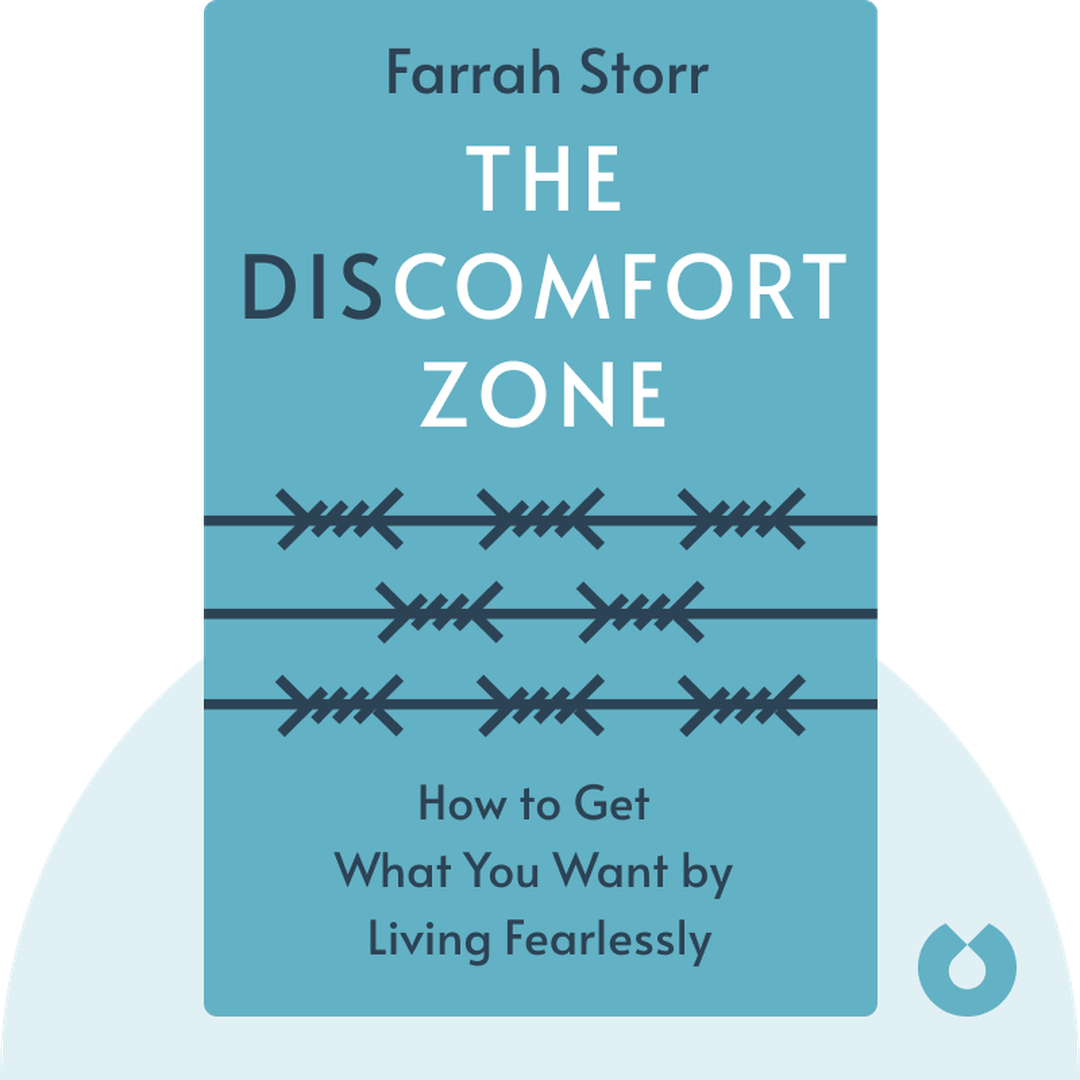
The Discomfort Zone (2018) shows us how we can become more comfortable with the fears that hold us back. But it also goes one step further, explaining how we can harness these fears to drive success. Using real life examples, Farrah Storr examines the true nature of uncomfortable feelings and provides strategies to manage them so we can reach our full potential.
Who Should Listen to The Discomfort Zone?
- Victims of performance anxiety
- Seekers of true fulfillment
- Ambitious professionals wanting to create business opportunities
Books Similar to The Discomfort Zone
Readers who enjoyed this also liked these titles.