Theme Song
If You're Curious About These Questions...
You should listen to this audiobook
- Have you ever wondered why the harder you try to suppress your self-doubt, the more it seems to hold you back?
- What if you didn’t actually need to feel confident before taking the first step toward your biggest goals?
- What’s the secret to breaking free from the perfectionism trap and finally living a life fueled by your values instead of your fears?
Listen to The Confidence Gap — Cinematic Audio Edition
Loading player...
Key Takeaways from The Confidence Gap
- Discover how Acceptance and Commitment Training (ACT) helps you build true confidence by aligning your actions with your ongoing core values rather than just fleeting goals.
- Understand the confidence cycle and why you must take action first, allowing true confidence to naturally follow through a process of practicing, assessing, and adjusting.
- Learn why trying to eliminate fear is a trap, and find out how highly confident people accept and channel their natural fight-or-flight adrenaline into productive energy.
- Master the art of defusing negative thoughts by observing and neutralizing them, recognizing that your inner critic is just broadcasting thoughts rather than absolute facts.
- Find out how to project genuine confidence and charisma by practicing deep engagement and staying fully present in your everyday interactions.
Learning Tools
Reinforce what you learned from The Confidence Gap
Mind Map
The Confidence Gap
The New Approach (ACT)+
Reassessing Priorities+
Rethinking Fear+
Language of Acceptance+
Confidence Through Engagement+
Values in Four Life Areas+
Staying the Course+
Quiz — Test Your Understanding
Question 1 of 8
What is the core methodology recommended in the text to help build psychological flexibility?
Question 2 of 8
According to the text, what is the primary difference between goals and values?
Question 3 of 8
How does the book describe the relationship between confidence and action?
Question 4 of 8
How do confident people handle fear, according to the text?
Question 5 of 8
Why does the author advise against relying on positive self-statements like 'I will succeed'?
Question 6 of 8
What does the 'defusion' technique involve when dealing with negative thoughts?
Question 7 of 8
To help clarify your values, the text suggests breaking your life down into which four key areas?
Question 8 of 8
When facing the FEAR trap (Fusion, Excessive goals, Avoidance, Remoteness), what is the recommended antidote?
The Confidence Gap — Full Chapter Overview
- 1Recommendation
- 2Reevaluating Your Priorities
- 3Building a New Relationship with Fear
- 4Understanding the Language of Acceptance
- 5Building Confidence Through Engagement
- 6Values Across Four Areas of Life
- 7Staying on Course
- 8Final summary
The Confidence Gap Summary & Overview
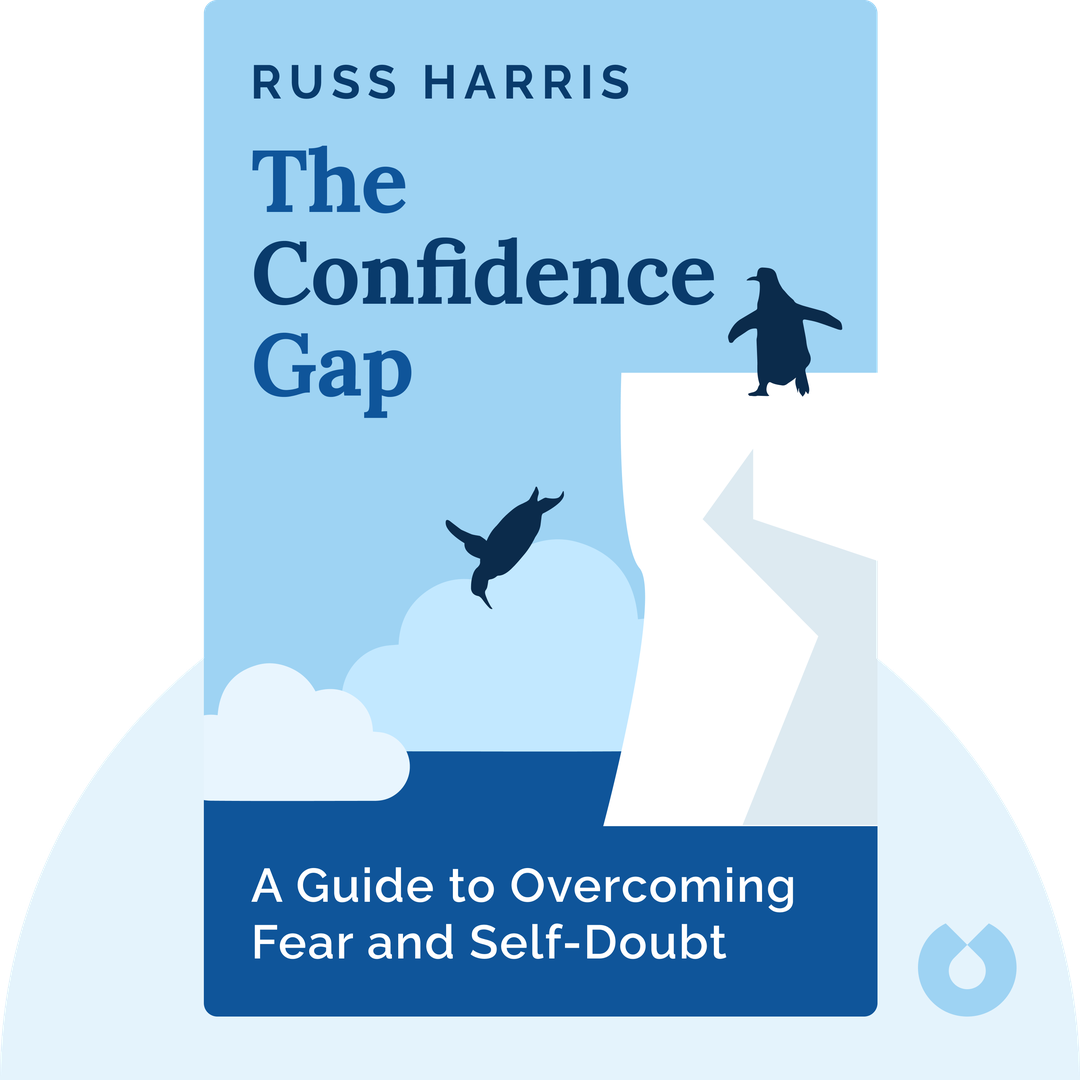
The Confidence Gap (2010) offers a refreshing approach to combating self-doubt and overcoming the constant pressure to be more confident. With practical tools, and strategies on how to embrace your fears rather than fight them, it offers a path to break free from the cycle of perfectionism and start living a life aligned with your values.
Who Should Listen to The Confidence Gap?
- Self-doubters
- Procrastinators and perfectionists
- Anyone who feels constrained by fear
Books Similar to The Confidence Gap
Readers who enjoyed this also liked these titles.