If You're Curious About These Questions...
You should listen to this audiobook
- What if you could transform your relationship with fear and use it as a powerful tool to unlock your true potential?
- Have you ever wondered why we often prioritize social comfort over our own personal growth and success?
- Are you curious about the simple, daily actions that can help you break out of a rut and build the courage to take bold risks?
Listen to Brave — Free Audiobook
Loading player...
Key Takeaways from Brave
- Discover how taking action despite your anxieties strengthens your 'courage muscles' and prevents fear from governing your life.
- Learn to overcome the fear of failure by breaking down your challenges and visualizing success to confidently step out of your comfort zone.
- Understand why resisting conformity and proudly embracing your unique differences will make you more authentic, likable, and successful.
- Find out why staying silent causes the long-term damage of self-betrayal, and discover how to clearly define your values so you can bravely speak up.
- Realize that different life environments demand different types of bravery, and learn why true courage often requires the vulnerability of speaking from the heart.
Learning Tools
Reinforce what you learned from Brave
Mind Map
Brave
Facing Fears+
Authenticity+
Communication+
Career & Decisions+
Vulnerability & Emotion+
Everyday Courage+
Quiz — Test Your Understanding
Question 1 of 9
What does the author suggest is a crucial first step when trying to build up courage and face your fears?
Question 2 of 9
According to the book, what is the primary benefit of resisting conformity and being true to yourself?
Question 3 of 9
Why is staying silent instead of speaking up for your beliefs considered damaging in the long term?
Question 4 of 9
When speaking from the heart and sharing difficult feelings, what important rule should you follow regarding the other person?
Question 5 of 9
How does the author suggest you overcome the feeling that advocating for yourself is egotistical?
Question 6 of 9
How should you handle decision-making in a highly unpredictable and changing world?
Question 7 of 9
What does the book argue is the true nature of asking for help when you are in need?
Question 8 of 9
What is the danger of using distractions like overworking to numb the pain of grief?
Question 9 of 9
According to the final summary, why does it take courage to be grateful?
Brave — Full Chapter Overview
- 1Recommendation
- 2Facing Your Fears Builds Strength
- 3Resisting Conformity Pays Off: Stay True to Yourself
- 4Don’t Let Fear Silence You; Be Clear About What Matters
- 5Speaking from the Heart Takes Courage, but a Few Basic Rules Help
- 6Don’t Be Afraid to Advocate for Yourself; Share What You Bring to the Table
- 7When the Future Is Uncertain, Choose a Path and Stick with It
- 8Don’t Be Afraid to Ask for Help When You Need It; Asking Shows Strength
- 9Don’t Shut Out Sadness; Give It Your Full Attention
- 10Final summary
Brave Summary & Overview
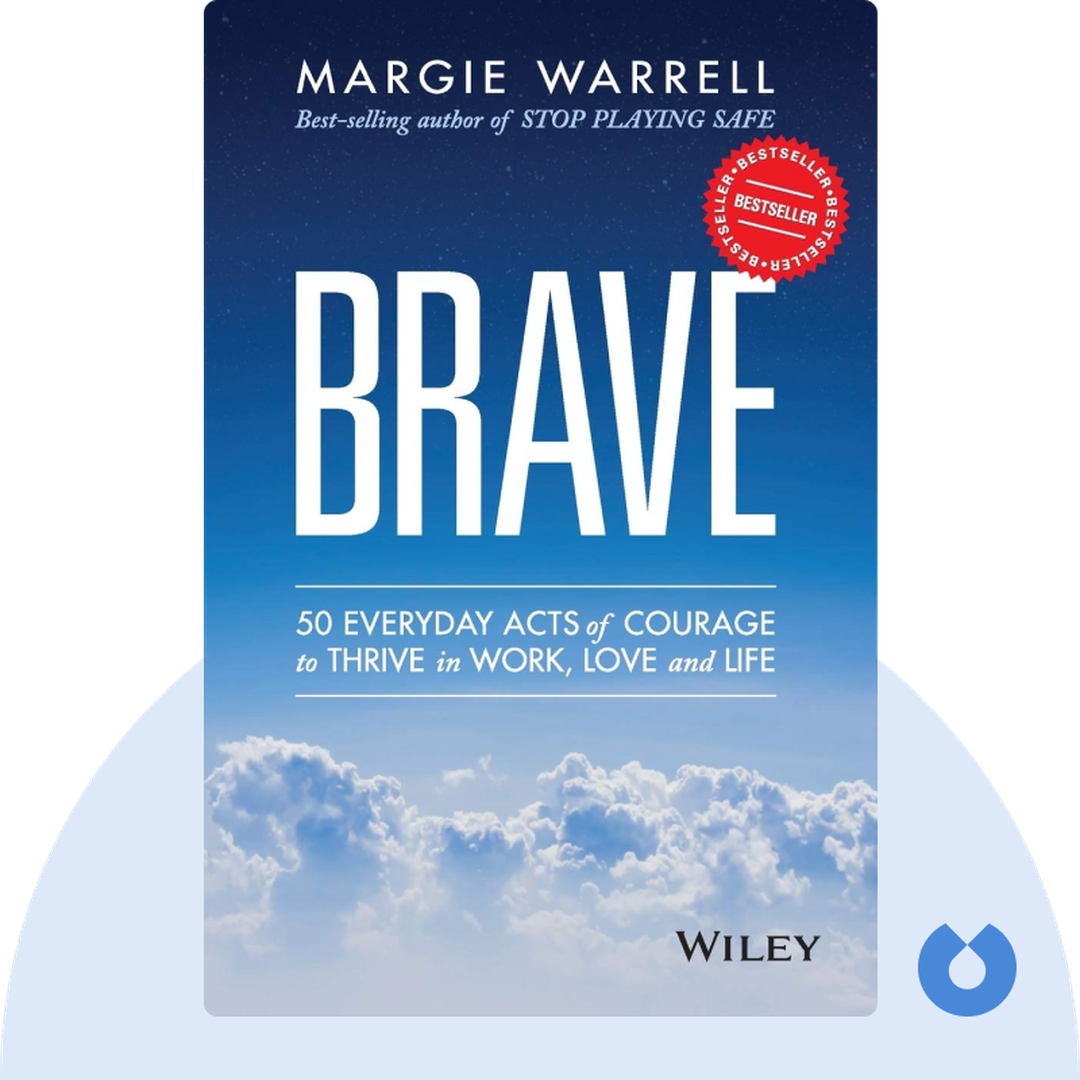
Brave (2015) details the actions that anyone can take to become braver in daily life. In doing so, it breaks apart social interactions and the norms that prevent individuals from acting more courageously. These blinks show how fear stops people from living to their full potential and supplies the tools for becoming braver and learning how to thrive.
Who Should Listen to Brave?
- The timid
- Employees stuck in a rut and considering life changes
- Life coaches and mentors
Books Similar to Brave
Readers who enjoyed this also liked these titles.