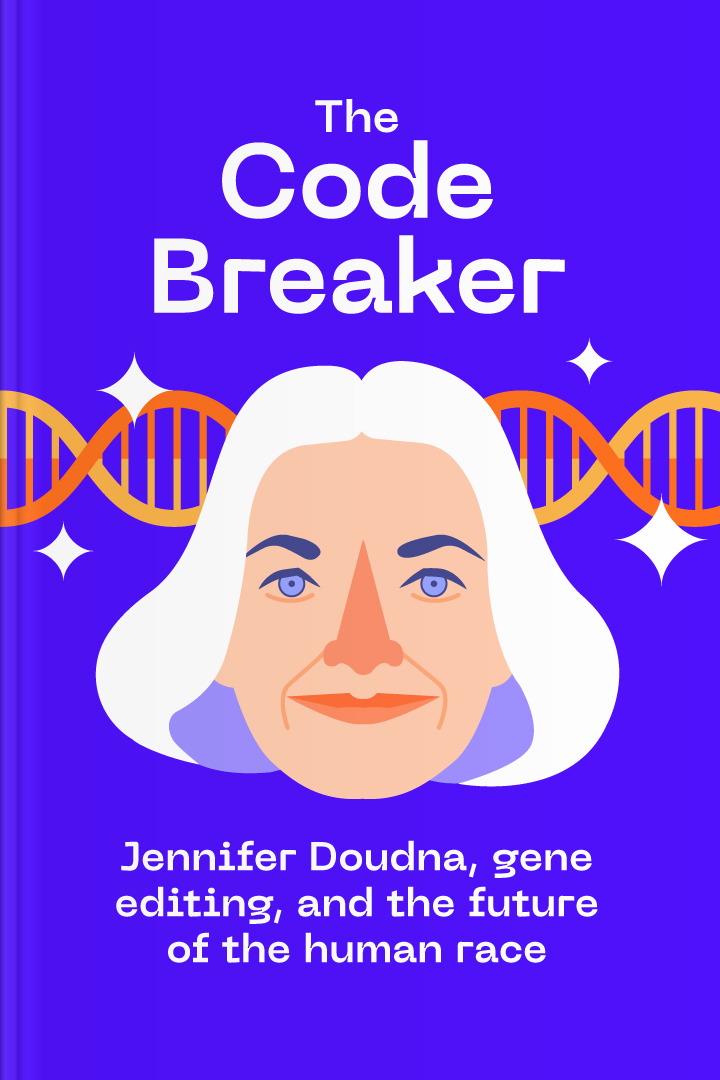
If You're Curious About These Questions...
You should listen to this audiobook
- What if you could rewrite the fundamental code of life, and how did a simple observation in nature lead to a tool that is now reshaping human genetics?
- What is the secret to staying persistent in a male-dominated field, and how can protecting your own curiosity lead to the most significant scientific discovery of our time?
- Have you ever wondered how the technology behind gene editing helped us fight a global pandemic, and what ethical dilemmas arise when we gain the power to influence our own evolutionary path?
Listen to The Code Breaker — Free Audiobook
Key Takeaways from The Code Breaker
- Discover how relentless curiosity and an early connection to nature can serve as a steady engine to overcome societal discouragement and fuel a groundbreaking career.
- Learn how a simple gift of the book 'The Double Helix' ignited Jennifer Doudna's fascination with DNA, proving that exposing young minds to complex mysteries can spark world-changing journeys.
- Understand the foundational concepts of CRISPR-Cas9 and explore how this revolutionary gene-editing tool has profoundly shaped modern public health, including its role in COVID-19 testing.
- Find out why practical encouragement—like shadowing a working biologist—is crucial for empowering young women to shatter gender barriers and dismiss naysayers in STEM fields.
- Recognize the vital importance of mentors and supportive communities in transforming a solitary childhood interest into a tangible, global scientific impact.
The Code Breaker — Full Chapter Overview
Chapter 1: Recommendation
Chapter 2: Curiosity That Refused to Shrink
Chapter 3: A Childhood Shaped by Nature and Encouragement
Chapter 4: Mentors, Milestones, and Making Space to Belong
Chapter 5: A Breakthrough Amid Love and Loss
Chapter 6: Power, Promise, and the Ethics of Changing Life’s Code
Chapter 7: When a Global Crisis Met a Genetic Tool
Chapter 8: A Life That Invites the Next Question
The Code Breaker Summary & Overview
This audio narration traces the story of Jennifer Doudna, a scientist whose lifelong habit of asking questions helped transform modern genetics. From early inspiration at home to the challenges of entering a male-dominated field, her path shows what can happen when curiosity is protected, supported, and pursued with steady determination.
Along the way, we’ll meet the idea at the heart of her most famous work: CRISPR-Cas9, a powerful tool that allows scientists to edit genomes. We’ll also hold space for the ethical questions the technology brings—especially around fairness, human diversity, and how society chooses to use scientific power—before closing with a gentle invitation to reflect on passion, persistence, and curiosity.
Who Should Listen to The Code Breaker?
- Listeners who enjoy inspiring stories about scientists, discovery, and the real human moments behind breakthroughs.
- Anyone curious about what CRISPR-Cas9 is, why it matters, and how it contributed to COVID-19 testing and vaccine development.
- People who want a thoughtful, non-judgmental introduction to the ethical questions raised by genetic editing.
Books Similar to The Code Breaker
Readers who enjoyed this also liked these titles.
Gene Editing and the Unthinkable Power to Control Evolution
A Roadmap for the Questioner
Step into J. Robert Oppenheimer’s inner world—his gifts, contradictions, and regrets—as scientific wonder turns into moral weight, and one man’s search for truth collides with politics, secrecy, and the shadow of the bomb.
Genetic Engineering and the Future of Humanity