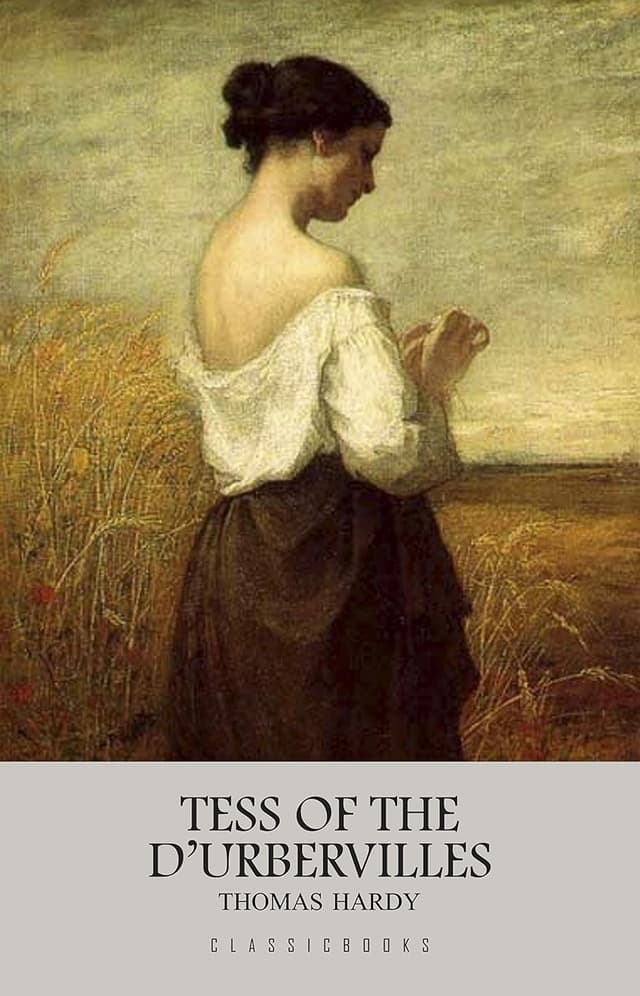
Listen to Tess of the d’Urbervilles (Full Version) — Free Audiobook
Tess of the d’Urbervilles (Full Version) — Full Chapter Overview
Chapter 1: Recommendation
Chapter 2: 1
Chapter 3: 2
Chapter 4: 3
Chapter 5: 4
Chapter 6: 5
Chapter 7: 6
Chapter 8: 7
Chapter 9: 8
Chapter 10: 9
Chapter 11: 10
Chapter 12: 11
Chapter 13: 12
Chapter 14: 13
Chapter 15: 14
Chapter 16: 15
Chapter 17: 16
Chapter 18: 17
Chapter 19: 18
Chapter 20: 19
Chapter 21: 20
Chapter 22: 21
Chapter 23: 22
Chapter 24: 23
Chapter 25: 24
Chapter 26: 25
Chapter 27: 26
Chapter 28: 27
Chapter 29: 28
Chapter 30: 29
Chapter 31: 30
Chapter 32: 31
Chapter 33: 32
Chapter 34: 33
Tess of the d’Urbervilles (Full Version) Summary & Overview
First published in 1891, Tess of the d’Urbervilles is Thomas Hardy’s haunting tragedy of a young woman whose life is reshaped by a single, socially “ruinous” event—and by the harsh moral arithmetic that Victorian respectability applies to female experience. Set in the pastoral landscapes of Wessex, the novel follows Tess Durbeyfield from village simplicity into a widening circle of ancestral myth, economic pressure, desire, and judgement.
Hardy pairs lyrical descriptions of rural England with an unsparing critique of class pretension, religious certainty, and the double standards that label women while excusing men. Fate, coincidence, and the indifferent movement of the natural world press against Tess’s intelligence and capacity for love, creating a story that is at once intensely intimate and deeply philosophical. Controversial on release and enduringly influential, Tess remains a landmark of English realism and a moving study of innocence, agency, and the cost of compassion.
Who Should Listen to Tess of the d’Urbervilles (Full Version)?
- Listeners who want a powerful, character-driven classic that confronts sexual politics, social stigma, and moral hypocrisy without losing its emotional tenderness.
- Fans of Victorian and early modern English fiction interested in rural life, class anxiety, and the collision between tradition and modernity.
- Readers drawn to tragic love stories and philosophical novels that question fate, justice, and what society calls “purity.”
Books Similar to Tess of the d’Urbervilles (Full Version)
Readers who enjoyed this also liked these titles.

Innocence Lost, Strength Found

In the shadow of war and industry, Constance Chatterley finds her marriage to a paralyzed baronet turning into an emotional vacuum—until a forbidden, fiercely bodily love forces her to choose between social duty and a more honest kind of life.

From a bishop’s startling act of mercy to the long shadow it casts across lives marked by poverty, love, law, and revolution, Hugo’s epic asks what it means to be just—and whether compassion can outlast cruelty.

In the quiet English town of Cranford—where ladies rule, poverty is politely unspoken, and visiting hours are law—a newcomer’s plainspoken kindness upends delicate proprieties, revealing a community sustained by humor, pride, and unexpectedly fierce compassion.