If You're Curious About These Questions...
You should listen to this audiobook
- What if you could harness the power of sound to boost your mood, energy, and productivity?
- Are you curious about the hidden ways in which sound is shaping your emotions, thoughts, and behaviors?
- Did you know that the sounds around you could be secretly affecting your physical health, from heart rate to digestion?
Listen to Sound Affects — Free Audiobook
Loading player...
Key Takeaways from Sound Affects
- Master the lost art of conscious listening to transform invisible energy vibrations into a deeper, richer experience of the world around you.
- Discover how tuning into 'geophony'—the earth's natural sounds like rain and wind—can instantly lower your heart rate and reduce stress hormones.
- Understand why your auditory system acts as a lightning-fast primary warning system that continuously monitors your environment, even while you sleep.
- Learn how to practice a biophonic counting exercise to connect with the living sounds of nature, measurably improving your focus and sleep quality.
- Find out how 'anthrophony'—the human-made soundscape—impacts your nervous system, from the stress of unpredictable city noise to the healing power of music.
Learning Tools
Reinforce what you learned from Sound Affects
Mind Map
Sound Affects
Conscious Listening+
Geophony+
Biophony+
Anthrophony+
Cosmophony+
Silence+
Quiz — Test Your Understanding
Question 1 of 7
What is the primary difference between hearing and the 'lost art of listening' as described in the text?
Question 2 of 7
Why do geophonic sounds, such as falling rain or ocean waves, naturally lower human stress levels and heart rates?
Question 3 of 7
According to the text, why does the human brain prioritize auditory information over visual information when detecting sudden threats?
Question 4 of 7
How does modern anthrophony, such as construction noise and car alarms, negatively impact human health?
Question 5 of 7
How are scientists able to detect the 'sounds' of cosmophony, such as the collision of black holes, despite the vacuum of space?
Question 6 of 7
What happens when a person enters an anechoic chamber, a space designed to absorb virtually all sound reflections?
Question 7 of 7
Which of the following is an actionable practice suggested by the book to reclaim silence and improve listening skills?
Sound Affects — Full Chapter Overview
- 1Recommendation
- 2Geophony — the Earth speaks
- 3Biophony — nature’s living orchestra
- 4Anthrophony — the human soundscape
- 5Cosmophony — a universe of sound
- 6Silence, or the gap between sounds
Sound Affects Summary & Overview
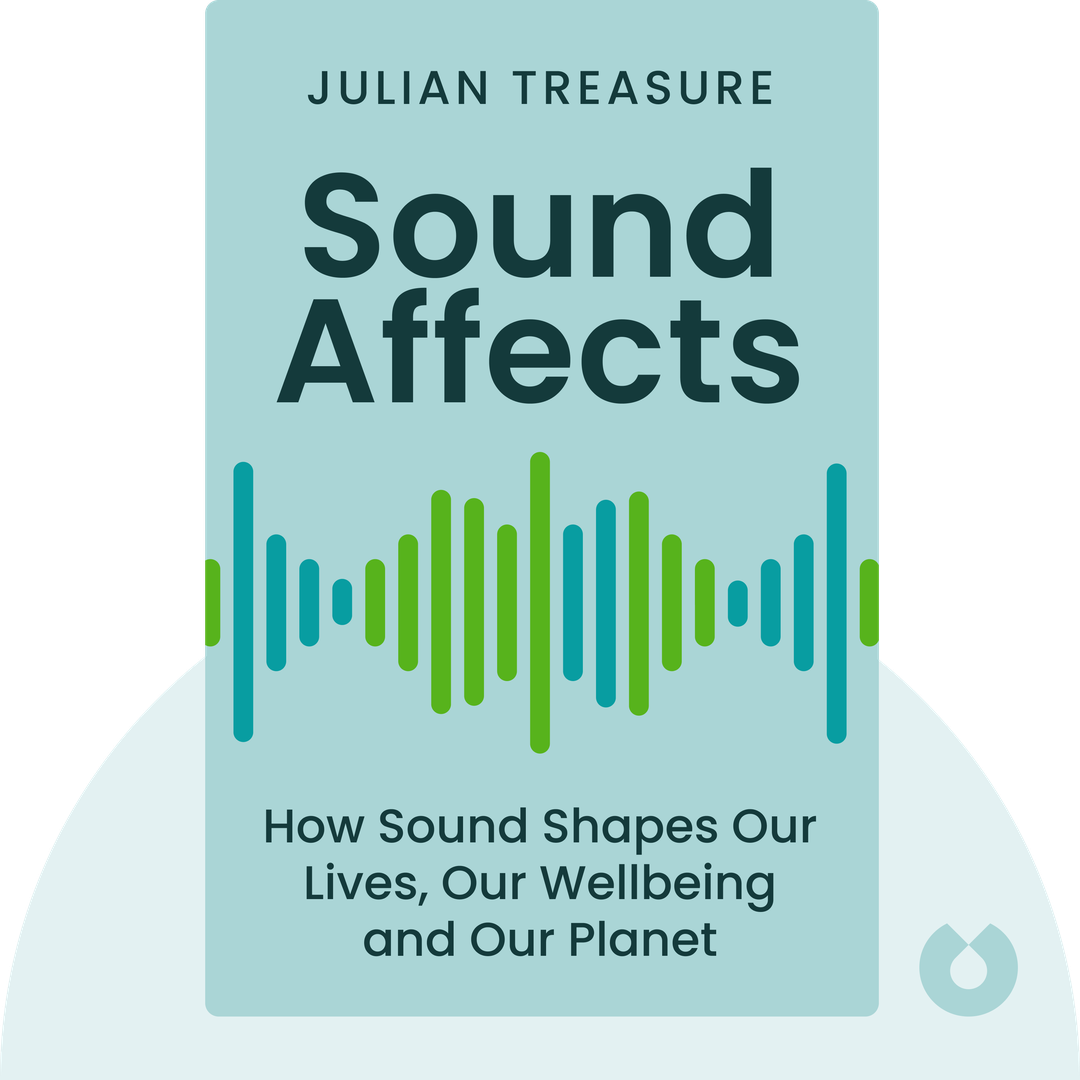
Sound Affects (2025) explores the wonder of sound and its impacts on the human psyche, physical health and wellbeing. Exploring the universe through its distinct sonic realms, it weaves science, stories, and sensory exploration into a compelling case for rediscovering the lost art of listening.
Who Should Listen to Sound Affects?
- Nature lovers who want to appreciate and protect the complex acoustic ecosystems around them
- Urban dwellers who feel overwhelmed by city noise
- Anyone feeling disconnected from their environment who wants to rediscover wonder and presence through conscious engagement
Books Similar to Sound Affects
Readers who enjoyed this also liked these titles.