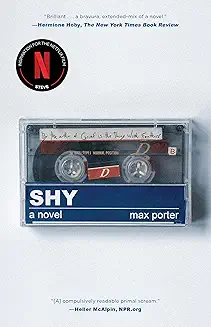
If You're Curious About These Questions...
You should listen to this audiobook
- Have you ever wondered what it’s like to walk through the darkest night of your life carrying a rucksack full of stones—and a mind that just won't stop hurting?
- Are you curious about how the rhythm of jungle music and the pulse of a bassline can become the only thing keeping a troubled teenager from disappearing into his own ghosts?
- What if the 'last chance' wasn't actually the end of the road, but the only place where a chaotic, violent story could finally find its way to mercy?
Listen to Shy — Free Audiobook
Key Takeaways from Shy
- — 3:13 A.M.: The Weight on His Back
- — Shame, Small Slights, and Heavy Stones
- — Stories the House Hides
- — Fights, Rhymes, and the Cost of Toughness
- — Living Inside a Beat
Shy — Full Chapter Overview
Chapter 1: Recommendation
Chapter 2: 3:13 A.M.: The Weight on His Back
Chapter 3: Shame, Small Slights, and Heavy Stones
Chapter 4: Stories the House Hides
Chapter 5: Fights, Rhymes, and the Cost of Toughness
Chapter 6: Living Inside a Beat
Chapter 7: What Are You Escaping?
Chapter 8: The Badgers in the Water
Chapter 9: Eve, Badgers, and Broken Windows
Chapter 10: Arms Around His Shoulders
Chapter 11: Start Again at Dawn
Shy Summary & Overview
Shy is a night-long plunge into the head and heart of a troubled seventeen-year-old living at the Last Chance, a residential school for boys who’ve run off every other road. Across a single dark walk—hood up, Walkman clamped to his ears—Shy carries a heavy rucksack, and an even heavier load of guilt, impulsiveness, and urgent hope. He thinks about jungle music, about fights and friends, about a mother who loves him and a stepdad he resents, about therapists who are kind and patient, and about ghosts who might be real. There are sharp memories of broken bottles, screwed-up chemistry labs, and the small, humiliating moments that stick like burrs. There’s tenderness too: hugs in corridors, a day at Durdle Door, a bad joke that lands and makes the room laugh.
As the night widens, the house breathes with its layered history—kids and kings, myths and monsters—and the field feels close and huge at once. The ha-ha keeps animals out, but it can’t keep out fear, or need. Standing at the pond, spliff in hand, Shy sees something he cannot explain and something he understands too well: dead badgers floating like unanswered questions. What he does next—what the boys do next—turns the night into a bright, chaotic morning and proves a quiet truth. However messy and violent the story gets, mercy can arrive like a rush to the lawn. The book moves like a mix: spikes, breaks, breath, basslines, and sudden silence, all wrapped around a simple, human beat. A boy wants his mind to stop hurting. The people around him want him alive.
Who Should Listen to Shy?
- Listeners who love raw, voice-led fiction that feels live and intimate
- People interested in youth mental health, care, and group dynamics
- Fans of music-driven storytelling and coming-of-age narratives
Books Similar to Shy
Readers who enjoyed this also liked these titles.
A boy with an Easy-Bake Oven and a black notebook grows up under the glare of a hard house and a harder city. With video games, anime, and drawings of sea monsters as lifelines, he learns how tenderness and fury can live in the same body — and how survival sometimes looks like a quiet, stubborn form of love.

A shy freshman writes anonymous letters as he stumbles into friendship, first love, family secrets, and the messy work of growing up. What he finds isn’t a fix or a formula. It’s a way to be present in his own life.
A year without sleep. A child gone in the night. A mother who can’t trust her own memories. Step inside Isabelle Drake’s waking nightmare as she hunts for her missing son, relives a buried past, and learns what really happens when grief, guilt, and obsession turn into a story you can’t stop telling yourself.

Two foster brothers move into a new home and meet a girl next door who’s surviving a nightmare—then one desperate night forces a life-altering secret, and years later love, loyalty, and trauma collide until a single choice detonates everything.