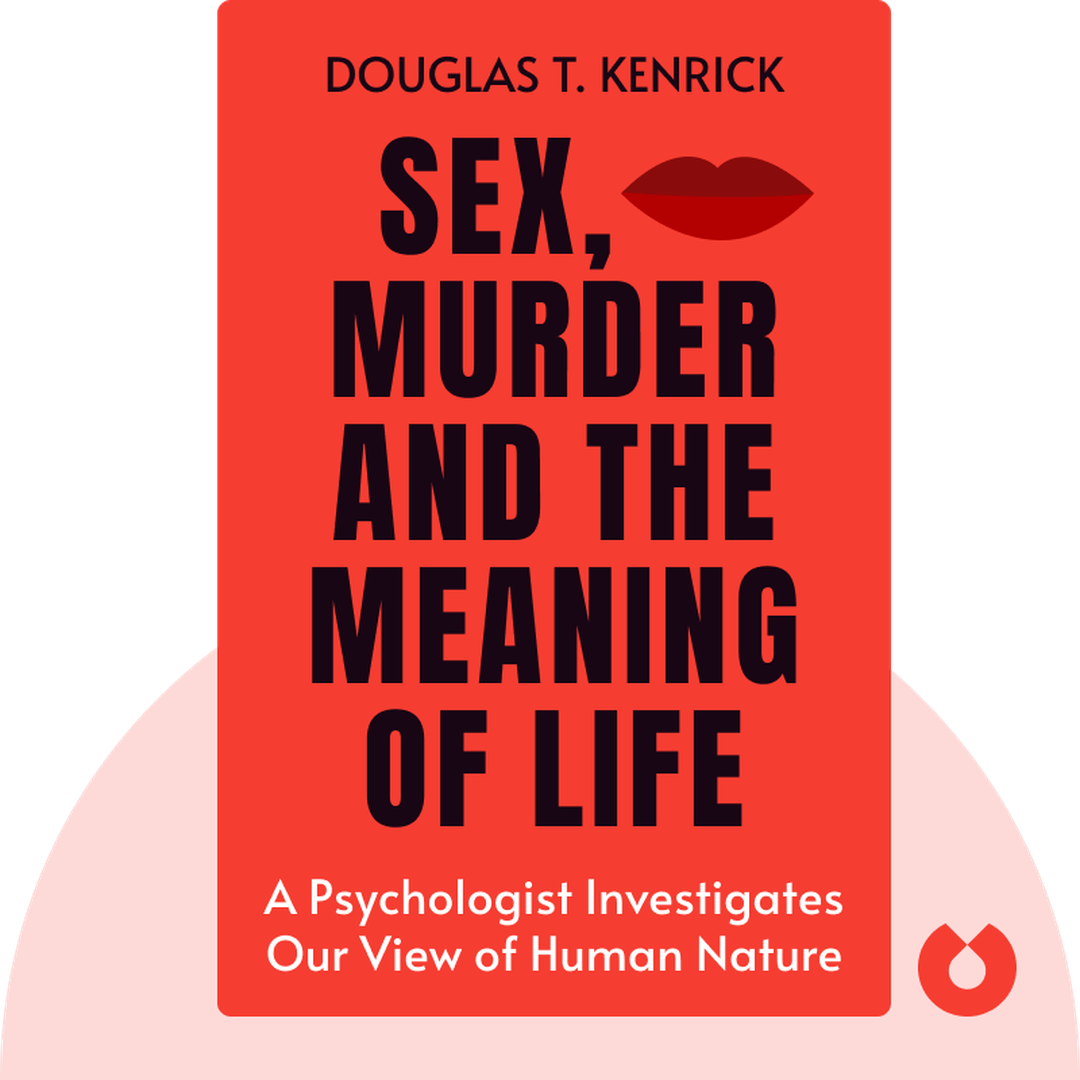
Sex, Murder and the Meaning of Life
Start ListeningDownload Try free on iPhoneScan to start in 5 seconds
Categories:
If You're Curious About These Questions...
You should listen to this audiobook
- Why do a staggering majority of people harbor homicidal fantasies, and how does evolutionary biology explain why men act on them far more often than women?
- How did our Stone Age ancestors' lack of medicine and fear of infectious diseases inadvertently wire the modern human brain for xenophobia?
- What does an average-looking man wearing a Rolex reveal about the true, primal purpose behind our desire to buy extravagant, expensive things?
Listen to Sex, Murder and the Meaning of Life — Free Audiobook
Loading player...
Key Takeaways from Sex, Murder and the Meaning of Life
- Exposure to highly attractive or socially dominant individuals can subconsciously lower your level of commitment to your current romantic partner.
- The disproportionately high rate of male violence is largely driven by an evolutionary need to assert social dominance and aggressively compete for highly selective female mates.
- Human prejudice is deeply rooted in our ancestors' survival instincts, particularly their need to quickly identify outgroup threats and avoid unfamiliar carriers of disease.
- Our brains selectively filter massive amounts of daily social information, permanently storing only the memories that are directly tied to our survival or reproductive success.
- Conspicuous consumption is not a byproduct of modern capitalism, but rather an ancient evolutionary strategy used primarily by men to signal status and attract mates.
Learning Tools
Reinforce what you learned from Sex, Murder and the Meaning of Life
Mind Map
Sex, Murder and the Meaning of Life
Evolutionary Foundations+
Attraction & Commitment+
Violence & Homicide+
Prejudice & Survival+
Selective Memory+
Conspicuous Consumption+
Quiz — Test Your Understanding
Question 1 of 6
According to the author's experiment, how does exposure to attractive or socially dominant people affect a person's level of commitment to their current partner?
Question 2 of 6
From an evolutionary perspective, what primarily explains why men account for approximately 90 percent of homicides despite both genders having homicidal fantasies?
Question 3 of 6
How did the experiment involving neutral and angry facial expressions demonstrate a reversal of the 'outgroup homogeneity' concept?
Question 4 of 6
What evolutionary survival instinct does the author suggest is a root cause of xenophobia and prejudice against foreigners?
Question 5 of 6
Why do we vividly remember events like a first kiss or a public tragedy, while forgetting most daily social interactions?
Question 6 of 6
According to the text, what is the true underlying cause of 'conspicuous consumption' (buying extravagant, expensive things)?
Sex, Murder and the Meaning of Life — Full Chapter Overview
- 1Recommendation
- 2Preference for beauty and social dominance is rooted in our reproductive instincts.
- 3Men’s higher rate of committing homicides is tied to their reproductive instincts.
- 4Prejudice arises from our evolutionary survival instincts.
- 5The memories that stay in our long-term memory are usually tied to survival and reproduction.
- 6Conspicuous consumption is driven by our reproductive desire.
Sex, Murder and the Meaning of Life Summary & Overview
Sex, Murder and the Meaning of Life (2011) looks at the many ways in which our evolutionary survival and reproductive instincts influence our behavior in the modern world. From conspicuous consumption to cold-blooded murder, it often seems that humans will do just about anything to survive and reproduce, and these blinks takes a closer look at what drives these profound desires.
Who Should Listen to Sex, Murder and the Meaning of Life?
- People interested in a deeper understanding of human behavior
- Students of social psychology
- Men frightened by their own dark thoughts
Books Similar to Sex, Murder and the Meaning of Life
Readers who enjoyed this also liked these titles.