If You're Curious About These Questions...
You should listen to this audiobook
- Have you ever wondered why your unconscious mind is like an iceberg, silently making the split-second judgments that actually shape your life?
- What's the secret to true success, and why might your IQ be far less important to your achievements than you’ve been led to believe?
- Are you curious about the hidden, inborn traits that truly drive human behavior and dictate how we connect with the world?
Listen to The Social Animal — Free Audiobook
Loading player...
Key Takeaways from The Social Animal
- Discover why you have far less control over your behavior than you think, as hidden environmental cues secretly dictate your everyday actions and purchases.
- Find out the surprising subconscious factors that influence who you fall in love with, including shared facial features, geographic proximity, and specific physical ratios.
- Understand how subtle contextual shifts—such as reading certain words or comparing product prices—can dramatically alter your choices, attitudes, and even your walking speed.
- Learn how physiological states and emotions override rational deliberation, famously demonstrating why even experienced judges grant more parole right after eating a meal.
- Explore the fascinating psychological debate between moral rationalism and intuitionism to understand whether your ethical choices are driven by conscious willpower or an innate inner sense of compassion.
Learning Tools
Reinforce what you learned from The Social Animal
Mind Map
The Social Animal
The Unconscious Mind+
Subconscious Influences+
Emotions Drive Decisions+
Moral Intuitionism+
Human Social Connection+
Predictors of Success+
Quiz — Test Your Understanding
Question 1 of 10
What does research suggest about how we subconsciously choose our romantic partners?
Question 2 of 10
How does context influence our perception of value, such as when evaluating a $30 bottle of wine?
Question 3 of 10
According to the study of an Israeli parole board, what factor significantly increased a judge's likelihood of granting clemency?
Question 4 of 10
How do psychopaths differ from the average person in terms of moral decision-making?
Question 5 of 10
What did neurologist Antonio Damasio discover about patients who lost their capacity for emotion due to brain damage?
Question 6 of 10
What psychological mechanism is primarily responsible for our automatic tendency to feel happier when we see someone else smiling?
Question 7 of 10
Which of the following best illustrates the immense processing power of the unconscious mind compared to the conscious mind?
Question 8 of 10
What does research indicate about the relationship between IQ and life success?
Question 9 of 10
In the famous marshmallow experiment, what did researchers discover about self-control?
Question 10 of 10
What is the central thesis of the book regarding human behavior?
The Social Animal — Full Chapter Overview
- 1Recommendation
- 2We unconsciously pick partners who closely resemble us and fit specific physical standards.
- 3Context shapes our choices.
- 4In decision making, emotions often outweigh strictly rational deliberation processes.
- 5There are two competing theories about moral judgment: rationalism and intuitionism.
- 6When it comes to moral decisions, intuition outweighs reason and pure rationality alone.
- 7Rational choice cannot occur without emotions.
- 8We’re social creatures, born to connect with one another.
- 9You can’t overrate the unconscious mind; it absorbs and processes huge amounts of information in seconds.
- 10Traditional measures of intelligence aren’t dependable predictors of success.
- 11Sensitivity and self-control can greatly influence the likelihood of success.
The Social Animal Summary & Overview
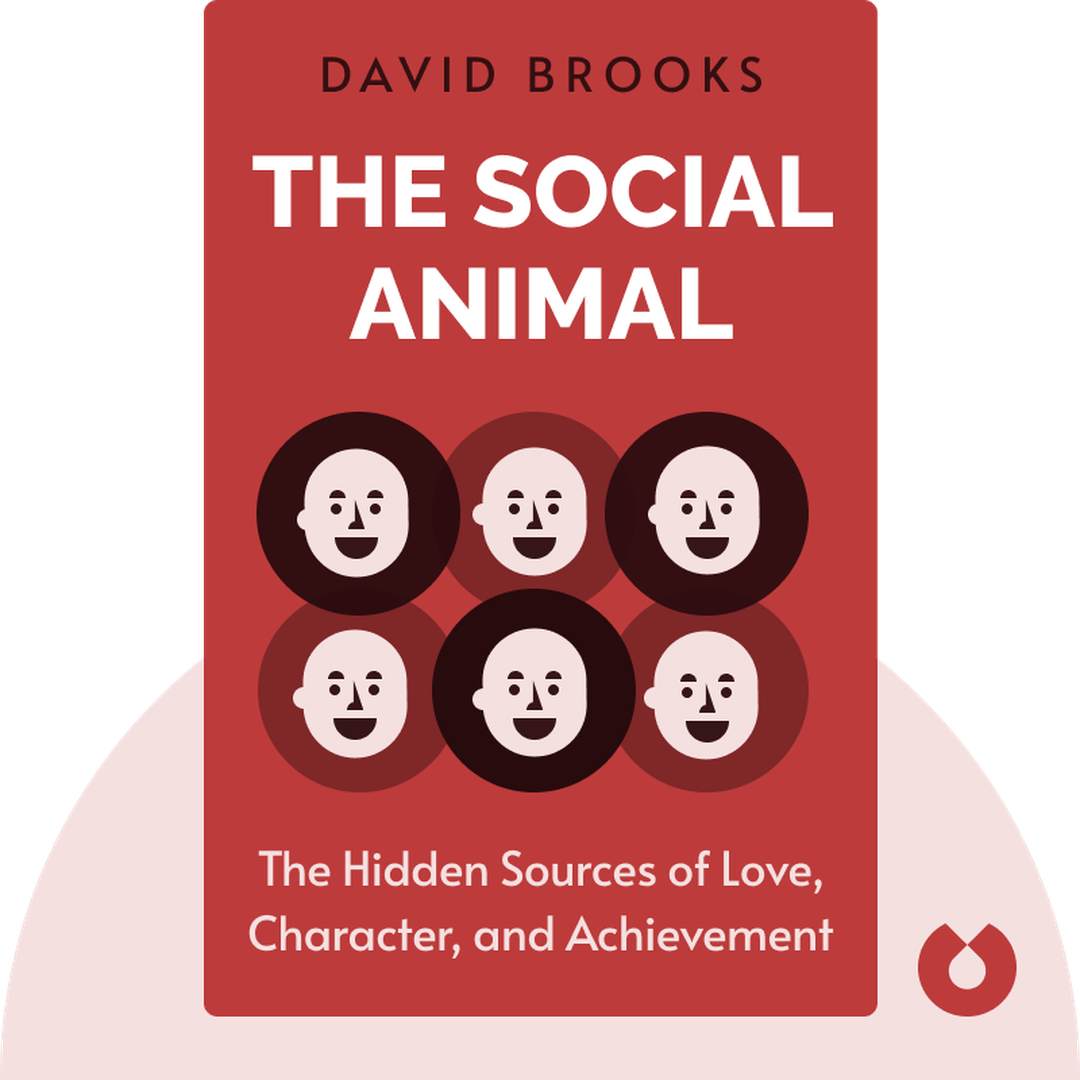
The Social Animal (2011) reviews a trove of scientific evidence explaining what actually determines human behavior. Our iceberg-like unconscious mind helps us navigate the world with split-second judgment, while certain inborn traits drive us to be successful in life. You’re both a lot – and a lot less – smarter than you think!
Who Should Listen to The Social Animal?
- Students of human behavior who want to know what makes us tick
- Skeptics curious about whether people really are rational beings
- Anyone who’s interested in understanding what determines our success in life
Books Similar to The Social Animal
Readers who enjoyed this also liked these titles.