If You're Curious About These Questions...
You should listen to this audiobook
- What if the meteoric rise of brands like Starbucks and Victoria’s Secret wasn’t actually due to luck, but a replicable science you can master?
- Have you ever wondered what specific brand-building secrets allow some companies to achieve massive, rapid growth while others struggle to gain traction?
- What’s the hidden formula that transforms a simple product into a household name and a global market leader?
Listen to Rocket — Free Audiobook
Loading player...
Key Takeaways from Rocket
- Learn how to forge entirely new markets by identifying gaps between luxury and budget, and continually reinvent your brand to meet customers' evolving daily needs.
- Understand the 2/20/80 rule to see why your top two percent of 'apostle consumers' generate 20 percent of your revenue and drive 80 percent of your remaining sales through recommendations.
- Discover why rewarding your most devoted buyers with memorable, value-driven experiences turns them into passionate brand advocates who enthusiastically promote your company.
- Master the use of 'demand spaces' to pinpoint exactly when, why, and with whom your customers use your products, allowing you to successfully launch highly targeted offerings.
- Find out how to craft a brand that appeals to all the senses and emotions, utilizing premium aesthetics and compelling backstories to create unforgettable, highly profitable first impressions.
Learning Tools
Reinforce what you learned from Rocket
Mind Map
Rocket
Product & Market Innovation+
Apostle Consumers+
Demand Spaces+
Aesthetics & Impressions+
Employee Culture+
Digital Relationships+
Continuous Improvement+
Quiz — Test Your Understanding
Question 1 of 7
Why did Les Wexner decide to rebrand Victoria's Secret even after the company reached $2 billion in annual revenue?
Question 2 of 7
What does the 2/20/80 rule represent regarding a brand's 'apostle consumers'?
Question 3 of 7
How does the book define a brand's 'demand spaces'?
Question 4 of 7
According to the text, what is a key lesson about brand aesthetics demonstrated by companies like Cucinelli and Disney?
Question 5 of 7
What is the 'golden rule of customer service' highlighted by the Four Seasons hotel example?
Question 6 of 7
How does Amazon successfully turn regular users into loyal 'apostle consumers' in the digital age?
Question 7 of 7
What is the core philosophy behind Toyota’s 'complaint as a gift' strategy?
Rocket — Full Chapter Overview
- 1Recommendation
- 2Sometimes you need to tell consumers what they want.
- 3The more loyal the customer, the more revenue they generate.
- 4Constantly reassess the needs of your core consumers.
- 5First impressions are vital, and every facet of your brand should be truly beautiful.
- 6Passionate employees lead to satisfied customers.
- 7Strong virtual relationships with your customers are vital in the digital age.
Rocket Summary & Overview
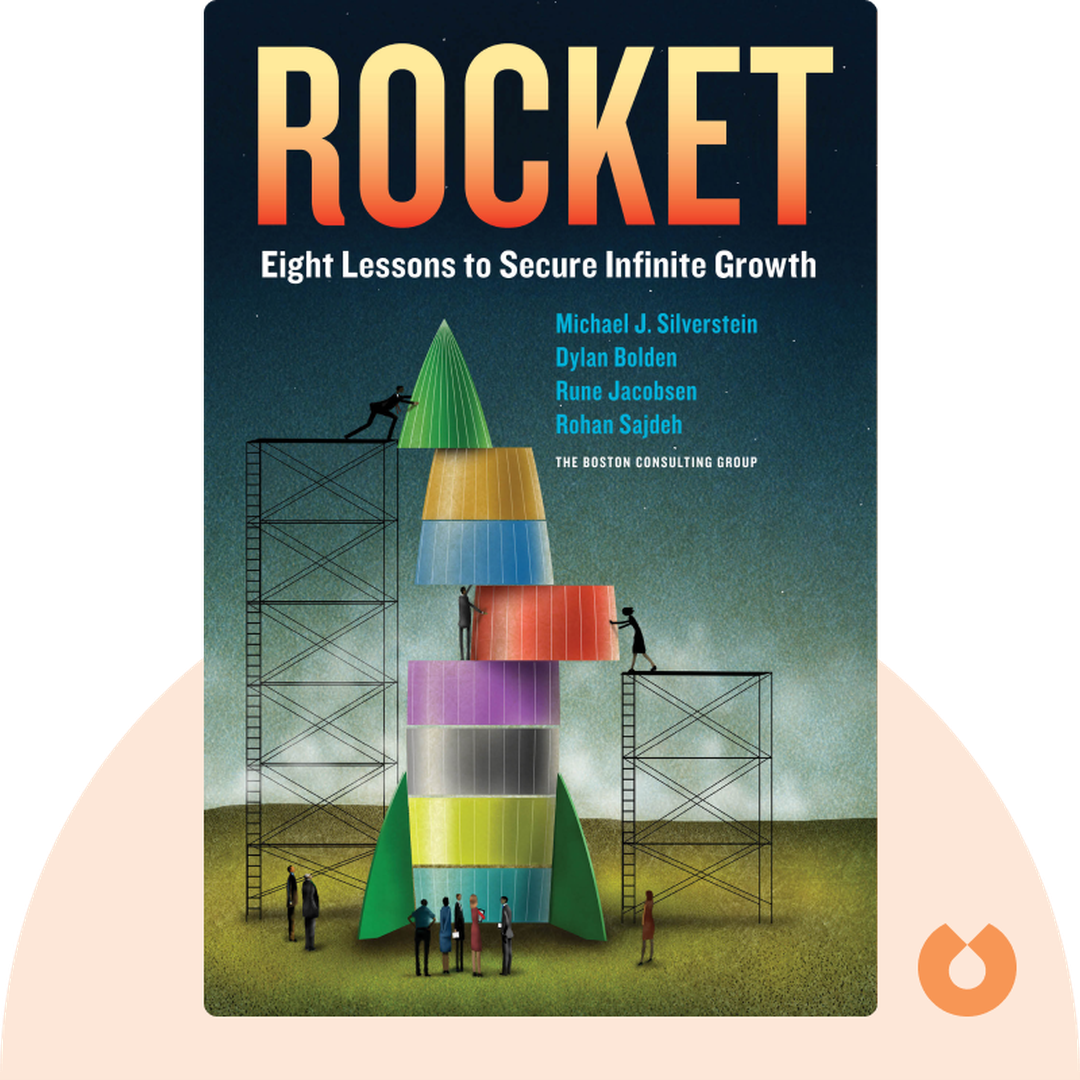
Rocket (2015) is an inside look at the success of brands like Starbucks and Victoria’s Secret, whose rapid rise had nothing to do with luck. These blinks share the proven science of brand building that propelled companies like these to such impressive growth and immense success.
Who Should Listen to Rocket?
- Founders and CEOs looking to grow their small business or start-up
- Young entrepreneurs
- Brand developers and marketers
Books Similar to Rocket
Readers who enjoyed this also liked these titles.