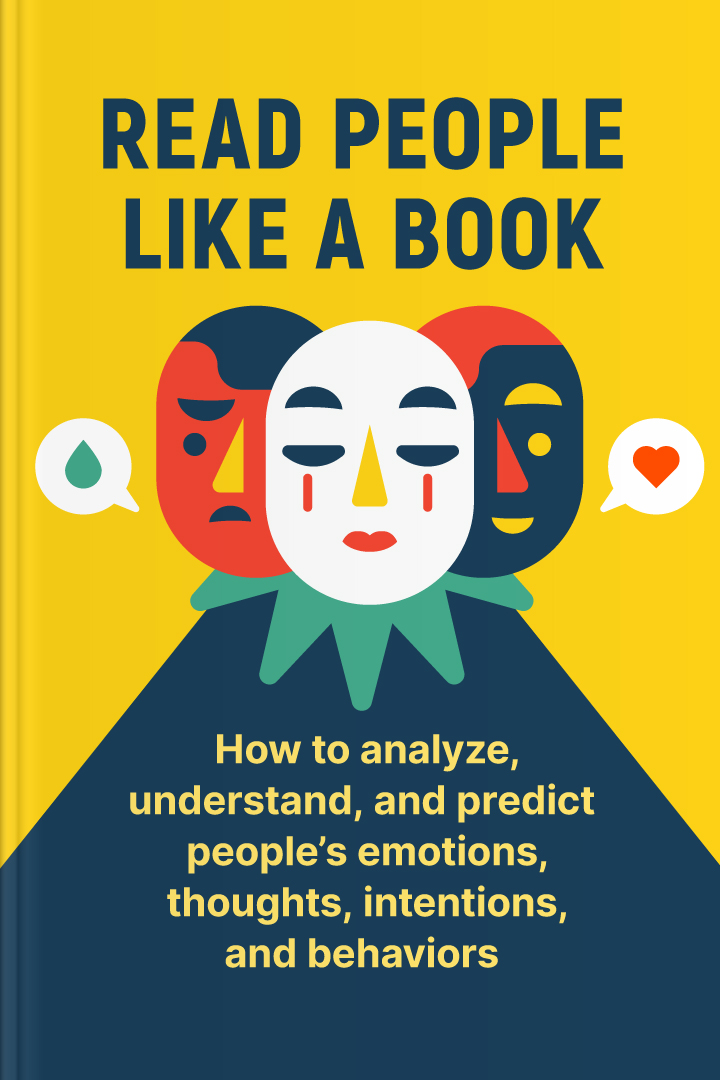
If You're Curious About These Questions...
You should listen to this audiobook
- What if you could decode the hidden motives and needs behind someone’s words just by observing their smallest habits and posture?
- Have you ever wondered why your first impression of someone is often wrong, and what specific 'silent signals' you should actually be looking for instead?
- What’s the secret to reading a person's true emotions without jumping to conclusions or turning into a harsh judge?
Listen to Read People Like a Book — Free Audiobook
Key Takeaways from Read People Like a Book
- Discover why 'mind reading' isn't a mystical gift, but a highly trainable skill rooted in paying close attention and using empathy for connection rather than control.
- Master the art of reading subtle patterns in tone, timing, and posture to uncover the hidden motives and emotions sitting just beneath people's words.
- Understand why loosening your certainty and avoiding quick judgments is crucial to overcoming perceptual bias and accurately interpreting the actions of those around you.
- Learn how to analyze recurring behavioral clusters and cultural context rather than relying on single, often misleading gestures to decode someone's true state of mind.
- Find out how to establish a behavioral 'baseline' for the people in your life, allowing you to easily spot meaningful emotional shifts by first observing their normal daily habits.
Read People Like a Book — Full Chapter Overview
Chapter 1: Recommendation
Chapter 2: The Learnable Art of “Mind Reading”
Chapter 3: Context, Humility, and the Discipline of Noticing
Chapter 4: Following the Why: Motives Beneath Behavior
Chapter 5: The Quiet Signals: Faces, Bodies, and What They Might Mean
Chapter 6: Typologies as Maps, Not Labels
Chapter 7: Gentle Detective Work: Noticing Deception Without Losing Compassion
Chapter 8: Thin Slices, Word Choices, and the Stories in Private Spaces
Chapter 9: Reading People for Connection, Not Control
Read People Like a Book Summary & Overview
This audio guide explores a grounded, compassionate approach to “mind reading”—not as a supernatural gift, but as a practical skill built through observation, context, and empathy. Across eight short chapters, it walks through motives, needs, and the silent signals people send through expression, posture, habits, and word choice.
Along the way, you’ll hear how to avoid the common traps—like overconfidence, snap labeling, and reading too much into a single gesture. The emphasis stays human and kind: noticing patterns, asking better questions, and using what you learn to build trust, reduce conflict, and protect yourself without turning into a harsh judge of other people.
Who Should Listen to Read People Like a Book?
- People who want to communicate more smoothly at home or work by understanding emotions and motives beneath the surface.
- Listeners who want practical tools for noticing nonverbal cues and inconsistencies—without jumping to accusatory conclusions.
- Anyone interested in psychology, personality patterns, and the art of staying curious instead of critical.
Books Similar to Read People Like a Book
Readers who enjoyed this also liked these titles.
Think Like a Psychologist, Analyze Human Behavior, and Decode Emotions
How to Analyze Emotions, Read Body Language and Behavior, Understand Motivations, and Decipher Intentions

In a world where small untruths and large deceptions live side by side, this warm, practical guide helps listeners notice subtle cues, ask steadier questions, and seek truth with empathy—so relationships, decisions, and self-understanding can feel clearer and more authentic.
Understand Others to Get What You Want