If You're Curious About These Questions...
You should listen to this audiobook
- What if you could dismantle even the most deeply rooted exclusionary systems and build a community where every individual truly belongs?
- Have you ever wondered why some organizations struggle with diversity despite their best efforts, and what the missing piece to achieving 'radical' inclusion really is?
- What’s the secret to turning a local fight for justice into a global blueprint for social change and equitable leadership?
Listen to Radical Inclusion — Free Audiobook
Loading player...
Key Takeaways from Radical Inclusion
- Understand why exclusion often goes unnoticed due to entrenched cultural norms, and discover how making these invisible barriers visible is the crucial first step toward systemic change.
- Learn how to actively identify exclusion by asking 'Who is missing, and why?' and combining personal stories with hard data to challenge deep-rooted biases.
- Discover the transformative power of active listening to uncover the hidden fears and misconceptions that drive people's resistance to change.
- Master the strategy of using powerful personal testimonies and shared community values to effectively reframe complex issues and shift public perspective.
- Define your unique role in driving inclusion by asking 'Why you? Why now?' and leveraging your personal strengths to build coalitions at the right moment.
Learning Tools
Reinforce what you learned from Radical Inclusion
Mind Map
Radical Inclusion
Core Concepts+
Step 1: Recognize Exclusion+
Step 2: Listen Actively+
Step 3: Define Your Role+
Step 4: Build Coalitions+
Step 5: Advocate and Act+
Step 6: Adapt to a New Normal+
Step 7: Go Beyond Inclusion+
Quiz — Test Your Understanding
Question 1 of 7
Why does exclusion often persist unchallenged in society, according to the text?
Question 2 of 7
What was the turning point during the Makeni town hall discussion about pregnant girls attending school?
Question 3 of 7
How does the author suggest individuals approach defining their role to make a systemic impact?
Question 4 of 7
What does the text identify as being at the heart of any effective coalition?
Question 5 of 7
How did David Moinina Sengeh reframe the policy of allowing pregnant girls back into school to overcome cabinet resistance?
Question 6 of 7
What role did cultural tools, such as comedy, play in building a new culture of inclusion in Sierra Leone?
Question 7 of 7
What did the experiences of Black students at institutions like Harvard and MIT demonstrate about sustaining progress?
Radical Inclusion — Full Chapter Overview
- 1Recommendation
- 2Recognize and address exclusion
- 3Understanding exclusion via listening
- 4Define your role and know the right time to act
- 5Build strong coalitions for lasting change
- 6Drive change through advocacy and action
- 7Building a new culture for inclusion
- 8Sustain progress and address emerging challenges
Radical Inclusion Summary & Overview
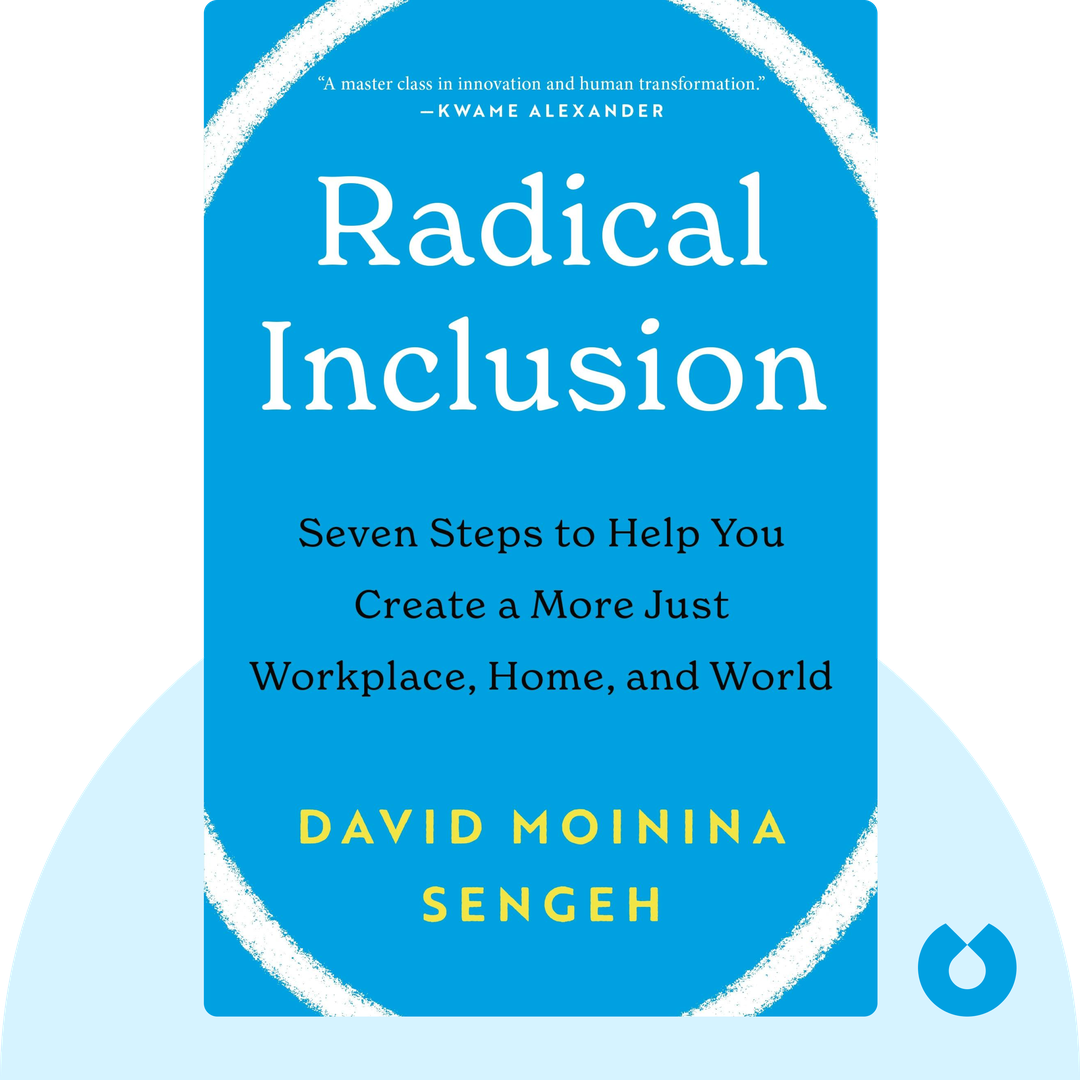
Radical Inclusion (2024) tells the compelling story of a fight to guarantee the right of pregnant girls in Sierra Leone to attend school. It explores how exclusionary systems can be transformed and offers practical strategies for creating more inclusive and equitable communities. Through personal stories and global experiences, it will provide you with a blueprint for fostering a world where everyone truly belongs.
Who Should Listen to Radical Inclusion?
- Community leaders advocating for social change
- Educators seeking inclusive teaching strategies
- Policymakers addressing systemic inequality and exclusion
Books Similar to Radical Inclusion
Readers who enjoyed this also liked these titles.