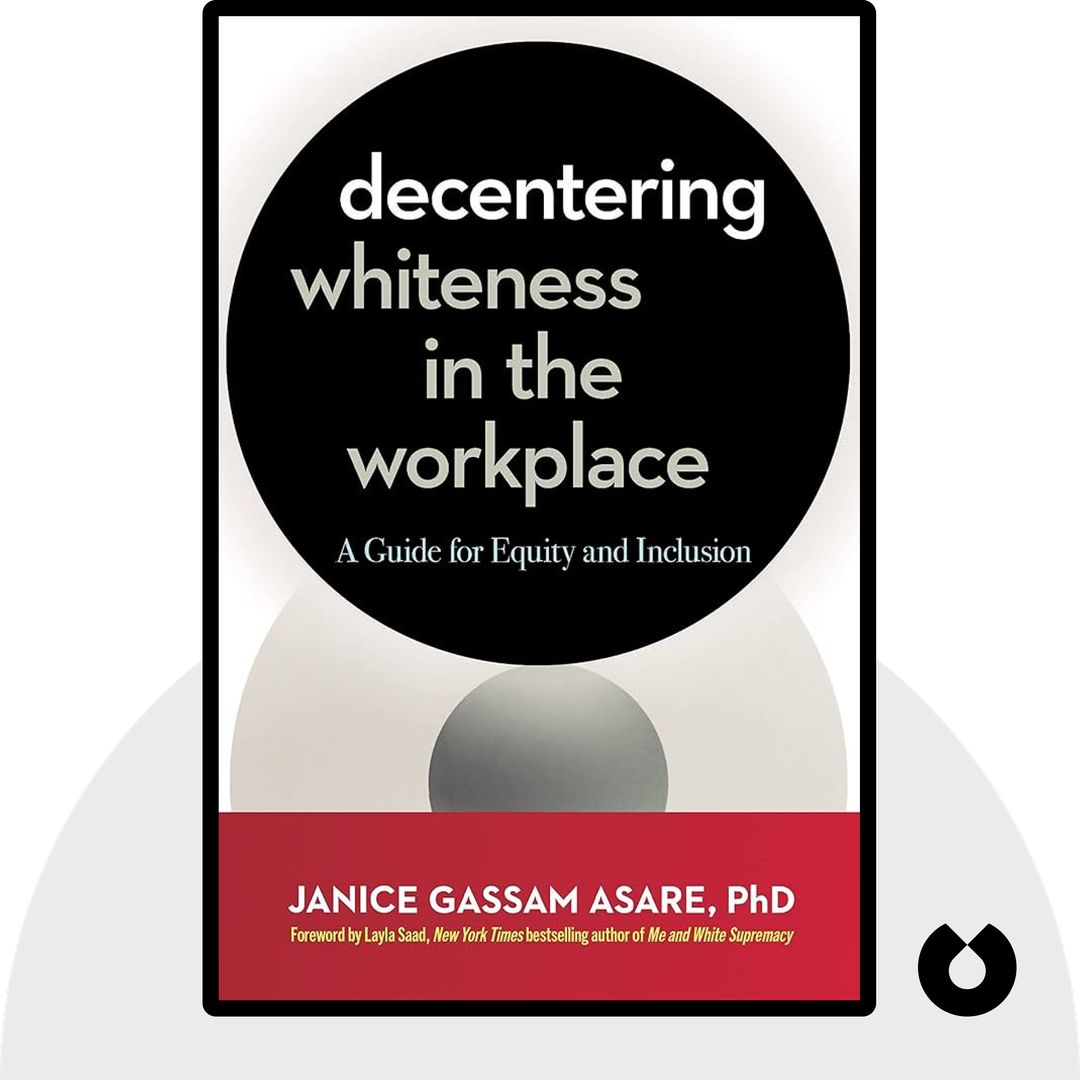
Decentering Whiteness in the Workplace
Start ListeningDownload Try free on iPhoneScan to start in 5 seconds
Categories:
If You're Curious About These Questions...
You should listen to this audiobook
- Have you ever wondered why standard 'professionalism' in the office often feels like it’s designed for only one specific group of people?
- Did you know that your company's most well-intentioned DEI policies might actually be reinforcing the very biases they aim to eliminate?
- What if you could uncover the hidden cultural 'defaults' that are preventing your team from achieving genuine inclusion and belonging?
Listen to Decentering Whiteness in the Workplace — Free Audiobook
Loading player...
Key Takeaways from Decentering Whiteness in the Workplace
- Discover why well-intentioned attempts at empathy in diversity discussions often fail by unintentionally centering white experiences and minimizing profound racial discrimination.
- Understand the historical roots of 'whiteness' not just as a racial identity, but as a constructed social and legal system designed to consolidate and maintain power.
- Identify the invisible ways white-centered norms permeate modern workplaces, from implicitly biased grooming policies to subtle preferences for Eurocentric names and speaking patterns.
- Learn how subtle micro-messages and daily cultural biases pressure employees of color to assimilate, draining their energy and limiting their professional advancement.
- Harness the 'curb cut effect' by designing workplace policies that center marginalized perspectives, unlocking innovative and universally beneficial solutions that uplift the entire organization.
Learning Tools
Reinforce what you learned from Decentering Whiteness in the Workplace
Mind Map
Decentering Whiteness in the Workplace
Concept & History of Whiteness+
Impacts of Centering Whiteness+
Steps to Start Decentering+
Centering the Margins+
Redefining Empathy+
Quiz — Test Your Understanding
Question 1 of 7
What was the core issue with Julia's response to Shonda's experience of hair discrimination in the diversity task force meeting?
Question 2 of 7
According to the text, how did the social and legal boundaries of 'whiteness' evolve in the United States as the nation expanded?
Question 3 of 7
What is the 'curb cut effect' used to illustrate in the context of workplace diversity?
Question 4 of 7
Which of the following is recommended as a strategic step to decenter whiteness in the hiring process?
Question 5 of 7
How does the text suggest organizations should hold leadership accountable for cultural equity and inclusion?
Question 6 of 7
What does the text identify as a characteristic of 'diversity theater'?
Question 7 of 7
What powerful insight did Julia gain about empathy after attending anti-racist training?
Decentering Whiteness in the Workplace — Full Chapter Overview
- 1Recommendation
- 2The history of whiteness
- 3How centering whiteness affects the workplace
- 4Steps for beginning to decenter whiteness
- 5Bringing the margins to the center
- 6A note on empathy
- 7Final summary
Decentering Whiteness in the Workplace Summary & Overview
Decentering Whiteness in the Workplace (2023) exposes how white-dominant norms, mindsets, and behaviors subtly perpetuate harms and constrain inclusion in policies, interactions, and cultures across organizations.
Who Should Listen to Decentering Whiteness in the Workplace?
- Human resources professionals looking to tackle subtle biases hindering diversity, equity, and inclusion efforts
- Organizational leaders seeking fresh perspectives on barriers facing marginalized groups
- Employees seeking solutions to dominant cultural patterns in the workplace
Books Similar to Decentering Whiteness in the Workplace
Readers who enjoyed this also liked these titles.