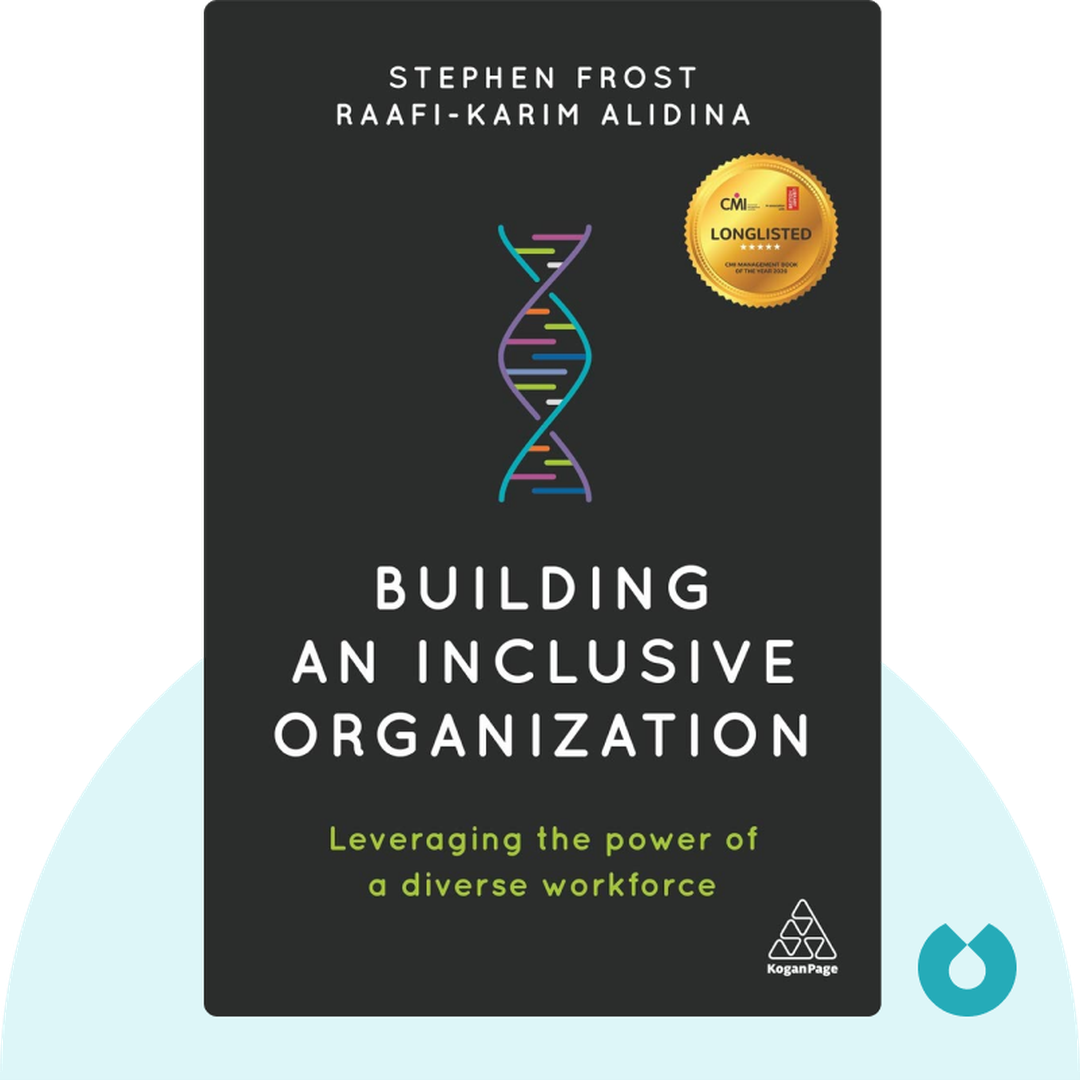
Building an Inclusive Organization
Start ListeningDownload Try free on iPhoneScan to start in 5 seconds
Categories:
If You're Curious About These Questions...
You should listen to this audiobook
- What if the secret to your company’s next breakthrough isn’t hiring more 'culture fits,' but intentionally building teams that disagree?
- Have you ever wondered why even the most well-intentioned diversity initiatives often fail to create real, lasting change?
- Did you know that the most successful organizations aren’t just diverse on paper, but have mastered a specific environment where every voice feels safe to challenge the status quo?
Listen to Building an Inclusive Organization — Free Audiobook
Loading player...
Key Takeaways from Building an Inclusive Organization
- Discover why 'box-ticking' diversity fails and learn how to make the structural interventions necessary to build a truly inclusive, innovative, and profitable company culture.
- Understand how genuine workplace diversity combats modern polarization, breaking down the harmful echo chambers and groupthink that stifle original ideas.
- Uncover how invisible unconscious biases secretly dictate hiring and leadership decisions, and why claiming 'I don't see color' only masks the problem.
- Master the 'Ladder of Cultural Competence' to actively counteract your hidden prejudices using concrete strategies like anonymized recruiting and diverse hiring committees.
- Find out why the gender pay gap is a company-wide cultural crisis that men must actively help solve, requiring transparent, merit-based practices rather than superficial equality awards.
Learning Tools
Reinforce what you learned from Building an Inclusive Organization
Mind Map
Building an Inclusive Organization
The Case for Diversity & Inclusion+
Overcoming Unconscious Bias+
Addressing the Gender Pay Gap+
Leadership & Data Gathering+
Actionable Culture Change+
Industry-Specific Challenges+
Empathy & Personal Connection+
Quiz — Test Your Understanding
Question 1 of 10
What do the authors mean when they refer to 'Diversity 101'?
Question 2 of 10
According to Noel Burch’s 'Ladder of Cultural Competence,' what characterizes the final stage of 'unconscious competence'?
Question 3 of 10
Why do the authors argue that men in leadership need to start worrying about the gender pay gap?
Question 4 of 10
What does the Tour de France tradition of giving a 'red lantern' to the last cyclist illustrate about building teams?
Question 5 of 10
What is 'minority stress' as described in the book?
Question 6 of 10
What potential danger do the authors associate with standard unconscious bias workshops?
Question 7 of 10
Which of the following is recommended by the authors as a structural intervention to make meetings more inclusive?
Question 8 of 10
Why are cultural and creative industries particularly difficult to transform regarding diversity and inclusion?
Question 9 of 10
How do big tech companies often incorrectly justify their lack of diversity?
Question 10 of 10
What actionable advice do the authors give for building empathy and getting 'buy-in' for diversity initiatives within an organization?
Building an Inclusive Organization — Full Chapter Overview
- 1Recommendation
- 2In increasingly polarized times, workplace diversity matters more than ever.
- 3We need to confront unconscious bias to transform our workplaces.
- 4Men must start taking the gender pay gap seriously.
- 5Homogeneous workplaces are bad for business.
- 6Inclusive leadership begins with gathering data.
- 7Transformation comes through action; culture is something you do.
- 8Diversity and inclusion policies should be adapted to specific industries.
- 9The tech industry can lead the way on diversity and inclusion.
- 10Final summary
Building an Inclusive Organization Summary & Overview
Building an Inclusive Organization (2019) offers a roadmap for leaders to create organizations that truly celebrate diverse perspectives in the workplace. The authors show that to become truly inclusive, workplaces need to work hard to overcome unconscious bias, create divergent teams where people challenge each other, and implement policies to create a psychologically safe environment for all.
Who Should Listen to Building an Inclusive Organization?
- Hiring managers who want to learn how to turn good intentions into action
- Leaders wanting to make their companies more innovative and inclusive
- Anyone who has suffered systematic discrimination and wants to understand how the system works.
Books Similar to Building an Inclusive Organization
Readers who enjoyed this also liked these titles.