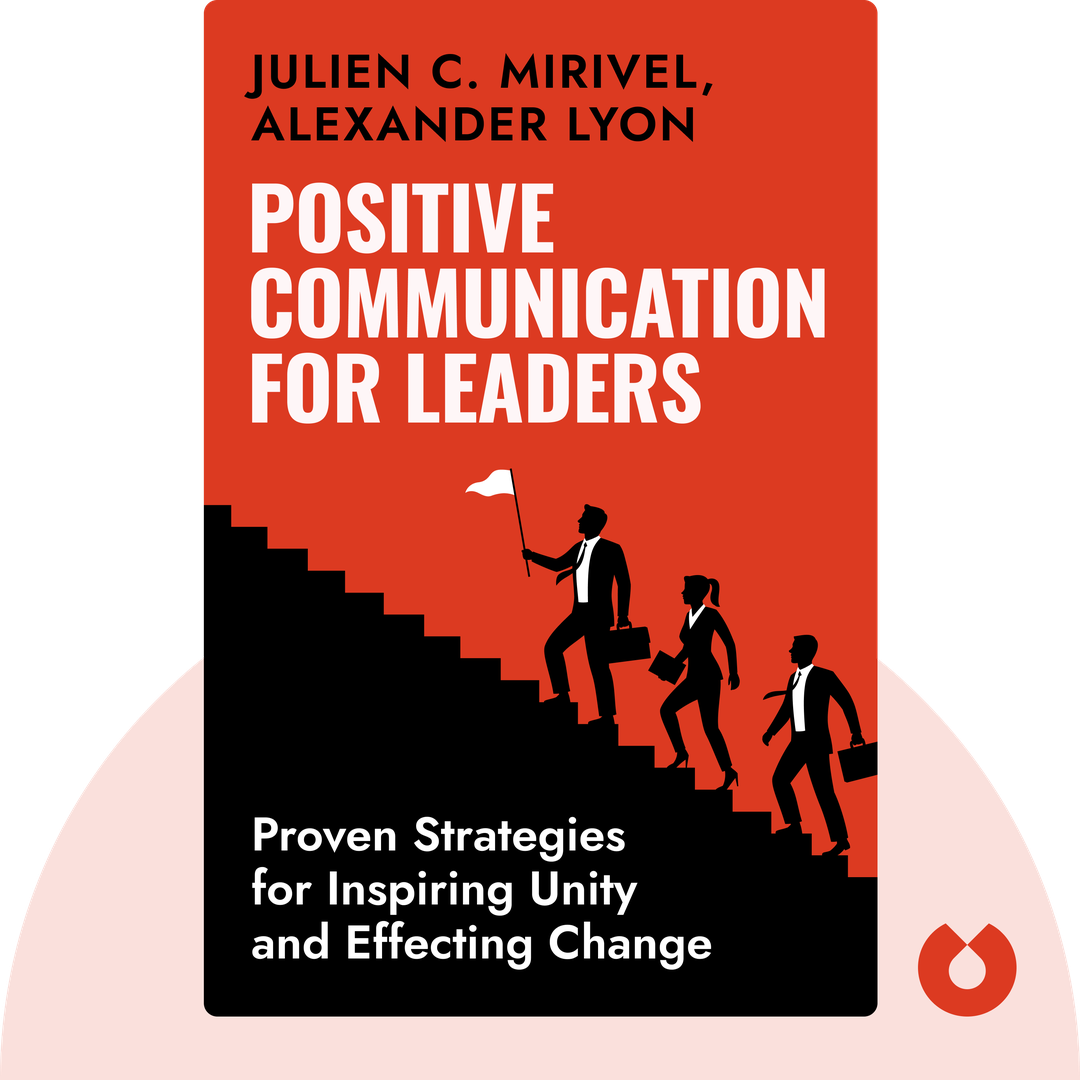
Positive Communication for Leaders
Start ListeningDownload Try free on iPhoneScan to start in 5 seconds
Categories:
If You're Curious About These Questions...
You should listen to this audiobook
- Did you know that a simple shift in the way you frame your daily requests can be the catalyst for a total transformation in your team's culture?
- What if you could master a specific listening technique that doesn't just gather information, but actually builds deep trust and psychological safety within your organization?
- What's the secret to delivering difficult feedback in a way that leaves your employees feeling empowered and driven to improve rather than defeated?
Listen to Positive Communication for Leaders — Free Audiobook
Loading player...
Key Takeaways from Positive Communication for Leaders
- Discover why a simple, intentional greeting is a transformative leadership tool that validates team members and lays the foundation for productive relationships.
- Learn how to bridge the digital divide by applying principles of positive interaction to your emails, promoting a culture of respect and connection.
- Master the use of open-ended questions to shift your leadership approach from merely directing employees to discovering their potential and sparking innovation.
- Understand the concept of appreciative inquiry and how asking positive questions can revolutionize performance reviews by focusing on strengths instead of critiques.
- Find out how mastering the art of the compliment directly strengthens the supervisor-employee relationship, which is the most potent driver of team performance.
Learning Tools
Reinforce what you learned from Positive Communication for Leaders
Mind Map
Positive Communication for Leaders
Greetings+
Questions+
Compliments+
Encouragement+
Deep Listening+
Quiz — Test Your Understanding
Question 1 of 6
According to the text, what is the deeper significance of a leader initiating a greeting in the workplace?
Question 2 of 6
How does the concept of 'appreciative inquiry' change traditional performance reviews and organizational change initiatives?
Question 3 of 6
What does the text identify as the most potent driver of an employee’s performance?
Question 4 of 6
What leadership lesson is illustrated by the example of filling bags of sand to protect a town from floodwaters?
Question 5 of 6
What is the purpose of the '1-2-4-All' method mentioned in the section on deep listening?
Question 6 of 6
According to the text, how does the communication style of higher-ranking executives typically differ from others?
Positive Communication for Leaders — Full Chapter Overview
- 1Recommendation
- 2Greetings: The first step toward transformative leadership
- 3Questions: Igniting innovation through curiosity
- 4Compliments: Elevating team spirit and performance
- 5Encouragement: Powering purpose and passion
- 6Deep listening: The cornerstone of effective leadership
Positive Communication for Leaders Summary & Overview
Positive Communication for Leaders (2023) explores the transformative power of positive communication strategies in leadership roles. It offers practical guidance on employing positive language, active listening, and constructive feedback to enhance organizational effectiveness and interpersonal relationships. Through theoretical insights and real-world applications, it aims to equip leaders with the tools to foster a more supportive and productive workplace environment.
Who Should Listen to Positive Communication for Leaders?
- Corporate leaders seeking to improve team dynamics
- HR professionals interested in organizational development strategies
- Managers aiming to enhance employee engagement
Books Similar to Positive Communication for Leaders
Readers who enjoyed this also liked these titles.