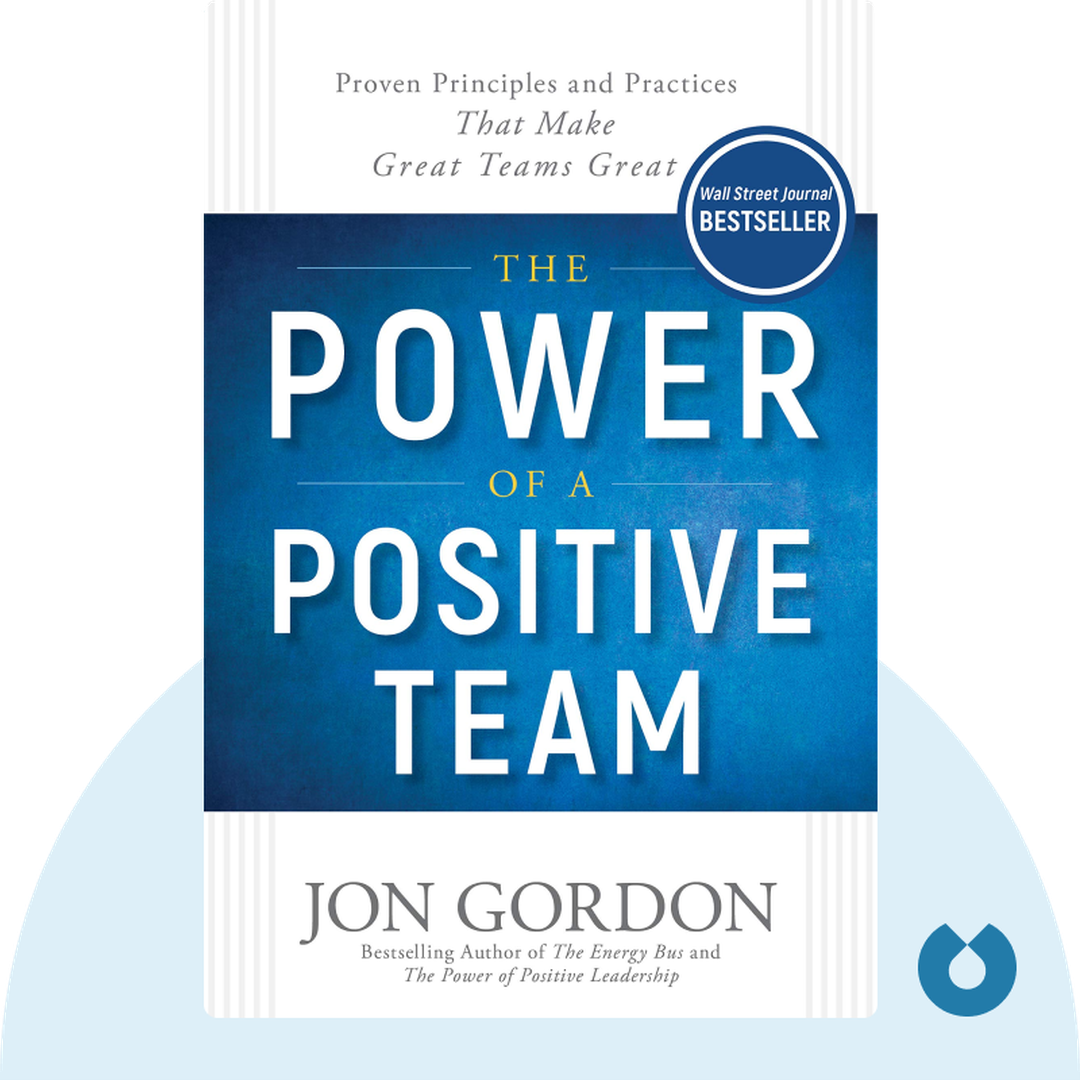
The Power of a Positive Team
Start ListeningDownload Try free on iPhoneScan to start in 5 seconds
Categories:
If You're Curious About These Questions...
You should listen to this audiobook
- What’s the secret to neutralizing team negativity before it drains your organization’s productivity and morale?
- Have you ever wondered why some teams thrive under pressure while others crumble despite having talented members?
- What if you could implement a few proven principles to transform your team's communication and unlock a new level of commitment?
Listen to The Power of a Positive Team — Free Audiobook
Loading player...
Key Takeaways from The Power of a Positive Team
- Discover how radiating optimism as a leader naturally attracts top talent and encourages colleagues to willingly share new ideas and opportunities.
- Understand why a strong team culture ultimately beats strategy, and how scientific studies prove that every team member's emotions are contagious.
- Learn how to actively confront and eliminate toxic negativity by implementing bold tactics, like a 'negative energy vampire' wall, to maintain a winning mindset.
- Master the 'no complaining' rule to instantly shut down toxic workplace venting by requiring team members to present a viable solution alongside any grievance.
- Recognize why an overreliance on digital messaging apps leads to communication voids, making regular face-to-face meetings essential for true team unity.
Learning Tools
Reinforce what you learned from The Power of a Positive Team
Mind Map
The Power of a Positive Team
The Value of Positivity+
Team Culture+
Eradicating Negativity+
Meaningful Communication+
Care & Commitment+
Continuous Improvement+
Quiz — Test Your Understanding
Question 1 of 7
According to psychologist John Gottman's research mentioned in the text, what interaction ratio is a strong indicator of a successful relationship?
Question 2 of 7
How does the book describe the relationship between culture and strategy, using Apple as an example?
Question 3 of 7
What is the primary function of the 'no complaining' rule invented by Dwight Cooper?
Question 4 of 7
What typically happens when a team experiences a 'communication void' due to over-reliance on digital tools instead of face-to-face interaction?
Question 5 of 7
Based on Nick Hays's observations during Navy SEAL 'Hell Week,' what was the primary difference between the recruits who quit and those who succeeded?
Question 6 of 7
How does the 'one percent rule' function within a positive team?
Question 7 of 7
According to the actionable advice in the summary, what is a vital prerequisite for providing effective constructive criticism to a team member?
The Power of a Positive Team — Full Chapter Overview
- 1Recommendation
- 2Building a positive team helps both the group and the leader who guides it.
- 3A strong team culture is vital, and each team member matters greatly in sustaining it.
- 4Positive teams face negativity and proactively remove it from their ranks.
- 5Weak communication breeds negativity, so teams must hold ongoing regular face-to-face meetings.
- 6Care and commitment are key to truly remarkable collective and individual achievement.
- 7Positive teams take small, deliberate steps toward greatness for the sake of fellow team members.
The Power of a Positive Team Summary & Overview
The Power of a Positive Team (2018) shares proven principles that help good teams become great. Using real-life examples from the author’s many years of work in business consulting, the blinks explain how you can improve your team’s communication and commitment while dispelling negativity.
Who Should Listen to The Power of a Positive Team?
- Anyone wanting to build a better team
- Leaders looking to brush up on their management skills
- Business owners wanting to improve their company’s culture
Books Similar to The Power of a Positive Team
Readers who enjoyed this also liked these titles.