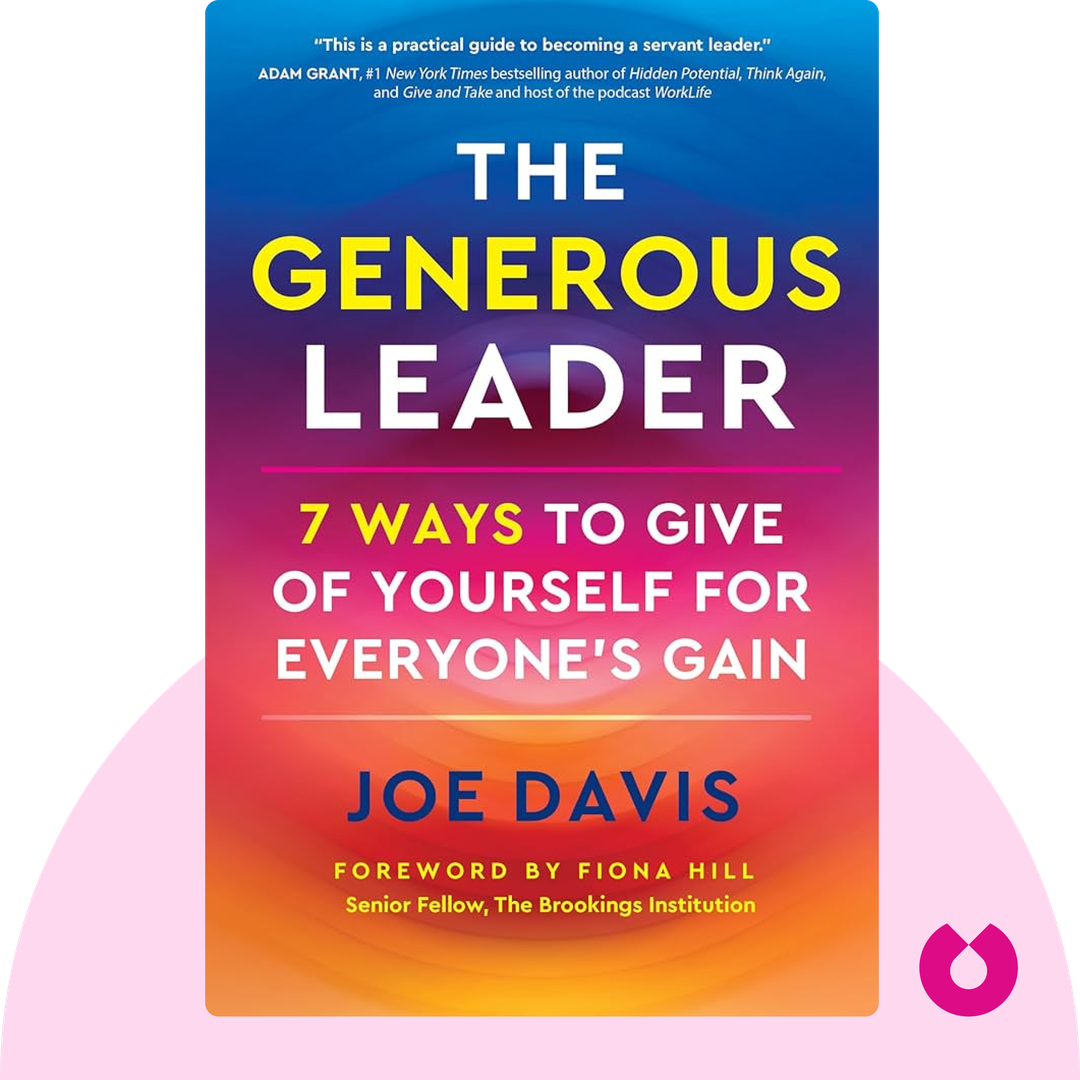
If You're Curious About These Questions...
You should listen to this audiobook
- What if the secret to building a high-performing organization wasn't about exerting more control, but about practicing a radical form of generosity?
- Have you ever wondered how being 'authentically present' can transform your professional environment and lead to more sustainable success than traditional management tactics?
- Are you curious about how leading with heart and integrity can actually become your greatest competitive advantage in today’s business world?
Listen to The Generous Leader — Free Audiobook
Loading player...
Key Takeaways from The Generous Leader
- Discover how to lead with true generosity by prioritizing attention, empathy, and respect to inspire profound team engagement and success.
- Understand why treating employees as whole individuals through empathetic, personal communication and shared vulnerability builds a resilient and loyal workplace.
- Master the art of generous listening by focusing on asking questions and tuning into emotional states rather than simply issuing commands or delivering content.
- Learn how to transform workplace inclusion into a strategic asset by proactively seeking out and integrating diverse viewpoints into your organization's core decision-making.
- Find out how empowering frontline workers to share ideas without the immediate influence of senior management can unlock uninhibited discussions and drive tangible operational improvements.
Learning Tools
Reinforce what you learned from The Generous Leader
Mind Map
The Generous Leader
Personal Connection & Communication+
Generous Listening+
Workplace Inclusion+
Active Allyship+
Recognition & Feedback+
Small Gestures+
Vulnerability as Strength+
Quiz — Test Your Understanding
Question 1 of 8
How does the book define 'generosity' in the context of leadership?
Question 2 of 8
When integrating personal connections into professional communication, what conventional workplace boundary does this method challenge?
Question 3 of 8
According to Google’s Project Oxygen study mentioned in the text, what is the most impactful trait of an effective leader?
Question 4 of 8
In the example provided about improving safety measures, why did the leader initially exclude senior management from the gathering of 300 field supervisors?
Question 5 of 8
What example does the text use to demonstrate 'active allyship' during a strategic planning session?
Question 6 of 8
How should leaders approach providing feedback to their team members to ensure it is effective?
Question 7 of 8
What was the result of a senior manager expressing a simple act of gratitude to university fundraisers, according to a cited study?
Question 8 of 8
How does the book view the traditional business doctrine of maintaining a stoic, detached leadership style?
The Generous Leader — Full Chapter Overview
- 1Recommendation
- 2Personal connections in leadership communication
- 3The craft of generous listening in leadership
- 4Tactics for workplace inclusion
- 5Cultivating diversity through active allyship
- 6Advancing growth with recognition and feedback
- 7Small gestures with outsized impact in leadership
- 8Leadership power through vulnerability
The Generous Leader Summary & Overview
The Generous Leader (2024) explores how leaders can profoundly influence their environments by practicing generosity in various aspects of their interactions and decisions. It details methods for building genuine connections, fostering inclusivity, and being authentically present in professional settings, thereby transforming leadership into a tool for positive change in organizations and society. Through stories and practical advice, it emphasizes the importance of leading with heart and integrity to achieve sustainable success.
Who Should Listen to The Generous Leader?
- Aspiring and current business leaders and managers
- Entrepreneurs seeking to improve team dynamics
- Anyone interested in personal development and leadership skills
Books Similar to The Generous Leader
Readers who enjoyed this also liked these titles.