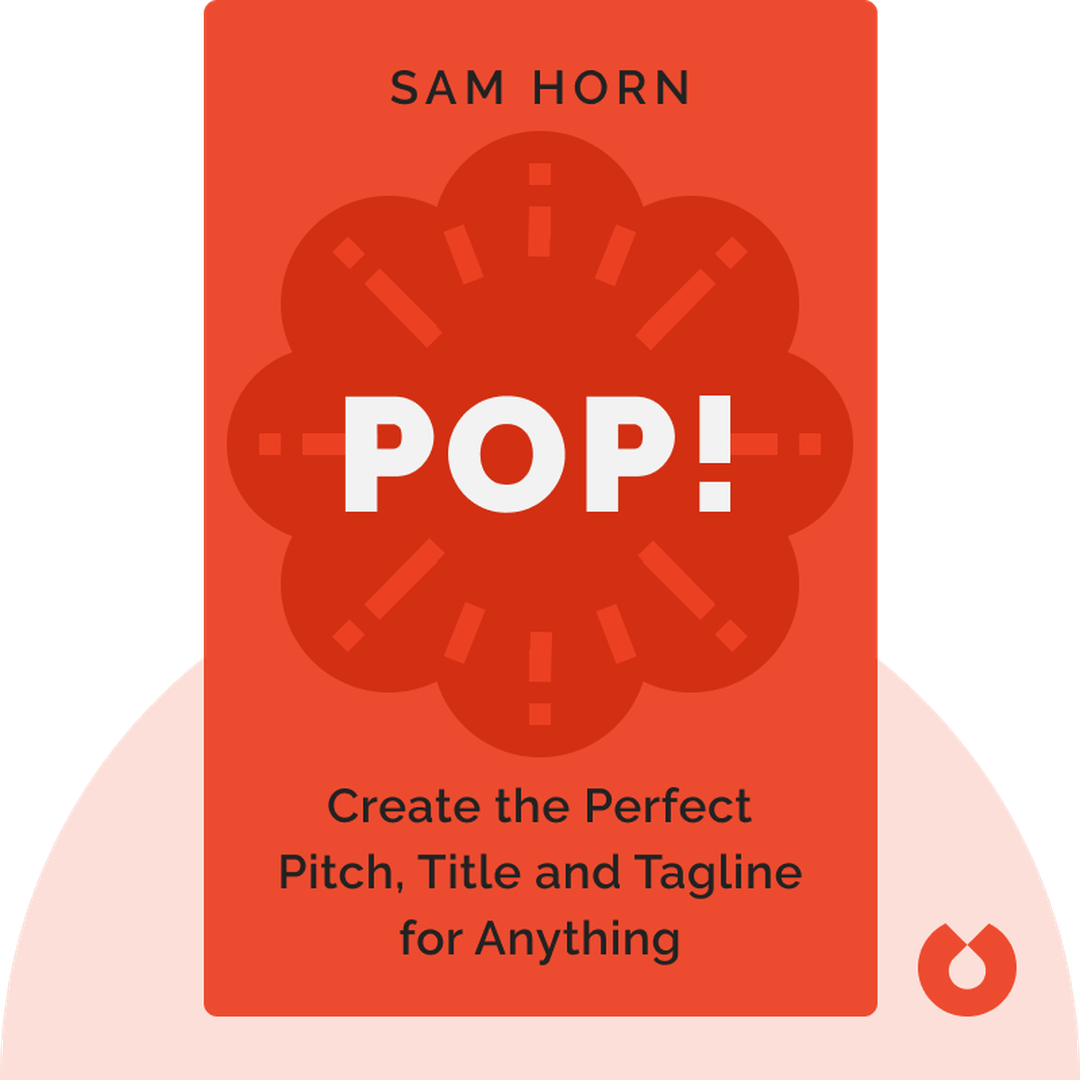
If You're Curious About These Questions...
You should listen to this audiobook
- Have you ever wondered why some ideas instantly stick in people’s minds while others are forgotten the moment they’re heard?
- What if you could follow a simple, systematic formula to ensure every title, pitch, or tagline you create is 'Popular, Original, and Pithy'?
- Are you curious about the secret to crafting messages that don't just grab attention, but actually win people over to your brand or product?
Listen to POP! — Free Audiobook
Loading player...
Key Takeaways from POP!
- Discover the POP! framework and learn how to craft pitches, titles, and taglines that are Purposeful, Original, and Pithy.
- Understand why the most successful slogans are under seven words long, perfectly matching the brain's short-term memory capacity.
- Learn how to answer the 'Big W's' of your business to build a foundational bank of core words that articulate the exact essence of your idea.
- Master creative wordplay techniques like 'Spell Chuck' and syllable swapping to invent one-of-a-kind brand names that effortlessly generate free media attention.
- Find out how to tap into your audience's love of music by using alliteration, rhythm, and rhyme to make your marketing messages deeply memorable.
Learning Tools
Reinforce what you learned from POP!
Mind Map
POP!
The POP! Philosophy+
Foundational Strategy+
Creative Techniques+
Imagery & Narrative+
Quiz — Test Your Understanding
Question 1 of 10
What does the acronym POP stand for in the context of creating memorable messages?
Question 2 of 10
Why is 'Pith' a crucial element of a successful advertising message?
Question 3 of 10
According to the text, what forms the foundational building blocks from which all POP! messages are constructed?
Question 4 of 10
Which originality technique involves deliberately discarding the normal way of writing a word to create a catchy phrase, such as a salon named 'Curl up and Dye'?
Question 5 of 10
How can using an iambic meter (accenting every other beat, like 'Ta DUM, Ta DUM') improve a message?
Question 6 of 10
What is the recommended systematic approach for handling clichés when trying to be 'HUMORiginal'?
Question 7 of 10
When creating personalized metaphors to visualize your message, the book suggests drawing columns for the 'Three A's.' What are they?
Question 8 of 10
What is the 'half-and-half' technique used for in message creation?
Question 9 of 10
Why does the author emphasize wrapping your message in a story?
Question 10 of 10
What actionable advice does the book give to help creators harness the 'collective unconscious' of their audience?
POP! — Full Chapter Overview
- 1Recommendation
- 2Make your message stick by making it POP!: Purposeful, Original, and strikingly Pithy for impact.
- 3Answer the big W’s to build core words that define and anchor your message’s purpose clearly.
- 4Experiment with core words and step into your customer’s point of view.
- 5Harness your audience’s deep love of music.
- 6Connect to your customer’s world via celebrities and popular media.
- 7Be HUMORiginal — but avoid clichés like the plague.
- 8Visualize your message using images and metaphors.
- 9Be counterintuitive and catch your audience off guard.
- 10Hold your audience’s attention through the power of stories.
POP! Summary & Overview
This book shows you how to craft messages and ideas that stick in the minds of your audience because they are Popular, Original and Pithy. Author Sam Horn offers a highly adaptable and systematic approach to creating pitches, titles and taglines that grasp people’s attention and win them over to your brand, product or idea.
Who Should Listen to POP!?
- Anyone who wants to learn how to sell
- Anyone who has to deliver professional pitches or create titles or taglines
- Anyone who wants to share their ideas and make them stick
Books Similar to POP!
Readers who enjoyed this also liked these titles.