If You're Curious About These Questions...
You should listen to this audiobook
- Did you know that your pitch is likely being filtered out by your listener’s 'instinctive brain' before their logical mind even hears a word?
- Have you ever wondered why some people command immediate respect in a meeting, and how you can use 'frames' to take control of any conversation?
- What if you could stop chasing clients and instead use a specific 20-minute method to make them feel like they are the ones competing for your idea?
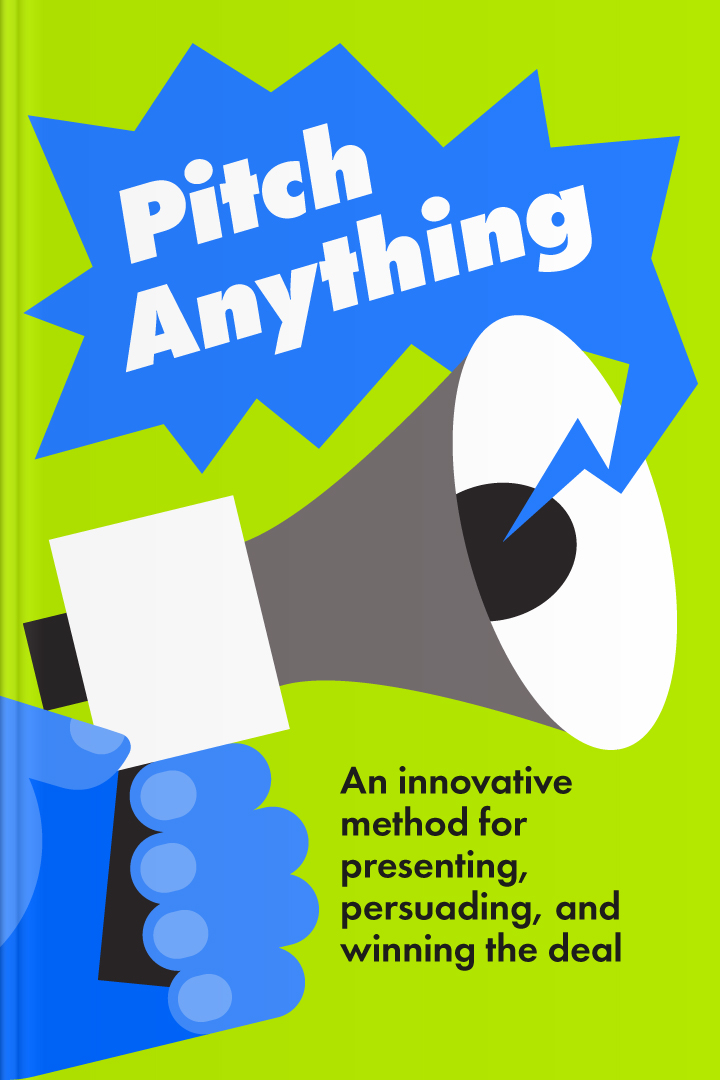
Listen to Pitch Anything — Cinematic Audio Edition
Key Takeaways from Pitch Anything
- Discover why successful pitching isn't about being loud or aggressive, but rather mastering a learnable method to naturally capture attention and communicate your value.
- Understand how the brain processes information in three stages, and why logical pitches often fail because they skip over the listener's primitive, filtering 'crocodile brain.'
- Master the art of earning a room's attention by crafting a message that feels positive and fresh, bypassing the instinct to label your ideas as dangerous, boring, or complicated.
- Learn to navigate the collision of 'frames' in high-stakes meetings so you can maintain a strong posture and prevent dominant personalities from taking control of your agenda.
- Find out how to naturally counter arrogant 'power frames' using subtle acts of defiance, signaling that you are offering valuable expertise rather than begging for permission to speak.
Learning Tools
Reinforce what you learned from Pitch Anything
Mind Map
Quiz — Test Your Understanding
Pitch Anything — Full Chapter Overview
- 1Recommendation
- 2Speaking to the Brain That Decides
- 3Winning the Meeting With Frames
- 4Raising Status Without Becoming Someone Else
- 5A Calm 20-Minute Pitch That Holds Attention
- 6Creating the “Yes” Feeling With Frame Stacking
- 7Confidence Without Clinging
- 8Practicing Frame Control With Humor and Ease
Pitch Anything Summary & Overview
This summary explores Oren Klaff’s approach to pitching—an approach built less on charisma and more on understanding attention, decision-making, and social dynamics. It explains why many pitches fail even when the idea is strong: the message is often aimed at the listener’s logical mind while their older, instinctive brain is quietly deciding whether to ignore it.
Across the chapters, you’ll hear how to keep attention, handle common “frames” that show up in meetings, raise your perceived status without arrogance, structure a clear 20-minute pitch, and avoid the subtle neediness that weakens your presence. The focus throughout is calm control—presenting your idea with clarity, intrigue, and self-respect.
Who Should Listen to Pitch Anything?
- Founders, entrepreneurs, and fundraising teams who want a clearer, more compelling pitch that keeps attention
- Professionals who pitch ideas internally—seeking approval, budget, promotions, or project buy-in
- Anyone who wants to communicate with more confidence in high-stakes conversations without sounding pushy or needy
Books Similar to Pitch Anything
Readers who enjoyed this also liked these titles.