If You're Curious About These Questions...
You should listen to this audiobook
- Have you ever wondered what it actually felt like to witness the very first smoke-belching furnaces and monstrous machines through the eyes of someone who lived centuries ago?
- What if you could trace the exact moment the human imagination began to struggle against the cold, automated grip of the Industrial Revolution?
- Are you curious how a “film-like” sequence of private diaries, sermons, and secret notes can reveal a more hauntingly vivid history than any standard textbook ever could?
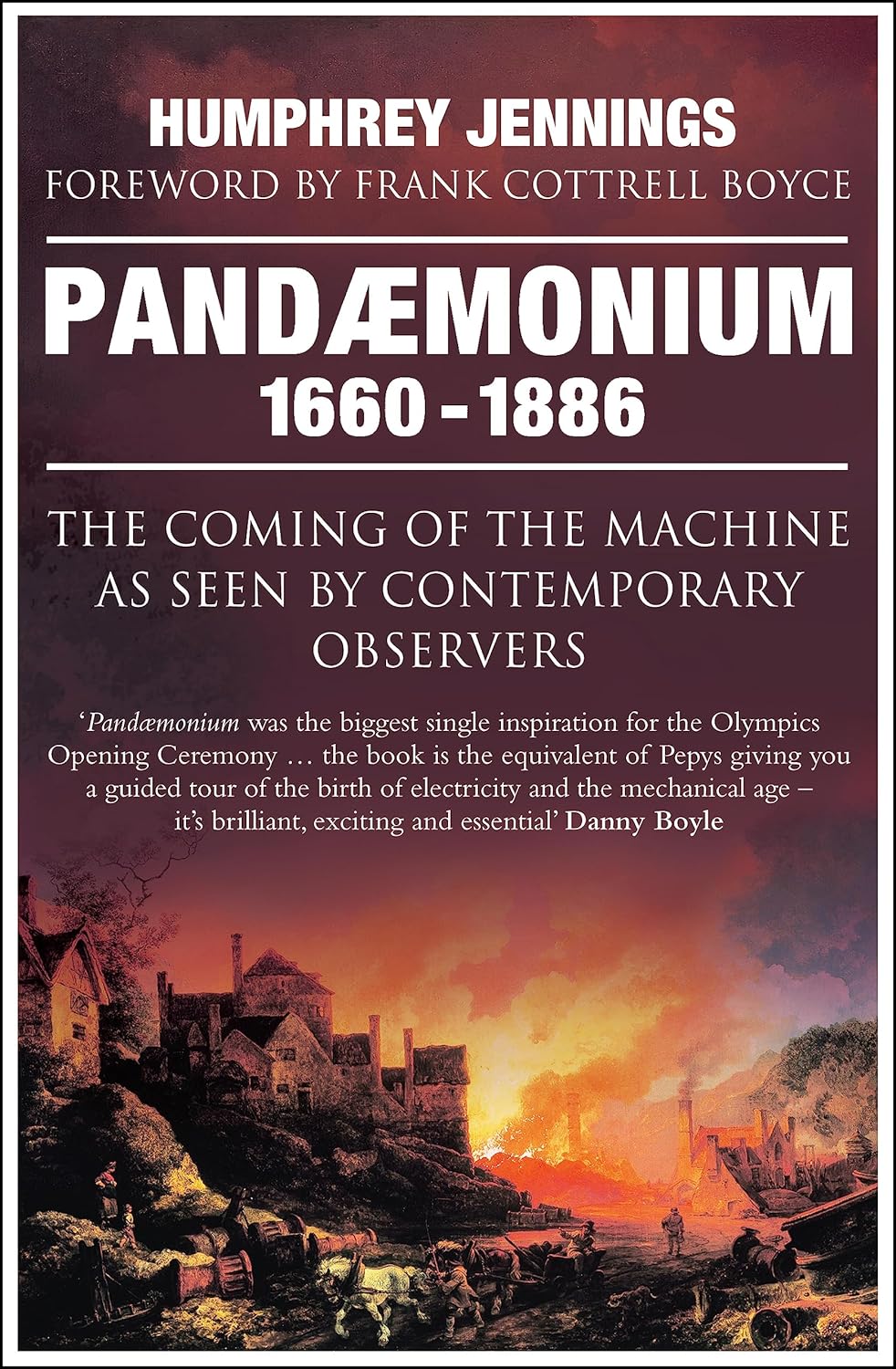
Listen to Pandæmonium 1660–1886: The Coming of the Machine as Seen by Contemporary Observers — Free Audiobook
Key Takeaways from Pandæmonium 1660–1886: The Coming of the Machine as Seen by Contemporary Observers
- The Method: An “Imaginative History” Made of Images
- 1660–1729: Observation, Experiment, and the First Shadows of Smoke
- 1730–1790: Exploitation—Systems, Mills, and Human Material
- 1791–1816: Revolution—Enclosure, Riots, and the Birth of the Machine-Age Mind
- 1817–1834: Protest, Peterloo, and the Railway’s First Shock
Pandæmonium 1660–1886: The Coming of the Machine as Seen by Contemporary Observers — Full Chapter Overview
Chapter 1: Recommendation
Chapter 2: The Method: An “Imaginative History” Made of Images
Chapter 3: 1660–1729: Observation, Experiment, and the First Shadows of Smoke
Chapter 4: 1730–1790: Exploitation—Systems, Mills, and Human Material
Chapter 5: 1791–1816: Revolution—Enclosure, Riots, and the Birth of the Machine-Age Mind
Chapter 6: 1817–1834: Protest, Peterloo, and the Railway’s First Shock
Chapter 7: 1835–1844: The Factory as Automaton—Ure, Carlyle, Dickens, Engels
Chapter 8: 1845–1851: Speed, Crowds, and the Great Exhibition’s Glittering Surface
Chapter 9: 1852–1863: High Vistas and Deepening Doubt—London from Above, Darwin’s Chance
Chapter 10: 1864–1871: Steel, Education, and the Plague-Wind—Victorian Confidence Meets Its Shadow
Chapter 11: 1872–1886: Confusion—Electric Light, Telephones, Crowds, and Mental Choking
Pandæmonium 1660–1886: The Coming of the Machine as Seen by Contemporary Observers Summary & Overview
Pandæmonium is Humphrey Jennings’ “imaginative history” of the Industrial Revolution, built not from a single authorial argument but from a moving sequence of contemporaneous quotations he calls “Images.” Arranged chronologically from 1660 to 1886, the extracts form a continuous, film-like narrative of a nation passing from early scientific curiosity and experimental observation into exploitation, upheaval, and finally a late-Victorian sense of dizzying complexity and moral uncertainty.
Across diaries, sermons, scientific notes, letters, parliamentary records, journalism, autobiography, and literature, Jennings’ collage captures the revolution as lived experience: smoke and furnaces, enclosure and displacement, awe at invention, terror at machinery, class conflict and reform, the clash between animism and materialism, and the struggle to keep imagination alive in an increasingly automated world.
Who Should Listen to Pandæmonium 1660–1886: The Coming of the Machine as Seen by Contemporary Observers?
- Readers who want a vivid, primary-source-driven journey through the Industrial Revolution beyond standard political/economic history.
- Artists, writers, filmmakers, and designers interested in collage methods, montage thinking, and “image-sequence” storytelling.
- Students and general readers curious about how science, religion, labour, class, and imagination collided as modern Britain took shape.
Books Similar to Pandæmonium 1660–1886: The Coming of the Machine as Seen by Contemporary Observers
Readers who enjoyed this also liked these titles.

Tracking Contagions, from Cholera to Ebola and Beyond
An Economic History of the Twentieth Century
What is Happening in the World
From the Wheel, to the Car, to What Comes Next