If You're Curious About These Questions...
You should listen to this audiobook
- Have you ever wondered why the professional 'armor' you use to protect yourself at work might actually be the biggest obstacle to your team’s success?
- What if you could master a ten-step method to turn even the most toxic office dynamics into a culture of radical productivity and trust?
- Are you curious about the secret psychological shifts that allow leaders to resolve deep-seated workplace friction without the usual drama?
Listen to Own Your Armor — Free Audiobook
Loading player...
Key Takeaways from Own Your Armor
- Discover the difference between 'above the table' professional talk and 'below the table' unspoken dynamics to uncover the true drivers of workplace drama.
- Understand why employees 'armor up' using defensive fight-or-flight responses when dealing with perceived threats like exclusion or harsh criticism.
- Avoid the 'bad apple fallacy' by recognizing that perceived troublemakers are actually just good people trying to protect themselves from workplace stress.
- Recognize that there are no perfect 'good apples' on a team, because even well-intentioned defensive actions can inadvertently worsen a toxic culture.
- Learn how to break the destructive threat/armor cycle through 'mutual disarmament,' a process where every team member takes responsibility for dropping their defenses.
Learning Tools
Reinforce what you learned from Own Your Armor
Mind Map
Own Your Armor
Workplace Dysfunction & Communication+
The Threat/Armor Cycle+
The Solution: Owning Your Armor+
Leadership & Performance+
Quiz — Test Your Understanding
Question 1 of 10
Why do traditional strategies for fixing dysfunctional teams usually fail, according to the author?
Question 2 of 10
What does 'below the table' communication refer to in the workplace?
Question 3 of 10
What is the 'bad apple fallacy'?
Question 4 of 10
Why is it important to recognize that there are no 'good apples' in a dysfunctional team?
Question 5 of 10
What is the recommended method for breaking the 'threat/armor cycle' during a conflict?
Question 6 of 10
According to the book, what is the difference between 'feedback' and 'owning'?
Question 7 of 10
Which of the following is NOT one of the three steps in the process of 'owning your armor'?
Question 8 of 10
How does a leader's armor affect the rest of the team?
Question 9 of 10
The author compares resolving team issues to solving a Rubik's Cube. What does this analogy illustrate?
Question 10 of 10
What happens to a team when they operate in a 'low threat' environment?
Own Your Armor — Full Chapter Overview
- 1Recommendation
- 2Principle #1: Workplace communication comes in two forms
- 3Principle #2: At work, we often “armor up” when we feel threatened
- 4Principle #3: Avoid falling for the “bad apple fallacy”
- 5Principle #4: Just as there are no “bad apples,” there are no “good apples”
- 6Principle #5: Most conflicts follow a threat-and-armor cycle
- 7Principle #6: Owning your armor is essential to resolving workplace conflicts
- 8Principle #7: “Owning your armor” is a three-step process
- 9Principle #8: Positive coworker communication is unarmored
- 10Principle #9: A leader’s armor has an outsized impact on the team
- 11Principle #10: The Own Your Armor approach can help unlock your team’s best work
- 12Final summary
Own Your Armor Summary & Overview
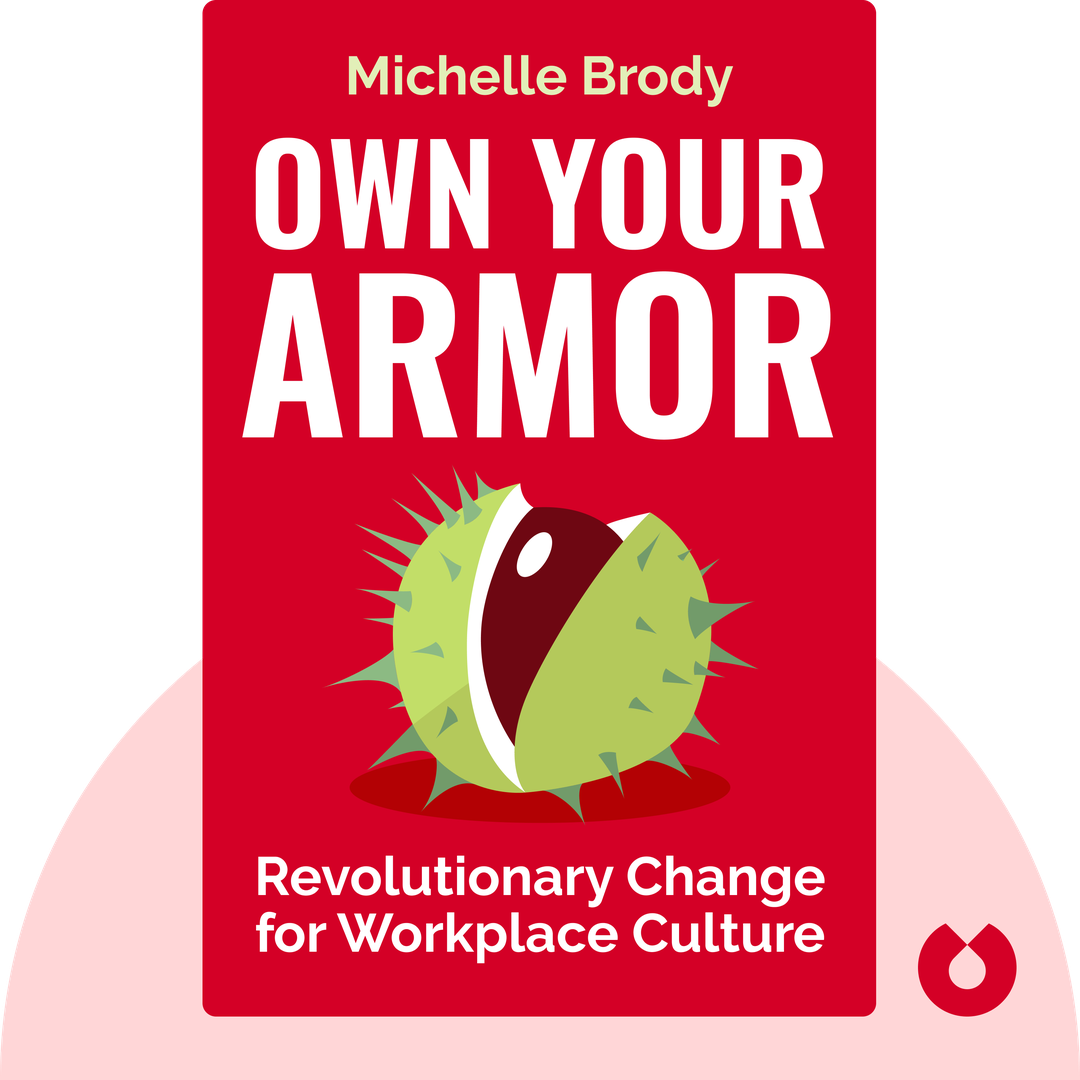
Own Your Armor (2022) offers an innovative approach to fixing dysfunctional workplace culture. It outlines the ten principles of the Own Your Armor method that teams can use to foster better communication, improve productivity, and create a healthier, more positive work environment.
Who Should Listen to Own Your Armor?
- Leaders who want to improve their team’s dynamics
- Employees who want to create a better workplace culture
- Anyone who wants to learn healthier ways of solving conflicts
Books Similar to Own Your Armor
Readers who enjoyed this also liked these titles.