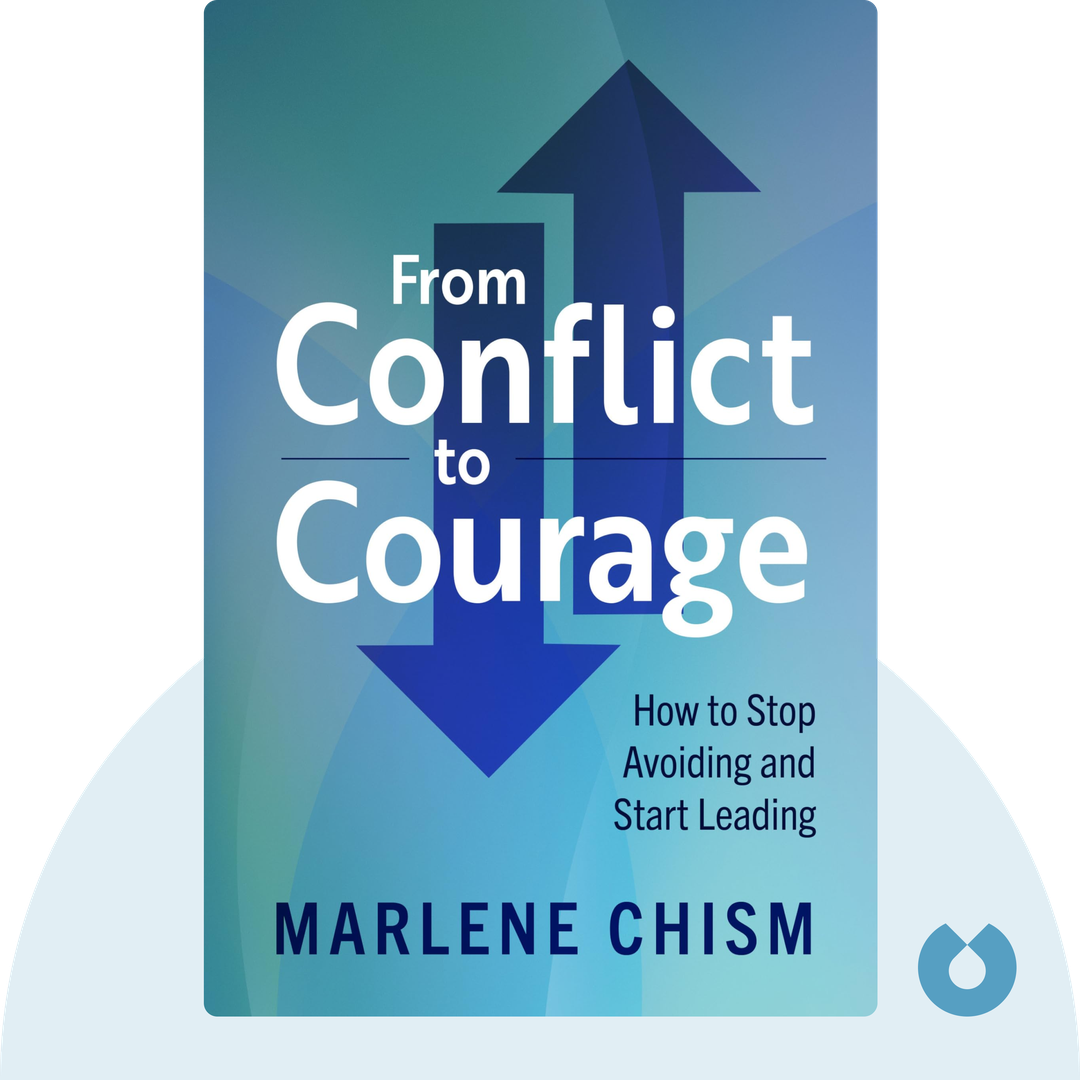
From Conflict to Courage
Start ListeningDownload Try free on iPhoneScan to start in 5 seconds
Categories:
If You're Curious About These Questions...
You should listen to this audiobook
- Have you ever wondered why common reactions like avoidance or appeasing often make workplace conflicts worse instead of better?
- What if you could transform every professional disagreement from a source of stress into a powerful opportunity for growth and innovation?
- What’s the secret to developing the "conflict capacity" needed to lead with courage rather than falling into patterns of aggression?
Listen to From Conflict to Courage — Free Audiobook
Loading player...
Key Takeaways from From Conflict to Courage
- Discover why framing conflict as a simple misalignment of desires, rather than an adversarial battle of right and wrong, makes workplace issues much more solvable.
- Understand the hidden dangers of the three dysfunctional conflict responses—avoidance, appeasement, and aggression—and why even aggressive posturing is just another form of avoidance.
- Learn to recognize your body's early physical warning signs during a disagreement to create space for conscious choice rather than automatic emotional reactions.
- Master practical outer-game skills that allow you to redirect heated arguments toward underlying interests and course-correct inappropriate behavior without damaging relationships.
- Find out why a supportive organizational culture is critical for nurturing conflict capacity, and how tolerating bad behavior from high performers can sabotage individual leadership development.
Learning Tools
Reinforce what you learned from From Conflict to Courage
Mind Map
From Conflict to Courage
The Cost of Unresolved Conflict+
Reframing Conflict+
Three Dysfunctional Responses+
Three Games to Win+
Achieving Leadership Clarity+
Having Effective Conversations+
Listen and Learn+
Quiz — Test Your Understanding
Question 1 of 7
How should leaders optimally reframe workplace conflict to make it more approachable and solvable?
Question 2 of 7
According to the book, what is a surprising truth about the aggressive response to conflict?
Question 3 of 7
What are the three interconnected elements required for truly effective conflict management?
Question 4 of 7
What does the book suggest is the true purpose of paying attention to your emotional responses, like a knot in your stomach during a meeting?
Question 5 of 7
How does the book recommend a manager approach an employee about a dress code violation?
Question 6 of 7
When an employee responds to a new task with the phrase 'I'll try,' what should a manager be listening for?
Question 7 of 7
What is a 'pseudobarrier' in the context of workplace conflict?
From Conflict to Courage — Full Chapter Overview
- 1Recommendation
- 2Three common mistakes
- 3Three games you must win
- 4Gaining leadership clarity
- 5Holding effective conversations
- 6Listen and learn
- 7Final summary
From Conflict to Courage Summary & Overview
From Conflict to Courage (2022) presents a comprehensive approach for transforming workplace disagreements into opportunities for growth and development. It introduces a three-part framework centered on developing “conflict capacity”, helping leaders move beyond common patterns of aggression, avoidance, and appeasing.
Who Should Listen to From Conflict to Courage?
- New managers struggling to handle their first leadership conflicts
- Experienced executives dealing with persistent interpersonal issues
- Anyone seeking to build stronger conflict resolution skills
Books Similar to From Conflict to Courage
Readers who enjoyed this also liked these titles.