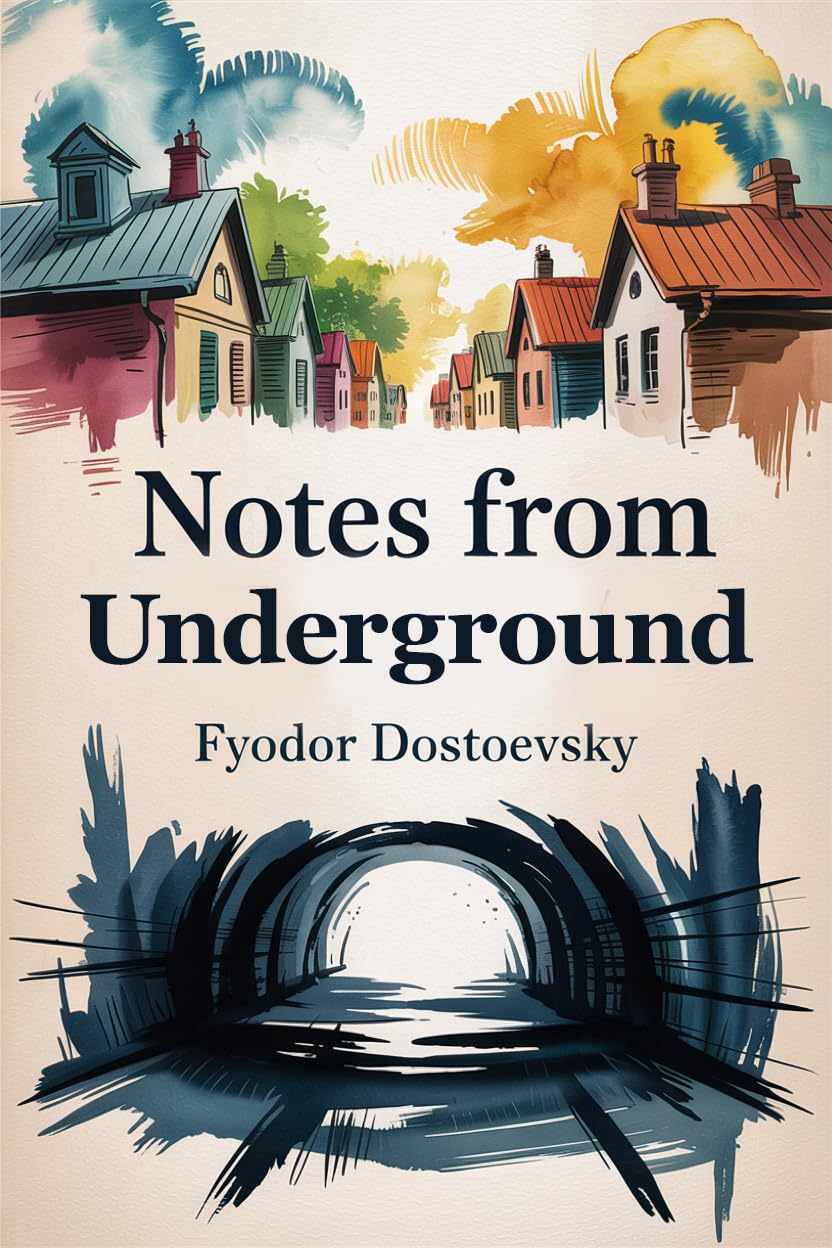
Listen to Notes from Underground (Full Version) — Free Audiobook
Notes from Underground (Full Version) — Full Chapter Overview
Chapter 1: Recommendation
Chapter 2: 1
Chapter 3: 2
Notes from Underground (Full Version) Summary & Overview
Notes from Underground is Dostoyevsky’s fierce, darkly comic confession from the mouth of a retired civil servant who calls himself sick, spiteful, and too conscious for his own good. Speaking directly to an imagined audience, the Underground Man attacks the era’s faith in rational self-interest and social “progress,” insisting that human beings will often choose suffering, chaos, or humiliation simply to prove they are free.
Part philosophical provocation, part psychological self-portrait, the book exposes how pride, shame, and resentment can become a private universe—one where self-knowledge does not heal, but corrodes. A landmark of modern literature, it anticipates existentialism and psychoanalysis while remaining intensely personal: a voice arguing with itself, daring the listener to recognize uncomfortable truths about agency, desire, and self-deception.
Who Should Listen to Notes from Underground (Full Version)?
- Listeners drawn to psychologically intense classics that foreground interior conflict, self-sabotage, and moral ambiguity.
- Fans of existential and philosophical fiction interested in early challenges to rationalism and utopian social thinking.
- Readers seeking a foundational work that influenced modernist narrative voice, unreliable narration, and confessional literature.
Books Similar to Notes from Underground (Full Version)
Readers who enjoyed this also liked these titles.

The Chronicles of a Tortured Soul

In the fevered heat of St. Petersburg, a broke former student tests the boundaries of conscience and daring, only to discover that the most relentless pursuit is not by police—but by the mind and soul that cannot escape itself.

When the dissolute Fyodor Karamazov and his three very different sons are pulled into the same orbit, old grievances ignite questions of faith, morality, and guilt—until a looming catastrophe forces each brother to confront what he believes, and what he can bear.

In the luminous St. Petersburg “white nights,” a lonely dreamer’s chance act of protection draws him into four evenings of intimacy with a young woman—where hope, confession, and the ache of unreturned love collide in a single, unforgettable week.