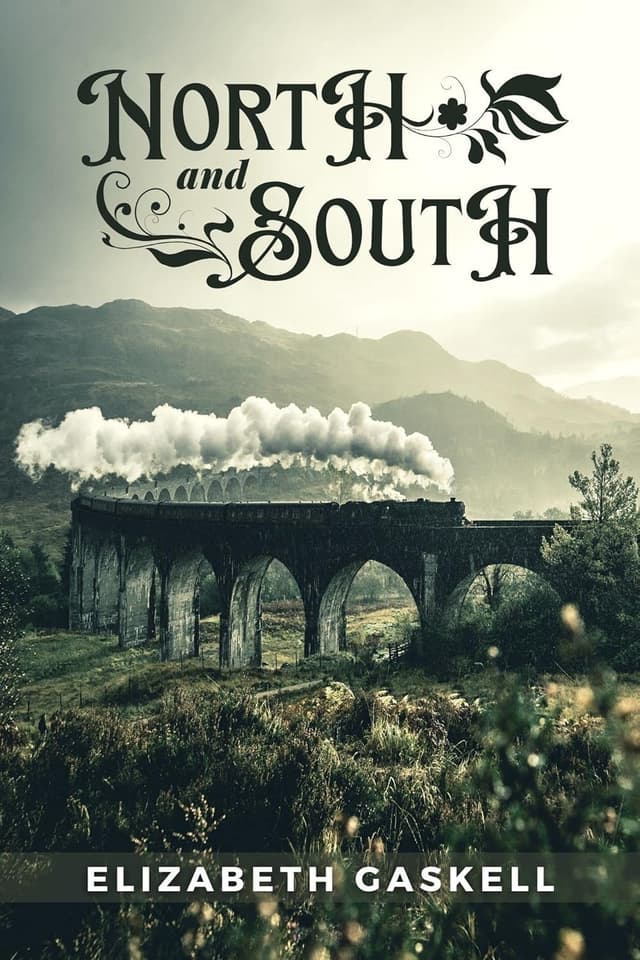
Written in the bustling industrial hub of Manchester, England, Elizabeth Gaskell’s *North and South* was first published as a serial in Charles Dickens’s magazine *Household Words* between 1854 and 1855. The novel emerged during the height of the Victorian Industrial Revolution, a period defined by rapid technological advancement, urbanization, and profound social upheaval. England was starkly divided between the agrarian, genteel South, rooted in tradition and inherited wealth, and the manufacturing North, driven by capitalism, new money, and a growing working class. Gaskell drew heavily from her own experiences as a Unitarian minister's wife in Manchester, witnessing firsthand the brutal living conditions of mill workers, the rise of labor unions, and the bitter strikes that defined the era.
Upon its publication, the novel was both significant and controversial for its unflinching, yet remarkably balanced, examination of class conflict. Unlike many contemporaries who solely demonized industrialists, Gaskell provided a nuanced portrayal of both the suffering mill workers and the self-made manufacturers, advocating for mutual communication and humane labor relations. Furthermore, the