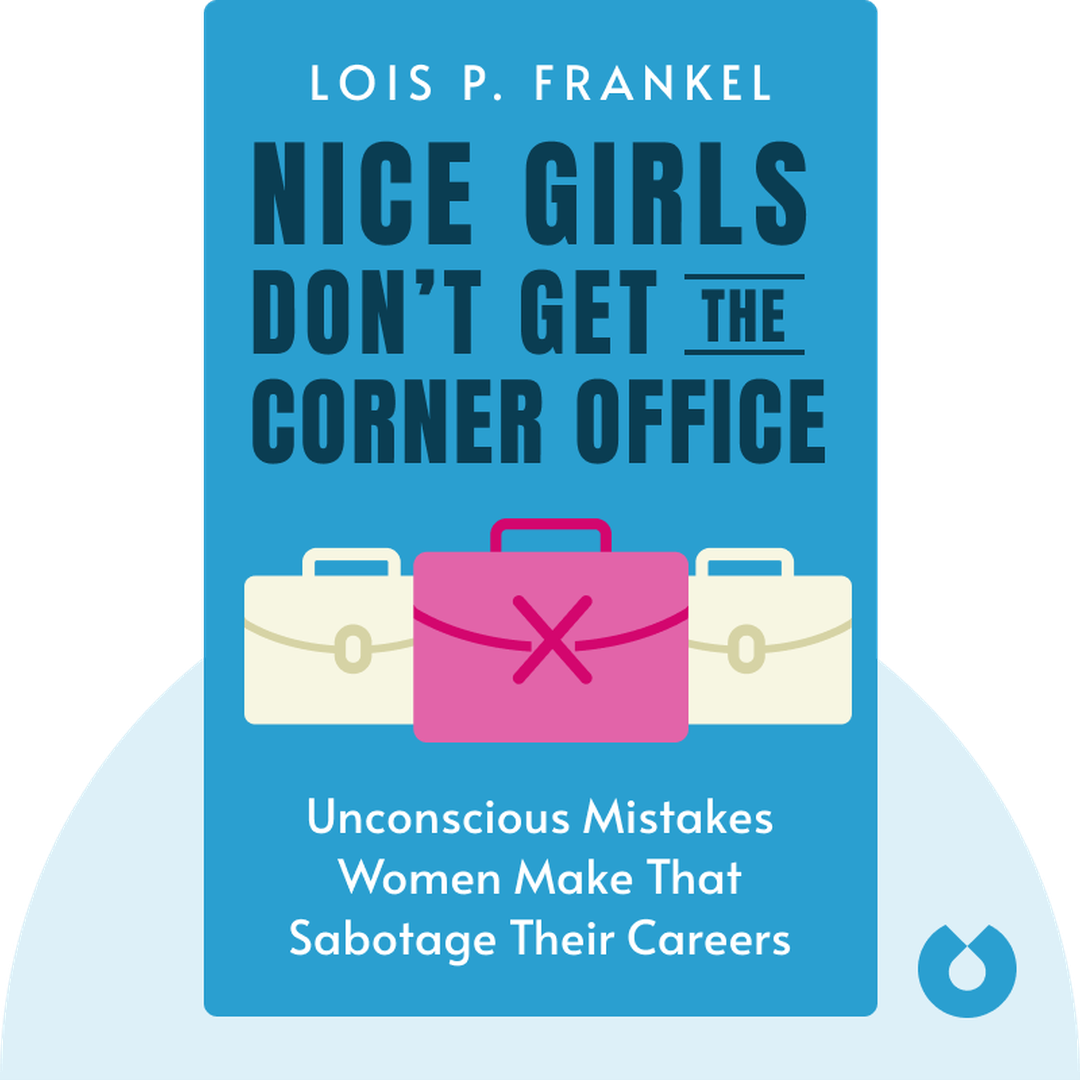
Nice Girls Don’t Get the Corner Office
Start ListeningDownload Try free on iPhoneScan to start in 5 seconds
Categories:
If You're Curious About These Questions...
You should listen to this audiobook
- Did you know that the childhood behaviors you were taught to be a 'good girl' could be the exact habits sabotaging your professional growth?
- Have you ever wondered why some women seem to glide effortlessly into leadership roles while others remain stuck despite their hard work?
- What are the subtle, unconscious mistakes you might be making every day that signal to your boss you aren't ready for the corner office?
Listen to Nice Girls Don’t Get the Corner Office — Free Audiobook
Loading player...
Key Takeaways from Nice Girls Don’t Get the Corner Office
- Discover how ingrained social conditioning causes women to unconsciously sabotage their own careers, and learn how to embrace the assertive behaviors necessary for success.
- Understand why women are taught from childhood to prioritize sympathy over respect, and why overcoming the fear of being labeled 'bossy' is crucial for career advancement.
- Recognize how asking for excessive advice or deferring decisions to others can severely damage your professional image and make you appear unfit for leadership.
- Learn why excessive smiling and overly feminine behaviors can undermine your authority, distort your serious messages, and make you appear insecure in the workplace.
- Master the art of standing your ground in a male-dominated competitive environment by finding the right balance between projecting decisive leadership and maintaining your identity.
Learning Tools
Reinforce what you learned from Nice Girls Don’t Get the Corner Office
Mind Map
Nice Girls Don’t Get the Corner Office
The Gender Gap Reality+
Childhood Conditioning+
Authority-Undermining Behaviors+
Career Strategy & Politics+
Actionable Solutions+
Quiz — Test Your Understanding
Question 1 of 8
According to the text, why do women often struggle to exhibit competitive and assertive behaviors in the workplace?
Question 2 of 8
How does constantly asking others for advice before making a decision affect a woman's professional image?
Question 3 of 8
What is a potential negative consequence of a woman smiling too much in a professional environment?
Question 4 of 8
Which of the following workplace behaviors is an example of falling into the 'little-girl trap'?
Question 5 of 8
Which communication habit should women avoid because it undermines their perceived confidence and competence?
Question 6 of 8
According to productivity experts mentioned in the text, why might working continuously without breaks actually hinder career progression?
Question 7 of 8
What is identified as a major reason women receive fewer promotions than men regarding workplace relationships?
Question 8 of 8
What specific, actionable advice does the book give regarding how a woman should be addressed in the workplace?
Nice Girls Don’t Get the Corner Office — Full Chapter Overview
- 1Recommendation
- 2Women remain at a disadvantage in the workplace.
- 3Women are encouraged to seek sympathy rather than respect and real influence.
- 4Seeking too much input and letting others choose for you can seriously damage your professional image indeed.
- 5Behaving or dressing overly feminine can weaken your professional image and warp the message you aim to convey.
- 6The corporate world is no place for little girls.
- 7Within a competitive business setting, you must truly play the part.
- 8Working too hard won’t take you far, no matter your gender.
- 9If you’re aiming for that corner office, you must not overlook the strategic value of relationships.
Nice Girls Don’t Get the Corner Office Summary & Overview
This book focuses on the reasons why women often don’t make it to the top ranks in the world of business. Frankel explains how women unconsciously behave in ways that undermine their business aspirations and presents female readers with measures to consciously counteract their self-defeating behavior.
Who Should Listen to Nice Girls Don’t Get the Corner Office?
- Any woman who wants to make it in the business world
- Anyone who wants to know more about gender inequality
- Any woman who wants to learn how to be more assertive
Books Similar to Nice Girls Don’t Get the Corner Office
Readers who enjoyed this also liked these titles.