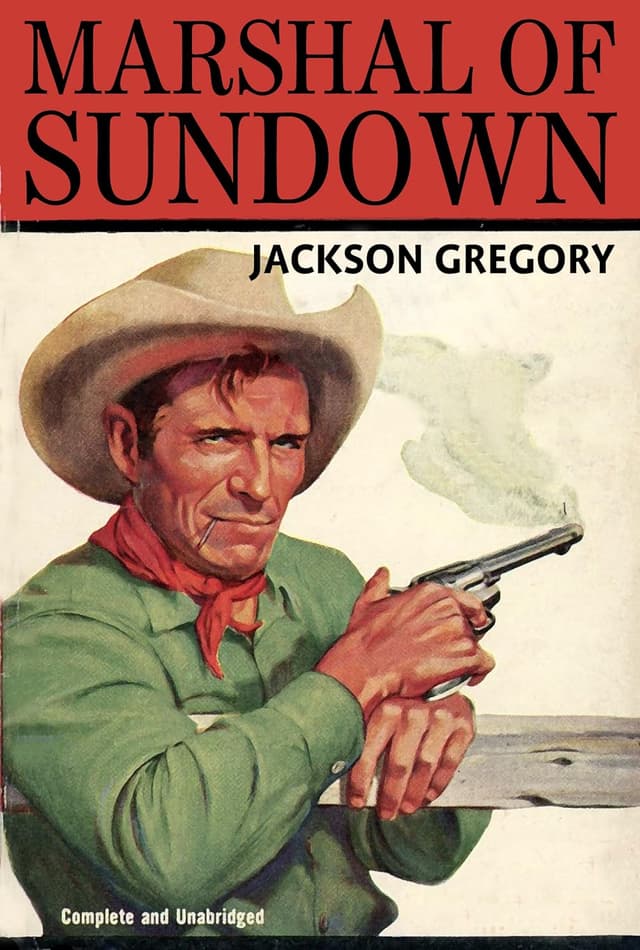
Written by Jackson Gregory in the United States and published in 1938, *Marshal of Sundown* emerged during the waning years of the Great Depression. As economic hardship and the looming shadow of World War II created profound national anxiety, American readers increasingly sought refuge in the escapism and moral clarity of Western fiction. Gregory, writing from his home in California, drew heavily upon the rugged landscapes of the West to craft a narrative steeped in frontier mythology.
Upon its publication, the novel was significant for its nuanced approach to the standard pulp Western formula. While it provided the requisite action and romance, it stood out by exploring the tension between the dying, lawless frontier and the encroaching forces of civilized society. The controversy surrounding the era's Westerns often lay in their romanticized, historically reductive portrayals of frontier justice and manifest destiny. However, Gregory’s work was distinctively reflective, offering a melancholic look at the closing of the American West. This theme resonated deeply with a 1930s audience grappling with their own era of rapid industrialization, institutional failure, and social upheaval.
The lasting impact of *Marshal of Sundown* lies in its vital contribution to the maturation of the Western genre. Gregory helped bridge the gap between inexpensive dime novels and respected regional literature, paving the way for the more complex, psychological Westerns of the mid-twentieth century. By cementing the archetype of the stoic, morally unwavering lawman navigating a rapidly changing world, the novel influenced generations of writers and filmmakers. It helped ensure that the mythos of the American West remained a foundational pillar of cultural identity, shaping how society understood concepts of justice, independence, and the rugged individual for decades to come.